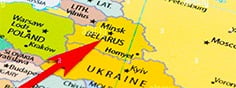


Belarus Has Been Overrun By Jellyfish
- 5.10.2026, 9:53
- 1,294
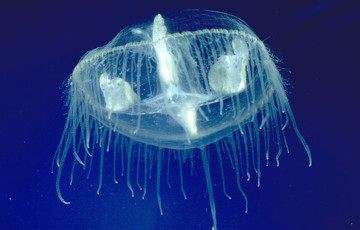
Researchers believe they may have been introduced into the water bodies along with aquarium plants.
The freshwater jellyfish Craspedacusta sowerbii may have a much wider distribution in Belarus than isolated observations suggest. This conclusion was reached by Tatyana Lipinskaya and Vladimir Semenchenko from the Scientific and Practical Center for Bioresources of the National Academy of Sciences of Belarus. The results of their work have been published in the *Russian Journal of Biological Invasions*.
DNA from this species was first detected in the country in May 2018 during river monitoring. Traces of the jellyfish were found in several major river basins at once: in the Pripyat near Narovlya, in the Pina in Pinsk, in the Dnieper in Mogilev, in the Berezina near the village of Panyushkovichi, and in the Neman near the village of Gozha. In the summer of that same year, jellyfish were spotted by residents of Brest, as well as by employees of the Mozyr Thermal Power Plant’s wastewater treatment facilities.
New sightings followed in 2023: Craspedacusta sowerbii was detected in a reservoir on the Medyanka River in the Svisloch District and upstream of the Vitebsk Hydroelectric Power Plant dam on the Western Dvina. In August 2024, residents of Vitebsk observed a massive bloom of jellyfish in the Western Dvina.
It is not easy to spot this species due to the peculiarities of its life cycle. Most of the time, the jellyfish exists as a small polyp on the riverbed. When the water temperature reaches approximately 28°C, favorable conditions arise for the jellyfish themselves to emerge, and they rise to the upper layers of the water. Their diameter can reach 25 mm. Because they appear irregularly in the water column, it is difficult to pinpoint their habitats.
Traces of Craspedacusta sowerbii DNA have been found in water bodies across various regions of Belarus; therefore, scientists believe that the jellyfish has already spread throughout the country, although it is not always possible to spot it.
This species is considered an invasive species in Belarus. Researchers speculate that it may have entered water bodies along with aquarium plants. Another possible route of spread is waterfowl. It is not yet entirely clear exactly how the jellyfish affects local ecosystems, but the study notes its potential impact on the abundance and structure of zooplankton.

Bank's name: Bank Millennium S.A.
Address: ul. Stanislawa Zaryna, 2A, 02-593, Warszawa
IBAN: PL97116022020000000216711123
SWIFT: BIGBPLPW
Name of the account holder: Fundacja “KARTA ‘97”
Purpose/title of payment: Donation for statuary aims
You can contact us by the e-mail charter97@gmail.com