
Bloomberg Named The Only Sector Where Billionaires Are Getting Richer
- 5.10.2026, 22:06
- 2,320
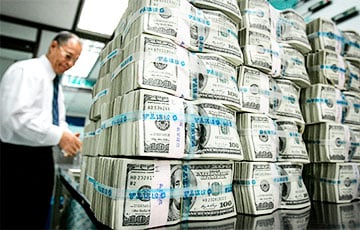
In the first nine months of the year, their combined wealth grew by $845 billion.
Technology billionaires accounted for about one-third of the combined wealth of the world’s 500 richest people in 2026. In the first nine months of the year, their combined wealth grew by $845 billion—to $4.6 trillion, according to data from the Bloomberg Billionaires Index.
Tech billionaires make up about one-fifth of the list, but they account for 36% of the index’s total wealth. The growth in their fortunes was driven primarily by the artificial intelligence boom and rising stock prices of technology companies, particularly U.S. ones.
At the same time, billionaires who made their fortunes outside the tech sector collectively lost $62 billion. Americans accounted for 94% of the net capital gains of all index participants.
Elon Musk saw the largest increase in his fortune: since the beginning of the year, he has become $310 billion richer, accounting for about 40% of the total capital growth among those on the list. According to Forbes, his net worth has once again exceeded $1 trillion. He first became a trillionaire on June 12, but soon lost that status.
As Bloomberg notes, nine out of the ten richest people in the world are associated with U.S. technology companies. The net worth of Dell Technologies founder Michael Dell rose by 81% to $254 billion, while that of Meta CEO Mark Zuckerberg—whose company is recognized as an extremist organization and banned in Russia—increased by $23 billion.
Meanwhile, the net worth of Oracle Chairman Larry Ellison—who briefly became the world’s richest person in September 2025—decreased by $196 billion.
The agency notes that in mid-June, the combined wealth of the world’s 500 richest people peaked at $13.4 trillion. It later fell by 6%—to $12.6 trillion—amid a general market slowdown and doubts about the largest AI companies.
Due to the growing wealth of the richest individuals, U.S. authorities are considering raising taxes on the ultra-wealthy. In November, California voters will decide whether to implement such a tax, while in Washington, D.C., New York, Illinois, and Rhode Island, new taxes are still only under discussion, according to Bloomberg.
Although most of the wealth remains in the hands of the heads of major technology companies, the AI boom is also generating huge profits for startup founders and companies that provide AI infrastructure, the agency notes.
As an example, Bloomberg cites Lin Zong-chi, founder of the Taiwanese company King Slide, who increased his net worth by approximately $9.5 billion in 2026. His company manufactures server rails and cable management systems for data centers.
In addition to him, the list also includes Wang Xin, chair of the board of directors at Guangdong Dtech Technology Co., whose company manufactures specialized drills for assembling printed circuit boards.
The list also includes two heirs to the Lee family of Samsung Electronics Co.—Bu-jin and So-hyun—a rise attributed to growing demand for the company’s microchips.
In addition, several other Chinese entrepreneurs made the list amid China’s development of its own technology and AI infrastructure and competition with the U.S.: Zhou Zhining and his family from Suzhou TFC Optical Communication Co., as well as Yuan Fugen from Suzhou Dongshan Precision Manufacturing Co.

Bank's name: Bank Millennium S.A.
Address: ul. Stanislawa Zaryna, 2A, 02-593, Warszawa
IBAN: PL97116022020000000216711123
SWIFT: BIGBPLPW
Name of the account holder: Fundacja “KARTA ‘97”
Purpose/title of payment: Donation for statuary aims
You can contact us by the e-mail charter97@gmail.com