
Russia Deployed Tu-95s And Launched Three Waves Of Missiles At Ukraine
1- 7.10.2026, 7:59
- 2,600
Kyiv, Dnipro, and Kremenchuk are under attack.
On the night of October 7, Russia, the aggressor nation, launched a massive combined strike against Ukraine, using ballistic and cruise missiles, guided bombs, and jet-powered drones. Explosions rocked Kyiv and Dnipro, and the attack itself unfolded in several waves, according to “Glavred”.
The enemy air raid was detected late in the evening on October 6.
“The takeoff of three Tu-160 aircraft from the ‘Belaya’ airfield was detected.If cruise missiles are launched, they are expected to enter Ukrainian airspace approximately after 3:00 a.m.," the Ukrainian Armed Forces reported at 10:19 p.m.
Ukrainians were urged not to ignore air raid sirens.
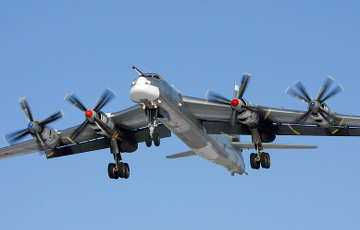
At approximately 03:49, Russia scrambled six Tu-95 strategic bombers from the Olenegorsk airfield, the Air Force reported.
“If cruise missiles are launched, they are expected to enter Ukrainian airspace approximately after 6:00 a.m. Do not ignore air raid sirens and take shelter,” the statement said.
Monitors have counted a total of nine Tu-160 and Tu-95 aircraft from several airfields in the Russian Federation.
Around 3:10 a.m., the occupiers launched ballistic missiles from the Bryansk region and the south, and just three minutes later, the military issued a warning about a launch targeting the capital.
The ballistic phase struck several directions simultaneously. Between 03:12 and 03:23, the Air Force detected targets heading toward Kyiv from two directions—the east and the north—a missile targeting Zaporizhzhia, which then changed course toward Dnipro, a high-speed target in the west of Donetsk Oblast, and a ballistic missile over Kharkiv Oblast. One of the groups passed south of the capital—through Obukhiv toward Ukrainka.
The second wave began at 4:40 a.m., when cruise missiles appeared in the sky. Their route followed the line Zaporizhzhia–Dnipropetrovsk Oblast–Kirovohrad Oblast, extending into Poltava Oblast: monitors detected targets near Bozhedarivka, on the border between Dnipropetrovsk and Kherson Oblasts, and then heading toward Kremenchuk. At the same time, guided missiles were heading toward the Zaporizhzhia region, while jet-powered UAVs were approaching from the north of the Sumy and Chernihiv regions.
The third peak occurred at 5:11 a.m.—the military again reported ballistic missiles targeting the capital.
“A ballistic missile is heading for Kyiv. Multiple targets,” warned the Ukrainian Air Force.
After that, attack drones penetrated deeper into the Kyiv region: their trajectories were tracked toward Nemeshaieve, Makarov, Vasylkiv, Obukhiv, and Kozin. By morning, targets in Cherkasy were added to the list.
The heaviest pressure in the final phase was directed at the Poltava region. From 5:50 a.m. to 6:26 a.m., cruise missiles successively entered from the west of the Kharkiv region, striking Chutovo, Mashevka, Novye Sanzhary, Velyka Bahachka, and Dykanka, while Kremenchuk became the main focal point—at least four separate groups of missiles were recorded striking it. The latest reports concerned Oleksandriya in the Kirovohrad region and a new group of missiles targeting Kremenchuk.
Kyiv and Dnipro: Strikes on Warehouses and Industrial Facilities
Kyiv Mayor Vitali Klitschko confirmed the initial damage in the capital. According to him, in the Obolon district, shells struck an area of non-residential buildings, and in the Podil district, they struck warehouse facilities.
In Dnipro, an industrial facility was targeted, according to the head of the regional military administration, Oleksandr Hanzha.
Another strike hit a transportation infrastructure facility in Zaporizhzhia, the Regional Military Administration reported. Due to the aftermath of the attack, temporary traffic restrictions may be imposed on certain road sections.
Explosions were also heard in Kremenchuk, in the Poltava region, amid a Russian missile attack. The Regional Military Administration stated that the region is under a massive enemy attack.
According to monitoring groups, the Russians launched ballistic missiles from the Bryansk and Taganrog areas, while “Zircon” missiles were launched from the directions of Kursk, Rostov, and Millerovo.
They Knew About the Strike in Advance
Signs that Russia was building up forces for a major bombardment appeared two days before the attack. On the afternoon of October 6, Ukrainian President Volodymyr Zelenskyy reported that Ukrainian intelligence had detected the Russian military preparing for a new massive strike, and in an evening video address, he clarified that the information had been updated.
At the same time, monitoring sources reported the redeployment of strategic aircraft: four Tu-95MSs took off from the “Ukrainka” airfield toward “Olenyi,” and two more headed for “Engels-2.” According to their estimates, the total salvo could have reached about 70 missiles of various types, and among the potential targets, they cited critical and military infrastructure in Kyiv and the Kyiv region, as well as facilities in the Dnipropetrovsk, Lviv, Rivne, Volyn, and Zhytomyr regions.
The Air Force urged the public not to ignore air raid alerts, to remain in shelters, and to follow official announcements—the threat of further launches persisted even after dawn.

Bank's name: Bank Millennium S.A.
Address: ul. Stanislawa Zaryna, 2A, 02-593, Warszawa
IBAN: PL97116022020000000216711123
SWIFT: BIGBPLPW
Name of the account holder: Fundacja “KARTA ‘97”
Purpose/title of payment: Donation for statuary aims
You can contact us by the e-mail charter97@gmail.com