
Politico: The EU Is Secretly Preparing For A Large-Scale Hybrid Attack By Russia
1- 7.10.2026, 9:56
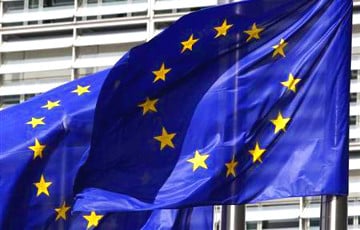
Ambassadors from 27 countries are discussing the scenario.
The capitals of EU countries are preparing for a possible scenario involving a large-scale hybrid attack, which could result in the deaths of EU citizens. According to five EU diplomats and officials, such an outcome is increasingly being viewed as likely, reports Politico.
In recent weeks, EU ambassadors from all 27 member states have been discussing a possible response to such an attack in a “restricted format”—without phones or aides. The talks intensified after a drone carrying explosives was discovered at Leipzig Airport in August.
For years, the EU has been developing mechanisms to respond to hybrid threats, particularly cyberattacks, election interference, and sabotage. However, diplomats’ attention has now shifted to a far more serious scenario—attacks that could result in a large number of casualties.
“We must be prepared for something serious,” said a high-ranking EU diplomat. “Unfortunately, Leipzig has shown us that a very serious incident resulting in numerous casualties cannot be ruled out.”
Another EU official stated that, given the scale of Russia’s actions, casualties could occur sooner than expected.
The EU reports an increase in hybrid attacks
Following the start of Russia’s full-scale invasion of Ukraine, the EU reports that Moscow has intensified its campaign of cyberattacks, sabotage, and other covert operations within the bloc’s member states.
EU Commissioner for Justice Michael McGrath stated that European democracies are facing a growing number of threats:
“We are strengthening our ability to anticipate and detect threats, improving our early warning system, and ensuring that Europe can respond quickly and collectively when our democratic resilience is put to the test.”
Discussions among EU diplomats and ministers focused, in particular, on the possible deployment of emergency response teams, the allocation of EU funds to assist an affected country, and coordination among the heads of European institutions during a crisis.
The director of the European Center of Excellence for Countering Hybrid Threats Teija Tiilikainen stated that due to the increasingly lethal means Russia is using to test Europe’s readiness, casualties are likely to occur sooner or later.
The EU may face coordination challenges
If EU or NATO citizens are killed in an attack, the pressure on both organizations will be extremely intense. At the same time, the EU’s preparations for such a scenario are already sparking debate over the division of responsibilities between the EU and NATO.
Some capitals believe that the EU may be overstepping its role in the security sphere and duplicating the functions of NATO, which has been the cornerstone of European security for decades.
Former NATO spokesperson Oana Lungescu warned that excessive overlap could hinder decision-making.
“If there is confusion or duplication, it can slow down the decision-making process, which has serious consequences, since time is always of the essence,” she said.
A particular concern is the lack of sufficiently secure communication channels within the EU and the risk of confidential information leaks. Because of this, some capitals prefer to discuss the most sensitive issues within NATO frameworks.
The European Commission Proposes a New Protocol
European Commission President Ursula von der Leyen called for strengthening the EU’s capabilities in the security sector.
In her State of the European Union address, she proposed creating an “emergency security protocol” that would help EU member states coordinate their actions in the event of a large-scale attack. According to diplomats, this protocol, along with the proposal to create a “European Security Council,” could be included in the “European Security Strategy,” which is scheduled to be published in early November.
At the same time, some diplomats oppose the creation of new frameworks, believing they may duplicate existing mechanisms.
One high-ranking diplomat stated that the EU should make more active use of its existing crisis response tools.
“We are very uncomfortable with the emergency security protocol,” he said. “We already have mechanisms in place. If a crisis arises, we have the Integrated Political Response (IPR), which worked very well during the pandemic and other crises.”
How Responsibilities Might Be Divided Between the EU and NATO
The IPPR mechanism allows the country holding the EU presidency, at the request of an affected state, to convene emergency meetings involving experts from NATO, the UN, and other international organizations.
In the event of a large-scale hybrid attack, the decision on further actions rests with the affected country.
Oana Lungescu proposed dividing responsibilities between the EU and NATO to avoid confusion during an incident involving mass casualties. According to her, NATO could focus on intelligence sharing and military deterrence, while the EU could focus on civil protection responses.
At the same time, Teija Tiilikainen noted that EU coordination of responses to hybrid attacks is useful, but it cannot be compared to resilience measures at the national level.
Lungescu also emphasized that for Moscow, the distinction between the EU and NATO is not that significant:
“Frankly speaking, Putin doesn’t care whether a decision is made by Coreper II or the North Atlantic Council.”

Bank's name: Bank Millennium S.A.
Address: ul. Stanislawa Zaryna, 2A, 02-593, Warszawa
IBAN: PL97116022020000000216711123
SWIFT: BIGBPLPW
Name of the account holder: Fundacja “KARTA ‘97”
Purpose/title of payment: Donation for statuary aims
You can contact us by the e-mail charter97@gmail.com