

Lukashenko Will Be Removed From The Agenda
1- 6.11.2026, 10:47
- 4,444
Most U.S. congressmen have no intention of cooperating with the dictator.
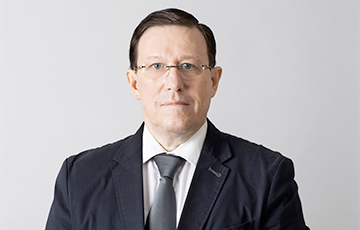
Arkady Moshes , Director of Research Programs on Russia, Eastern Europe, and Eurasia at the Finnish Institute of International Affairs , in an interview “Filin” about what the Belarusian-American track will look like in new political realities in the U.S..
“After the midterm elections, the depth of the internal crisis in the U.S. became clearer,” noted political analyst Arkady Moshes. — The war in Iran, the insane trade and economic confrontation with countries like Canada—which has never happened before and should never have happened—are consequences of the Trump administration. Americans have a bull in a china shop.
There’s a chance that Congress will now seriously set out to fix the mess Trump has created; perhaps they’ll try to repeal certain measures, but they won’t be able to undo everything or turn back the clock.
— However, it’s important to note that they created this mess themselves and are now trying to fix it on their own. And what about relations with Belarus?
— Lukashenko has outlasted many U.S. presidents; it’s not out of the question that he’ll outlast Trump as well. As for the Belarus-U.S. situation, I think attention to it will wane significantly now.
It will depend on two strategic factors. The first is how U.S. relations with Russia develop. And the second is, of course, any progress toward peace in Ukraine.
If the context surrounding these two issues begins to change, Belarus will remain on the agenda for a while. If, however, the Middle East—with its economic implications—and China come to the forefront, the post-Soviet space will, accordingly, recede into the background.
At the same time, if the Russian-American track does continue, the question of what to do about Belarus will inevitably arise. Of course, they could leave the matter entirely up to Russia and stay out of it.
— Could the release of our political prisoners come up in some context?
— In my view, Cole’s mission has already run its course. After the last exchange, which was clearly a failure, I assumed they’d find him another job. That’s exactly what happened.
He may become a special representative for hostage affairs. His mandate will apparently expand to a global scale. But at the same time, the “Cole equals Belarus” association has weakened significantly.
Now, inevitably, the question of the U.S. Secretary of State will arise. It is unlikely that this position, which must be confirmed by Congress, will remain with Rubio.
If there is a new Secretary of State, changes may occur throughout the entire foreign policy apparatus, including among special envoys, and Cole may even be removed at some point.
All the more so, as he said, he has nothing to boast about after the final stage of his work in Belarus: they started by freeing hundreds, but ended up with only dozens.
— But freeing people has always been a priority of U.S. foreign policy, no matter who’s in power.
— They could exchange their own citizens, but I don’t recall them ever releasing hostages en masse for other countries. It’s a very thankless job.
It’s one thing to free someone of the stature of Nelson Mandela. What other kind of release would win points with voters?
— There was even talk of releasing all political prisoners from Belarus.
— All sorts of things have been discussed at one time or another. Trump even wanted to end a war in half an hour. I wouldn’t get my hopes up just yet.
Another thing is that the “Belarus Democracy Act” (Belarus Democracy Act), which is enacted by Congress.
Since 2004, it has not been repealed, but only expanded and reaffirmed. It turns out that the majority of members of Congress—even those from previous sessions—had no disagreements regarding Belarus. They had no intention of cooperating with Lukashenko.
Most assumed that doing business with regimes that use political prisoners as “currency” is a losing proposition from the start, because some will be released while others will be imprisoned.
Trump was not among these people; he was characterized by cynicism, but not pragmatism. As I’ve already said, he began releasing people—starting with hundreds, but ending with dozens.
— And what’s in store for the high-profile potash fertilizer deal?
— I think the same thing as with deals involving Russia. What happened to Russian diesel? Everyone is afraid to buy it, fearing that Congress will pass a new law, and those who took the risk of trading with Russia will face problems.
They may fear lengthy, protracted legal battles. I think the same concerns are arising regarding Belarusian potash fertilizers. The volumes there are negligible, and Europe has refused to facilitate this transit—and it won’t change its position.
— As for Europe, the voices of those calling on the EU to continue freeing people—either alongside the U.S. or even in place of the U.S.—are growing louder. How do you assess this prospect?
— There is some chance of this happening, but it’s small. I think there is no unified position in Europe on this issue, because there are countries that, by and large, don’t care, and there are those that do care, but they generally take a well-known stance.
First and foremost, the neighboring countries will play a key role here: Lithuania’s position is clear, Latvia’s is even more radical, and while there seemed to be some hints from Poland, overall nothing has changed.
In other words, if the immediate neighbors don’t see any practical point in “trading political prisoners,” then I don’t think the Germans or the French, for example, will push the issue very hard, because they have other things to worry about.

Bank's name: Bank Millennium S.A.
Address: ul. Stanislawa Zaryna, 2A, 02-593, Warszawa
IBAN: PL97116022020000000216711123
SWIFT: BIGBPLPW
Name of the account holder: Fundacja “KARTA ‘97”
Purpose/title of payment: Donation for statuary aims
You can contact us by the e-mail charter97@gmail.com