

Out Of Fear, Lukashenko Started Singing A Different Tune
36- 16.06.2026, 14:56
- 30,544
He doesn't want to be a co-aggressor anymore.
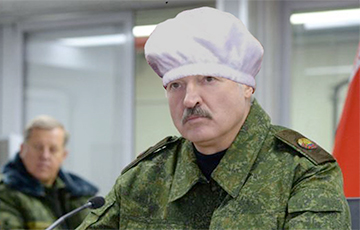
In an interview with Al Arabiya, Alexander Lukashenko spoke at length about the unacceptability of dragging Belarus into the war in Ukraine. Suddenly, he remembered his alleged Ukrainian roots again. He spoke of the close ties between Belarusians and Ukrainians.
And also about the fact that “Belarus is as clear as day to the Ukrainian military”: “We understand perfectly well that our main life-support facilities—industrial and logistical—will come under attack. As they stated, they have already identified 500 such targets on Belarusian territory,” writes “Solidarnast”.
He did not forget to mention the length of the border between our countries, making a candid admission that is unlikely to be met with enthusiasm in the Kremlin:
“The front line for Russia first and foremost (and, of course, for us as well), if it were to attack Kyiv from Belarusian territory, would be extended by 1,500 km along the Belarusian-Ukrainian border. Given the current course of the war, we and the Russians will not be able to ensure the defense of this section.
And yet, ‘if events unfold this way, NATO countries supporting Ukraine could deploy their troops there…,’ he stated.
In short, the Belarusian leader is making it abundantly clear with his every gesture just how little he wants this war.
But we remember very different statements and tones. And today, when certain individuals are trying once again to squeeze into the role of peacemaker, it is high time to refresh our memory of them.
At first, Lukashenko clearly did not relish the status of co-aggressor. He even tried to justify himself, claiming that he himself “heard about the invasion on February 24, 2022, from the news.”
But by the end of that same year, he was singing a completely different tune. While hosting the Kremlin leader in Minsk, he openly mocked the legitimate accusations against him:
“There isn’t a single issue today that we haven’t resolved. We are reaching out to the Russian Federation. At the most difficult moment. Well, you know, the two of us—we’re co-aggressors, the most harmful and toxic people on this planet. We have only one disagreement: who’s worse.
Vladimir Vladimirovich says it’s me. I’m starting to think it’s him. We’ve decided that together, we’re the same. That’s all. And if anyone thinks they can tear us apart today, drive a wedge between us—it won’t work.”
In April 2024, during yet another visit to Moscow, he spoke of complicity in the war as if it were routine: “I’m not denying that we are ‘co-aggressors.’ Everyone does their part. But I’ll say this straight: neither I nor Putin want the Ukrainian people, our brothers, to suffer. We don’t want that!”
The mood began to shift in 2025. Speaking in Moscow at the Global Nuclear Forum in September, he noted an alarming trend:
“You know the situation Russia is in—and we are part of it. There’s no end to what they’re writing and saying about us today, calling us all sorts of names. We’re aggressors, co-aggressors, and so on. To be honest, Russia, like all the other countries present here, has more than enough problems.”
By the end of 2025, when it had become absolutely clear that Kyiv could not be taken in three days or even three years, Lukashenko was forced to reassure Moscow that they were still in the same boat: “President Putin and I have clearly agreed: we help each other. ‘Aggressors,’ ‘co-aggressors’—it doesn’t matter what they say about us.”
And by early June 2026, the status of an accomplice in someone else’s war of aggression had clearly begun to weigh on him: “The main thing I want to tell you is this: if anyone tries to convince you that we are warriors, not peaceful people—don’t believe them.
We have no intention of fighting anyone—only friendship. We do not set out to fight—we want to be peaceful people; we want to live in peace.
I want this to be firmly understood in western Belarus, in Grodno: we want peace; we bring peace to the peoples. We are neither aggressors nor co-aggressors.”

Bank's name: Bank Millennium S.A.
Address: ul. Stanislawa Zaryna, 2A, 02-593, Warszawa
IBAN: PL97116022020000000216711123
SWIFT: BIGBPLPW
Name of the account holder: Fundacja “KARTA ‘97”
Purpose/title of payment: Donation for statuary aims
You can contact us by the e-mail charter97@gmail.com