


Is Nabiullina Leaving?
4- 19.06.2026, 13:29
- 3,026
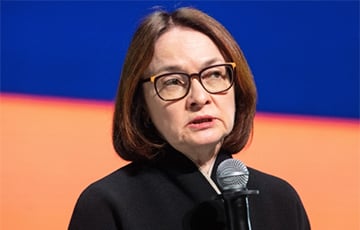
Photo: globallookpress.com
Russian authorities have begun discussing personnel changes at the Central Bank.
Russian leaders have begun discussing potential candidates for the position of Central Bank chairman, as well as possible reforms of the institution itself. According to the Financial Times reports, citing informed sources, these discussions have intensified amid circulating rumors of the impending resignation of Elvira Nabiullina.
Nabiullina’s third term as head of the regulator—a position she has held for the past 13 years—expires in 2027. By law, this will be her final term. The FT’s sources name the president’s economic adviser Maxim Oreshkin or the head of the defense-linked Promsvyazbank Pyotr Fradkov as the most likely successors. However, a final decision has not yet been made, and the publication’s sources do not rule out the possibility that Vladimir Putin may find a way to reappoint Nabiullina for a fourth term.
Meanwhile, the Central Bank governor’s absence from the public eye—which has lasted nearly a month, including her absence from the St. Petersburg Economic Forum—was caused solely by health issues; according to sources, she suffered from a severe respiratory infection. The president continues to trust the head of the Central Bank. Nabiullina and Sberbank CEO German Gref remain key technocrats who provide the Kremlin with an objective economic assessment. However, as noted by a former Kremlin official and sources in Western intelligence, despite their internal disapproval of current geopolitical events, neither Gref nor Nabiullina have called for a halt to military operations or cuts to the defense budget.
At the same time, a radical restructuring of the financial sector is being discussed behind the scenes. In particular, consideration is being given to stripping the Central Bank of its “mega-regulator” status, with its functions subsequently distributed among other government agencies, as well as shifting the Central Bank’s focus away from strict control over inflation. According to sources, the Russian president himself is currently fully absorbed by military operations, and it is unclear whether the initiative for changes at the Central Bank originated from him personally.
Elvira Nabiullina, 62, previously recognized as the world’s best central bank governor, has faced harsh criticism from officials and big business. This was due to a sharp increase in the key interest rate in 2024 to combat war-induced inflation (which peaked at 21% and had fallen to 14.5% by June 2026). This strict regulation failed to prevent an economic downturn, which in early 2026 showed a decline for the first time in three years.
The main complaint large businesses have against the Central Bank is the excessively strong exchange rate of the national currency. Because of this, domestic manufacturers—from machine builders to tire companies—are losing their competitiveness in the domestic market to cheap imports. Industrialists proposed that the Bank of Russia administratively fix the dollar exchange rate at a certain level, but Nabiullina categorically rejected this move, calling it fundamentally flawed and likely to trigger a new round of inflation.
Although Vladimir Putin has not publicly criticized the Central Bank governor, he has described the excessively strong ruble as a “sad” problem and expressed hope for further easing of monetary policy. According to the FT, Nabiullina’s hypothetical departure would be a tectonic shift for the Russian economy, which she has so far successfully kept afloat amid harsh sanctions and colossal military spending.

Bank's name: Bank Millennium S.A.
Address: ul. Stanislawa Zaryna, 2A, 02-593, Warszawa
IBAN: PL97116022020000000216711123
SWIFT: BIGBPLPW
Name of the account holder: Fundacja “KARTA ‘97”
Purpose/title of payment: Donation for statuary aims
You can contact us by the e-mail charter97@gmail.com