
NYT: In Russia, People Are Terrified To Say The Word "War"
7- 30.06.2026, 8:02
- 2,866
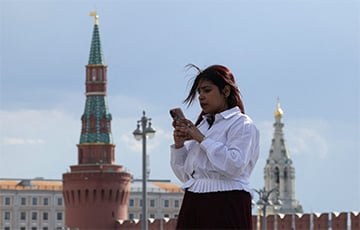
The sirens remain silent even during attacks.
Russians are increasingly finding that the authorities are concealing the true extent of the war’s consequences—from fuel shortages to drone attacks on Moscow, writes The New York Times.
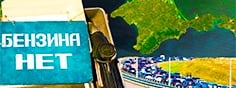
The point is that in Russia, the war is still officially referred to as a “special military operation,” even though it is described as the largest conflict in Europe since World War II. Officials attribute the fuel shortage to “unscheduled repairs at oil refineries,” without specifying that the cause was Ukrainian drone strikes on oil refineries.
According to available reports, Putin did not comment for several days on the large-scale drone attack on Moscow on June 18, when Ukraine deployed nearly 200 drones. He also remained silent when the Ukrainian side vowed to turn occupied Crimea into an “island,” methodically striking it with drones and missiles.
When Putin finally spoke out, he blamed the West for the attacks.
“These drones, these strikes on civilian infrastructure—what are they for? To destabilize society and create uncertainty regarding the actions of the Russian armed forces,” he said.
At the same time, fuel shortages had already been reported in at least 56 regions of the country, according to Mediazona.
It was only on Sunday that Putin publicly acknowledged the fuel problems, stating the need for “systemic measures commensurate with the scale of the current challenges.” According to him, a special task force is working around the clock to ensure supplies, especially for the agricultural sector.
Despite this, the authors argue that Putin has not publicly ordered the preparation of bomb shelters or early-warning systems in case of new attacks. In the Moscow suburbs of Kotelniki and Lyubertsy, which were hit by drones in mid-June, local authorities refused to disclose the locations of shelters or use sirens, explaining that the country is not formally at war. They promise to make such information public only “during mobilization and wartime.”
The head of Bashkortostan—a region with a population of four million people, where Ukraine has attacked oil refineries—stated that the authorities deliberately do not always sound the sirens so as “not to stress people out” —and even mentioned the rise in antidepressant use in Russia. And after a drone strike in the Yaroslavl region in late March, which killed a child and injured three adults, a local newspaper reported that the warning system was not activated “to avoid panic and further trauma.”
According to Alexandra Arkhipova, a social sciences researcher at the École Normale Supérieure in Paris , downplaying the danger and using euphemisms is a kind of “demonstration of submission” to Putin’s regime. She compiled a list of new military euphemisms: instead of “explosion,” they say “bang”; instead of “killed,” “deprived of life”; and instead of “drone,” “air target.”
“Russian political authorities are currently entirely focused on the image presented in the news,” Archipova noted, adding that it is important for the authorities to prevent panic, which could be shown on local and then federal television—with crowds of people crying and running through the streets.
As the article states, state-owned airlines also resort to linguistic tricks: instead of saying “the flight is delayed due to drones,” airports in Sochi or Krasnodar refer to the “actual schedule” or “schedule adjustments”. And when Moscow airports are temporarily closed due to attacks, officials say that flights are being accepted “by agreement”—and passengers are told the delay is due to problems with an incoming flight, not an attack on the city.
The researcher calls this practice “neutralization”—deliberate ambiguity.
“People may realize that something is happening, but exactly what—that remains unclear,” she explained.
Maria, a 25-year-old resident of Ryazan (her last name is withheld due to fears of persecution), said she was stuck in a taxi because of a traffic jam that doubled the time it took her to reach the city center. The news reports did not mention the cause—only the driver explained that there had been a collision with a drone and that the road was being cleared of debris.
“Drones have become something of a taboo,” she said, adding that she has stopped watching the news altogether since then.
According to Tatyana Stanova, a senior research fellow at the Carnegie Center for Russia and Eurasia Tatyana Stanova, the gap between what Russians see with their own eyes and what the authorities tell them is a “problem” for the Kremlin, though it is unlikely to undermine the regime’s grip on power. In her view, if the attacks continue, the Kremlin will most likely try to use them to stoke anti-Western and anti-Ukrainian sentiment and justify further escalation.

Bank's name: Bank Millennium S.A.
Address: ul. Stanislawa Zaryna, 2A, 02-593, Warszawa
IBAN: PL97116022020000000216711123
SWIFT: BIGBPLPW
Name of the account holder: Fundacja “KARTA ‘97”
Purpose/title of payment: Donation for statuary aims
You can contact us by the e-mail charter97@gmail.com