

Ukrainian Drones Have Inflicted Unprecedented Damage On Russia
- 11.07.2026, 20:57
- 2,276
It would have taken the U.S. years of strategic bombing to achieve a similar result.
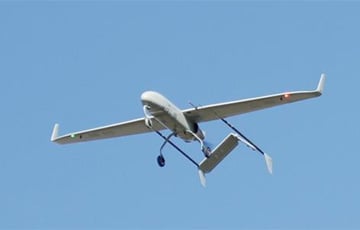
Ukraine’s widespread use of medium- and long-range drones caught Russia off guard, even though the war has been going on for five years now. However, it seems that no one in the world is prepared for this level of threat. This is discussed in an op-ed for Fox News, the vice president of the Texas Foundation for Public Policy and retired U.S. Army Lieutenant Colonel Chuck DeVore.
The author notes that Russia continues to regularly launch missile strikes and drone attacks on Ukrainian hospitals and residential buildings. According to him, such attacks are not highly effective militarily and are more reminiscent of campaigns to intimidate the civilian population, similar to the German raids on British cities during World War II. At the same time, as the publication writes, these attacks have not broken Ukraine’s resistance but have only strengthened its resolve to continue the fight.
Kyiv has also relied on the mass production and use of drones equipped with artificial intelligence and long-range cruise missiles. But, unlike the Russians, the Ukrainians systematically target military and military-industrial facilities—fuel convoys, ammunition depots, railway junctions, and bridges—which has significantly hampered the supply of Russian troops on the southern front.
The article states that these strikes have resulted in shortages of fuel, ammunition, water, and food for Russian units. “Ukrainian strikes have effectively placed a significant portion of the Russian southern front under a logistical lockdown,” the analyst writes.
DeVore pays particular attention to the campaign to destroy Russian oil refining and energy infrastructure. According to the expert, the intensity of the attacks has increased significantly in the last month alone, and their impact has been unprecedented.
“Kyiv has inflicted damage on Russian fuel production facilities equivalent to what it took the U.S. Air Force two full years of strategic bombing against Nazi Germany during World War II to achieve,” he noted.
According to the analyst, an acute fuel shortage is forcing Russian authorities to strike a balance in allocating this resource among the military, civilian transportation, freight transport, and the agricultural sector.
In addition, Ukrainian long-range weapons are increasingly targeting facilities that produce electronics and components for Russian missiles, as well as vessels of the so-called “shadow fleet,” which is used to export Russian oil in circumvention of sanctions.
According to DeVor, Russia’s current problems, caused by Ukrainian strikes, should serve as a warning to the United States. He notes that the U.S. Navy, including aircraft carriers, remains vulnerable to massive drone attacks from both the air and the sea—especially in port. Air bases, the energy sector, and other critical U.S. infrastructure also remain unprotected.
“Adversaries could launch such drone swarms from Cuba or Mexico, or from Chinese merchant ships sailing off our coast. America must learn these lessons quickly. The alternative is to learn these truths through our own bitter experience,” the analyst warns.

Bank's name: Bank Millennium S.A.
Address: ul. Stanislawa Zaryna, 2A, 02-593, Warszawa
IBAN: PL97116022020000000216711123
SWIFT: BIGBPLPW
Name of the account holder: Fundacja “KARTA ‘97”
Purpose/title of payment: Donation for statuary aims
You can contact us by the e-mail charter97@gmail.com