
Crimea Is Becoming An Unbearable Burden For Russia
- 11.07.2026, 19:28
- 1,484
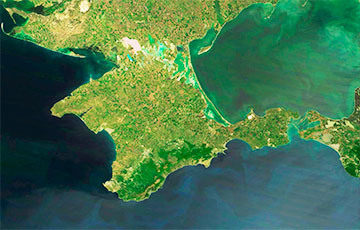
The Kremlin is concealing the true state of affairs on the occupied peninsula.
Russian authorities are increasingly avoiding the topic of Crimea—partly because the peninsula is becoming an unbearable financial, military, and social burden for them, and partly because this will make it easier in the future to avoid having to acknowledge the de facto loss of control over it. This was stated today, July 11, on the FREEDOM television channel by Eskender Bariev, head of the Crimean Tatar Resource Center .
In his view, the issue is not that Crimea has ceased to be important to the Kremlin, but that it is no longer the only priority.
“I think that, given the attacks by the Ukrainian Defense Forces across virtually the entire Russian Federation, Crimea is naturally beginning to take a back seat and receive less attention. But even so, I would say that they are still trying to pay attention to Crimea. And the fact that they are looking for ways to supply Crimea with, say, gasoline, and to maintain logistical supplies—for them, this remains very important nonetheless. “And perhaps the Russian authorities themselves are already trying to quietly push Crimea into the background—to the second or third tier—so that it will later go unnoticed that Crimea has been lost by the Russian Federation,” the guest on the program explained.
The silence on the air doesn’t cancel out the costs—the bill for maintaining the peninsula is primarily charged to the federal budget.
“The point is that the 95 rubles in subsidies per liter of gasoline requested by Gauleiter Aksyonov—when it comes to compensation payments—amounts to 15,000 rubles if there’s no power for more than 48 hours, although there are also very clever loopholes there: if the power comes back on even for 5 minutes, the calculation starts from the moment the power returns. But, again, this is the federal budget, which is why I said that Crimea is becoming an ever-greater burden for the Russian Federation, and they won’t be able to sustain it for long,” — Bariyev noted.
Added to this line item is another, far less public one.
“When we talk about supplying troops in Crimea (both personnel and equipment), they have really crammed Crimea full of military equipment, and a great deal of it remains there to this day. At the same time, they continue to launch attacks on Ukraine from Crimea—albeit to a lesser extent—but they continue. They have fewer resources to sustain these operations, and so all of this has an overall impact,” the expert explained.
The most telling indicator, however, is not the budget but the tourist season—which previously served as a showcase of normalcy and brought in a certain amount of revenue.
“Overall, we can say that the tourist season has been completely derailed, but even so, there are still instances when tourists come to Crimea—this is the case, at least, in Sudak, because they don’t travel any further south or west in Crimea. And that’s why we see completely empty beaches in Saki and Yevpatoria. Moreover, the beach infrastructure there resembles not so much beaches or recreational areas as defensive systems,” Bariyev commented.
The few who do decide to make the trip also have to contend with logistics that work against them.
“The logistics themselves have become more complicated. You have to take a bus to Kerch in order to continue on to Russia by train, or vice versa. And the schedules for these buses change frequently, and for some reason, they often send the bus out earlier than planned. People buy their tickets—and there are a lot of complaints from Russian tourists that they arrive to board their bus, only to find that the bus has already left, and they have to wait a whole day just to get back to Kerch, so they can somehow catch the train for which they had previously bought tickets,” he said.
But the most telling sign that the authorities have written off Crimea as a resort for the entire upcoming season is the fate of children’s summer camps.
“We’re seeing another issue: people who booked and purchased tickets in advance—especially for children’s camps—and as we’ve mentioned repeatedly, children’s facilities won’t be operating at all until September, for the entire season. They are closed throughout Crimea, and that amounts to at least 1,100 such health and recreation facilities of various levels. And now there’s a process underway to withhold refunds for those who previously paid, for example, 75,000 rubles for a health program or a child’s vacation, and a great many complaints are already emerging in Russia itself regarding this issue. “This is a sign that they no longer view Crimea—and are viewing it less and less—as a place where they can vacation and spend the summer,” Bariyev concluded.

Bank's name: Bank Millennium S.A.
Address: ul. Stanislawa Zaryna, 2A, 02-593, Warszawa
IBAN: PL97116022020000000216711123
SWIFT: BIGBPLPW
Name of the account holder: Fundacja “KARTA ‘97”
Purpose/title of payment: Donation for statuary aims
You can contact us by the e-mail charter97@gmail.com