


The Telegraph: This Is A Death Knell For Russia's Air Defense System
- 14.07.2026, 8:47
- 10,616
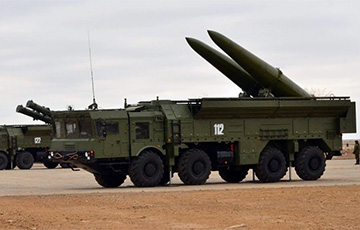
New goals are on the horizon.
Ukrainian drones flew about 2,400 km over Russian territory and struck the Omsk oil refinery—the flight lasted more than 12 hours. According to The Telegraph, this is the farthest attack by Ukrainian forces to date, comparable in distance to three flights across the entire United Kingdom.
The strike demonstrated that targets previously considered invulnerable due to their distance from the front lines are now within striking range. And Moscow has no quick way to remedy this: not only Siberian oil refineries but also military bases and the country’s largest liquefied natural gas terminal are now under threat. As a result, the Kremlin is forced to find ways to protect hundreds of new facilities, which places an additional strain on the already limited air defense resources and the slow pace of weapons production.
Why Air Defense Is Falling Short
According to the publication, the Omsk plant did not have a dedicated air defense system at all. The reason is simple: the country’s vast size makes it impossible to equip every strategically important facility with anti-aircraft systems—the main air defense forces are concentrated around major cities and the front lines.
Expert Kyle Glen, in a conversation with the publication, noted that the Russian system is built around Moscow and, possibly, St. Petersburg, while everything beyond this “first line of defense” effectively remains unprotected.
There is also a technical issue: the air defense system was originally designed to intercept NATO aircraft and ballistic missiles, not slow, low-flying swarms of drones with atypical radar signatures.
Range Will Increase
As noted by the manufacturer, Fire Point, the flight range of its FP-1 drones reaches approximately 2,100 miles (about 3,380 km), and the company produces about 200 such drones per day at a price of about $50,000 per unit. Missile technology expert Fabian Hoffmann suggested that the range of these drones could well increase to 4,000 km or more.
Potential targets in the future include Russia’s largest LNG plant in Yamal, as well as pumping stations that transport increasingly scarce oil across the country.
Putin had previously announced plans to expand air defense systems in response to Ukrainian strikes, and this week called for the construction of small-scale oil refineries. However, as noted by Thomas Whittington, a research fellow at the Royal United Services Institute , this is more of a long-term measure—rather than a response to an immediate threat. Expanding the number of air defense systems requires money, components, and industrial capacity, and every new battery means resources diverted from the front lines.

Bank's name: Bank Millennium S.A.
Address: ul. Stanislawa Zaryna, 2A, 02-593, Warszawa
IBAN: PL97116022020000000216711123
SWIFT: BIGBPLPW
Name of the account holder: Fundacja “KARTA ‘97”
Purpose/title of payment: Donation for statuary aims
You can contact us by the e-mail charter97@gmail.com