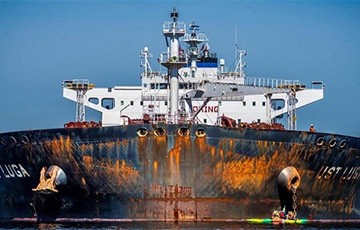


India's State-owned Oil Refineries Have Refused Russia's Request To Increase Gasoline Supplies
2- 16.07.2026, 20:41
- 1,140
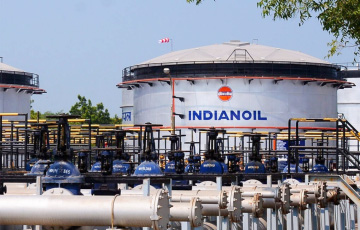
Officials in New Delhi stated that there are no surplus volumes available for export.
India's three state-owned oil companies, which Russia had asked to increase gasoline supplies, stated that they do not have any surplus fuel available for export. This was reported by Reuters citing sources at Indian refineries.
According to Reuters’ sources, Rosneft and Gazprom Neft—which supply oil to the Indian market—have approached Indian companies with requests for additional gasoline shipments. The Russian oil companies made the requests to both private and state-owned Indian refineries. Among the latter, the largest are Indian Oil, Bharat Petroleum, and Hindustan Petroleum.
Currently, only two shipments of Indian gasoline are heading to Russia. Both were sent by Nayara Energy, in which Rosneft holds a 49% stake.
42,000 metric tons of its gasoline from India’s largest refinery, Vadinar, were loaded onto the tanker Agni on June 18–20 and then transshipped to the vessel Garnet off the coast of Egypt. The gasoline is expected to arrive at the port of Vitino in the Murmansk region on July 26. According to Reuters sources, another tanker (the Varg) carrying gasoline destined for Russia is currently heading toward the Suez Canal, where the fuel will be transshipped to another vessel that will deliver it to one of Russia’s ports.
In total, India will supply less than 100,000 metric tons of gasoline to Russia, while the shortage of petroleum products on the market reaches 400,000–600,000 metric tons per month, according to an estimate by Energy Intelligence. Imports from Belarus and Kazakhstan cover roughly half of this shortfall. According to Reuters, Belarusian refineries are shipping 5,000–6,000 metric tons of gasoline to Russia per day. Kazakhstan has agreed to send 50,000 metric tons as part of humanitarian aid.
According to Energy Intelligence’s calculations, due to strikes on oil refineries in Russia, about half of the country’s refining capacity is idle, and its total output has fallen to 3.53 million barrels per day, which may be the lowest level since the early 2000s. It won’t be possible to quickly restore fuel production, according to Reuters sources: it will take two months, provided that no additional refineries have to be shut down.

Bank's name: Bank Millennium S.A.
Address: ul. Stanislawa Zaryna, 2A, 02-593, Warszawa
IBAN: PL97116022020000000216711123
SWIFT: BIGBPLPW
Name of the account holder: Fundacja “KARTA ‘97”
Purpose/title of payment: Donation for statuary aims
You can contact us by the e-mail charter97@gmail.com