

Uzbek Uprising In Belarus: The Authorities Didn't Expect This
9- 18.07.2026, 8:14
- 8,334
They decided to defuse the scandal using a combination of approaches.
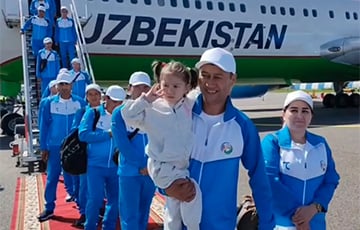
As soon as they arrived in Belarus, Uzbek migrant workers recorded a video in which they expressed their dissatisfaction with the reception conditions. The Belarusian authorities set about quelling this outburst to the best of their ability. But they are powerless to resolve the systemic problems that fundamentally call into question the effectiveness of recruiting migrant workers.
On July 9, during talks in Minsk , Alexander Lukashenko urged Uzbekistan’s President Shavkat Mirziyoyev to encourage his compatriots to come to Belarus to work as families: ““We love Uzbeks here…” and so on.
On the same day, the governments of the two countries signed an agreement on the “organized recruitment and employment” of Uzbek citizens for “temporary work in Belarus”.
On July 14, Lukashenko was already discussing the issue in concrete terms “on the ground”—in the Vitebsk Region—with Shukhratbek Abdurakhmanov, the hokim of the Andijan Region. Plans are in place to transfer 5,000 migrant workers from this overpopulated Uzbek region to the Vitebsk region. 255 have already arrived.
The authorities partially accommodated the guests. But they also clarified a few things
And it was precisely these people who, upon encountering Belarusian realities, immediately rebelled.
In a video addressed to the hokim, they complained that they had been housed in a rather scary dormitory, that their wages were lower than promised, and that they would have to pay for their own housing and meals. After that, they said, they’d be left with such a pitiful amount of money that flying all the way to the ends of the earth for this made no sense at all. So, they said, you might as well send us back home.
The Belarusian authorities—who have used truncheons to enforce obedience within their own country—clearly did not expect such defiance from workers from a country with a harsh authoritarian regime.
On top of that, it smacked of a second problem following the failed attempt to recruit labor from Pakistan.
They decided to quell the scandal using a combination of measures. On the one hand, they sort of promised the discontented workers a pay raise, free food, and free housing. To resolve the issue, top civilian officials were dispatched — Natalia Kochanova and Igor Sergeenko, who traveled to Novopolotsk and the Gluboksky District, respectively.
On the other hand, Interior Minister Ivan Kubrakov actively joined the effort with his “handsome men.”
At a special meeting at the Internal Affairs Directorate of the Vitebsk Regional Executive Committee, the minister stated: “We need to explain the specifics of our legislation to the citizens of Uzbekistan. This must be done without fail, starting at the airport.”
Of course, conducting “outreach” using the same methods as those employed against participants in the 2020 mass protests—that is, beatings and torture—is simply not appropriate in the case of invited foreign nationals: it smacks of an international scandal.
However, some form of psychological pressure certainly took place. In any case, as early as July 16, the new arrivals recorded a video with a completely different tone: everything’s okay, no complaints.
Not all of a nation’s problems are solved by fattening up calves
Probably, the local officials who received the first groups of Uzbeks assumed that they would put up with conditions worse than those in contract labor: after all, these people aren’t spoiled and certainly aren’t used to asserting their rights back home. But the guests turned out to be bolder than expected.
And local officials, no doubt fearing the wrath of Lukashenko—who had already promised Mirziyoyev a paradise for his subjects—were forced to make concessions. The Uzbeks claim that instead of $500, they were promised $700 (though initially the talk was of $900–1,000).
But by no means do all Belarusian villagers earn even $500. If the arriving migrants are paid one and a half to two times more than the locals for the same work, this could spark discontent even among the locals themselves. Moreover, the success of this revolt—in the eyes of the authorities—sets a bad example for Belarusians.
And besides, will all organizations—especially unprofitable ones—be able to sustain such wage levels?
Here, the issue comes down to the specifics of the economic model. In particular, Lukashenko has been “revitalizing the countryside” for four decades, but he just can’t seem to get it off the ground, since he continues to think like a state farm director from the 1980s.
Even in Russia, wages are higher than in Belarus. And it’s more appealing for an Uzbek to head there—or to Kazakhstan or Turkey. And EU countries are starting to take an interest in Uzbek migrant workers.
So it will be difficult to use them to fill the gaps in the Belarusian labor market. Moreover, we’re mainly talking about niches for workers who aren’t highly skilled.
Meanwhile, people have left Belarus and continue to leave—some for political reasons, some for economic reasons (or a combination of both)—and, as a rule, intelligent, enterprising, and proactive individuals with high levels of expertise in cutting-edge industries and other fields.
Young people are leaving—people who could benefit their homeland while also helping to solve the demographic problem. And so is the creative elite, who may not fatten up calves, but who sustain the spirit of the nation.
Yes, the authorities are trying to alleviate the severity of staffing problems, but this resembles palliative care: it can alleviate the symptoms, but it does not eliminate the causes of the disease.
Because the root of the problem lies in the nature of the system to which Lukashenko continues to cling tenaciously.
Alexander Klaskovsky, “Pozirk”

Bank's name: Bank Millennium S.A.
Address: ul. Stanislawa Zaryna, 2A, 02-593, Warszawa
IBAN: PL97116022020000000216711123
SWIFT: BIGBPLPW
Name of the account holder: Fundacja “KARTA ‘97”
Purpose/title of payment: Donation for statuary aims
You can contact us by the e-mail charter97@gmail.com