

The U.S. May Allow Saudi Arabia To Acquire Nuclear Weapons
7- 19.07.2026, 14:18
- 2,308
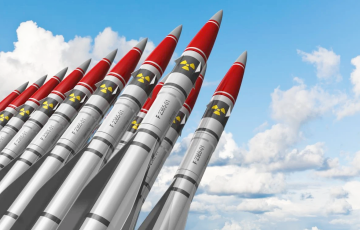
Prince Mohammed bin Salman has stated that his country wants to acquire a nuclear bomb.
The administration of Donald Trump has tentatively agreed to allow Saudi Arabia to enrich uranium without being subject to international safeguards designed to prevent the development of nuclear weapons. This was reported by CNN citing sources and documents it reviewed. The document in question is a draft nuclear agreement that would provide U.S. support for Riyadh’s civilian nuclear program.
According to two sources, the document has been awaiting the president’s signature for over a year, and its approval was delayed due to the war against Iran, which Trump explained, in part, as necessary to prevent Tehran from acquiring nuclear weapons. Some members of Congress also believe that the White House is delaying the signing out of fear of a bipartisan resolution that could block the initiative.
Experts interviewed by the channel warn that, in the absence of strict restrictions, the agreement could pave the way for Saudi Arabia to develop its own nuclear weapons. Crown Prince Mohammed bin Salman has previously stated that the kingdom would acquire a nuclear bomb if its main regional rival—Iran—were to do so.
As CNN notes, the draft agreement does not require Riyadh to sign the International Atomic Energy Agency (IAEA) Additional Protocol, which provides for enhanced inspections. Instead, it proposes concluding a bilateral safeguards agreement between the United States and Saudi Arabia.
In a report to Congress, the Trump administration asserted that these measures would cover the “most sensitive areas from a nonproliferation perspective”—enrichment, conversion, fuel fabrication, and reprocessing. However, the specific terms of the deal have not yet been made public, the channel reports.
Compared to the 2009 agreement between the U.S. and the United Arab Emirates, which is considered the “gold standard” of nuclear cooperation, the current proposal appears significantly less stringent. At that time, the UAE voluntarily renounced uranium enrichment and reprocessing and agreed to expanded IAEA safeguards.
According to CNN, the possibility of uranium enrichment on Saudi Arabian territory without mandatory IAEA safeguards has already raised concerns among many members of Congress. A spokesperson for the Arms Control Association Kelsey Davenport noted that the creation of “individual” safeguards agreements could set a dangerous precedent, as it would allow Russia and China to offer other countries similar deals with less effective monitoring mechanisms.

Bank's name: Bank Millennium S.A.
Address: ul. Stanislawa Zaryna, 2A, 02-593, Warszawa
IBAN: PL97116022020000000216711123
SWIFT: BIGBPLPW
Name of the account holder: Fundacja “KARTA ‘97”
Purpose/title of payment: Donation for statuary aims
You can contact us by the e-mail charter97@gmail.com