


Taras Zagorodniy: Russia Is Heading For A Cascading Collapse
3- 28.07.2026, 16:40
- 9,900
For banks, this would be a real disaster.
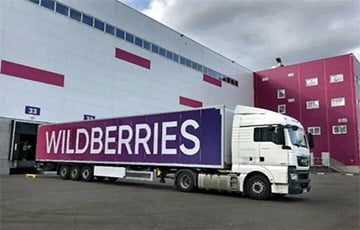
Following a series of strikes by Ukrainian drones on Wildberries’ logistics centers in Russia, there has been talk of a possible collapse of the largest marketplace. Russian oligarch Oleg Deripaska warned that the bankruptcy of the company, which is saddled with multibillion-dollar debts, could hit the entire financial system of the Russian Federation.
What real consequences for the Russian economy could the collapse of a giant like Wildberries have? How severely would this impact the Kremlin’s revenue and Putin’s ability to continue the war against Ukraine?
The website Charter97.org discussed this with Ukrainian political strategist and managing partner of the “National Anti-Crisis Group” Taras Zagorodniy:
— Let’s take a look at Wildberries’ financial statements. It’s all laid out there. The company’s debt totals 1.4 trillion Russian rubles. That’s debt.
Specifically, we’re talking about 500 billion rubles at VTB Bank. If this 500 billion becomes non-performing debt, it will create a massive hole in the bank’s balance sheet. The only way to plug that hole would be by printing money. And printing money means additional inflation. According to rough estimates, between three and four million people work on the Wildberries platform, including entrepreneurs. Consider that if the pressure continues, they may have to shut down their operations. At the same time, many of these people have taken out large loans.
The next problem relates to logistics. Wildberries is a fairly centralized company. According to various estimates, its turnover amounts to 15 trillion rubles. This is effectively 2% of Russia’s GDP and one-third of the Russian budget. The consequences will be enormous. First and foremost, this will deal a blow to the banking system. Even the Russian authorities acknowledge that the share of non-performing loans stands at 10%. I believe that in reality, it is already approaching 20%.
Wildberries could be the straw that breaks the camel’s back, triggering the collapse of the entire banking system. Banks’ balance sheets are loaded with loans secured by real estate and mortgages. Right now, the real estate market has slumped everywhere, both in terms of prices and sales volume. Developers are unable to service their loans. When oil refineries are not operating, they, too, fail to service their loans and other obligations. This creates additional problems for the banking system. Businesses are shutting down, people are being laid off, and other consequences are emerging.
All of this could trigger a cascading collapse of the banking system, which the Russian government will be forced to bail out by printing money to plug the holes in the banks’ balance sheets. Printing unbacked money signals the onset of hyperinflation. They are already actively printing money. The Russian government reports inflation at 6%, but in reality, it is already approaching 20%. If the authorities continue to flood the economy with money, Russia could reach levels that are already classified as hyperinflation within three months. And that would mean the collapse of the country’s entire financial system.
As for VTB Bank, it holds another stake, linked to a different marketplace, worth about 300 billion rubles. AFK Sistema has pledged its stake in Ozon as collateral for a loan. Meanwhile, Ozon’s shares have fallen by at least 12% on the stock market.
What does this mean? In the financial world, this is called a margin call. When shares are transferred to a bank as collateral, the contract always specifies the point at which, if their value falls below a certain threshold, the bank will require additional collateral or repayment of the loan. This loan may also be classified as non-performing.
This will deal another blow to VTB Bank. Just yesterday I read that restrictions have already been imposed on cash withdrawals, money transfers, and so on. And yet VTB is a systemically important bank in the Russian Federation.
All of this, taken together, creates very serious problems for the Russian economy. When there are three million entrepreneurs operating on the platform and no one knows which of them might go bankrupt, it affects payments. You no longer know whether it’s worth sending money to this person or whether you’ll receive goods or services in return. A payment crisis is beginning to grow within the Russian economy because trust in the economic environment is being lost. This is yet another blow. Wildberries could become the trigger for further chaos in the Russian economy, although it is already descending into chaos.
Ukraine has effectively damaged at least the majority of oil refineries on Russian territory. At the same time, it is cutting Russia off from the Azov and Black Seas. Ships have only just begun to call again at the “Sheshkharis” oil terminal in Novorossiysk, through which oil is exported.
The Sea of Azov is blocked. What does this mean? It means that the Volga-Don Shipping Canal—through which various goods, including oil from Tatarstan and Bashkortostan, were transported down the Volga—is blocked.This means no grain exports and no exports of ammonia and ammonium nitrate through the port of Taman. The feeder fleet—including “river-sea” class vessels—has also been disrupted. There are about two hundred such vessels. Ukraine is crippling yet another major cluster of Russia’s economic activity. For the Krasnodar Krai, this is one of the most significant clusters. Everything that is happening must be viewed in its entirety.
It is Wildberries that could deal the final blow to the entire logistics system on which this model relied. Make no mistake: the company is already dead. It is already being liquidated, although this has not yet been publicly announced.
What made Wildberries competitive? In part, thanks to its massive warehouses, which allowed it to handle large volumes of cargo. When you lose even 15%, let alone 20%, of your warehouses, you lose your competitive edge compared to Ozon and other platforms.
People are starting to shift their shipments to other marketplaces, overloading their logistics systems. Consider the company itself already dead. I’m certain that money is already being withdrawn from it on a massive scale. It’s just not visible yet, and no one is talking about it.
That’s why the problems for Russia are very serious. Banks have already accumulated a lot of non-performing loans. And they didn’t start hiding them yesterday or today. It all started last year, when problems with loan servicing arose. The Central Bank of Russia adopted a new approach: not to record delinquencies. A loan is already nonperforming, but it is not officially recognized as such. Instead, it is restructured. The borrower does not repay the principal but pays only the interest.
If such loans begin to be classified as nonperforming in Russia, banks will have to set aside corresponding amounts in reserves to cover them. For example, if the 500-billion-ruble Wildberries loan portfolio is recognized as non-performing, VTB Bank will have to urgently find 500 billion rubles and set them aside as reserves to cover potential losses. This is a massive problem.
Everything that is happening, of course, affects a huge number of Russians and entrepreneurs. People are losing their jobs, and sellers and buyers may not receive their money or goods. This is also a blow to the Russian military’s supply chain. Many dual-use goods were sold through Wildberries. There were other areas related to supplying the Russian military as well. So this is truly a serious problem.
— What other major targets in the Russian economy and logistics sector could Ukraine target next to further weaken the Kremlin’s ability to continue the war?
— Ukraine isn’t stopping its strikes. I wouldn’t rule out Ozon being next. I understand why it hasn’t been targeted yet. I looked at its ownership structure and saw that it involves Western capital. That’s why they’re leaving it alone for now. But I think it’s only a matter of time. Avito and Yandex Market could be the next targets. There’s also Pyaterochka, and there are assets owned by Alfa Group. In other words, there’s plenty of room to maneuver, so to speak.
But it’s important to understand that if one major player abruptly exits the market, the entire market begins to fall into disarray. It’s impossible to quickly reorganize logistics networks. Let’s also not forget about fuel shortages. When there’s no diesel fuel, it’s difficult to ensure the normal operation of Ozon and other existing marketplaces. It’s the same pattern all over again.
All these companies have loans. If operations grind to a halt, they won’t be able to service them. Wildberries’ annual turnover is about 15 trillion rubles, and all that money flows through the banking system.
If people stop buying through the marketplace and switch to cash payments, while simultaneously withdrawing money from Russian banks, the banking system will face a triple blow that is virtually impossible to withstand.
If Wildberries’ non-cash payments stop flowing into the banking system, it will be a real disaster for the banks. It’s essential to understand how all of this works together. This is real money and involves millions of people who buy consumer goods every day.
— Indeed, millions of shoppers and hundreds of thousands of sellers and entrepreneurs would suffer if Wildberries were to shut down. Could such a blow cause serious social upheaval and finally force Russians to connect the deterioration of their own lives with the war that Putin unleashed?
— Of course, this won’t lead to riots. But this situation is creating discontent and fostering the feeling that this is specifically Putin’s war.
To a greater extent, this is a blow to big Russian business and Putin’s inner circle, which understands that the country is simply hurtling toward disaster. Especially if the Americans pass the Graham–Blumenthal bill. Consider that if passed, it will remain in effect practically forever. When it comes to American money, try repealing a law like that later.
Many U.S. sanctions are imposed by presidential executive orders. In this case, however, we’re talking about a congressional decision that will be extremely difficult to repeal. Of course, not literally forever, but I don’t think it will be repealed within the next 50 years.

Bank's name: Bank Millennium S.A.
Address: ul. Stanislawa Zaryna, 2A, 02-593, Warszawa
IBAN: PL97116022020000000216711123
SWIFT: BIGBPLPW
Name of the account holder: Fundacja “KARTA ‘97”
Purpose/title of payment: Donation for statuary aims
You can contact us by the e-mail charter97@gmail.com