
About The New Peace Plan
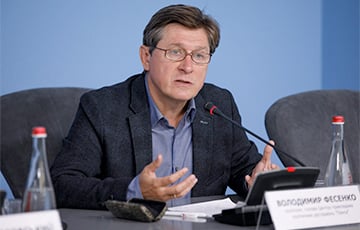
- Vladimir Fesenko
- 26.08.2026, 13:46
There's a certain buzz in the air again.
On August 24, 2026, the British newspaper *The Times* reported on a three-phase proposal developed by Ukraine, the United States, and European countries to freeze hostilities. The plan calls for an immediate ceasefire, a mutual withdrawal of troops, the creation of a demilitarized zone, and the provision of international security guarantees to Ukraine.
In fact, there is nothing fundamentally new about this plan. All of this was already discussed in various combinations back at the beginning of the year during trilateral negotiations. However, the issue is no longer about the unilateral withdrawal of Ukrainian troops from Donbas.
An important clarification: by all accounts, this is not yet a finalized “peace plan,” but rather a draft being coordinated by Ukraine, the U.S., and European partners, which they plan to present to Moscow. The article notes that Zelenskyy himself speaks of “proposals” and indicates that several more ideas are expected from the American side.
The Times links the emergence of these proposals to the visit to Moscow by the Vatican’s Secretary for Relations with States, Archbishop Paul Richard Gallagher, taking place from August 24 to 28. This visit is already underway; in particular, Gallagher has already met with Lavrov. The publication speculates that the peace proposals could be conveyed to the Russian side through the Vatican representative, although there is no official confirmation of such mediation.
However, this raises the question: why convey this plan through the Vatican when it would be more logical to convey it through American negotiators? In that case, there would be a better chance of it being considered and discussed.
Putin’s press secretary, Peskov, has already publicly rejected this plan. It is possible that it reached the Russian side even before this publication. Let me remind you that on August 22, Putin had already stated that he was receiving certain proposals through intermediaries to end the war, but he called them “exotic” and unacceptable. Perhaps he was referring specifically to these proposals.
What is important to understand in the context of the current state of negotiations? If the Kremlin perceives any peace initiatives as “Zelenskyy’s plan,” then that plan will have no chance of success. Under current conditions (primarily in the context of the air war), peace initiatives from Ukraine will be perceived by the Kremlin as a sign of weakness. And the response to them will not be an agreement to negotiate, but rather an intensification of military pressure on Ukraine.
The Vatican’s role as a mediator also offers no guarantee of success. For Putin, only Trump is of interest and importance. If the Americans present a new version of a peace plan, then some kind of discussion might be possible.
Some initially interpreted the news of a U.S. Air Force transport plane arriving in Moscow as a visit by Witkoff and Kushner, but when it became clear that it was CIA Director John Ratcliffe, the event began to be viewed as an emergency diplomatic mission. The issues surrounding the Russia-Ukraine war and the terms of its conclusion may be part of Ratcliffe’s negotiations in the Kremlin, but it seems to me that the main objectives of the CIA director’s visit to Moscow are actually different.
No matter what “peace plans” may emerge now, it must be understood that Russia will not agree to a ceasefire at this very moment. Right now and in the coming months, we are highly vulnerable to Russian ballistic attacks. And as long as the Kremlin holds this “trump card” (especially on the eve of winter and throughout the winter), they will hope to either win the war or force us to make significant concessions. We need to hold out during this period, and once Moscow realizes that its latest winter offensive has not brought victory, a window of opportunity for new peace talks will open.
Therefore, in my view, we should not expect any positive breakthrough in the negotiation process over the next six months. But this does not mean that we should not make attempts to resume the negotiation process. However, only the Americans can do so now and in the near future.
Vladimir Fesenko, Facebook

Bank's name: Bank Millennium S.A.
Address: ul. Stanislawa Zaryna, 2A, 02-593, Warszawa
IBAN: PL97116022020000000216711123
SWIFT: BIGBPLPW
Name of the account holder: Fundacja “KARTA ‘97”
Purpose/title of payment: Donation for statuary aims
You can contact us by the e-mail charter97@gmail.com