

Reactors At France's Largest Nuclear Power Plant Shut Down Due To A Jellyfish Invasion
- 29.08.2026, 6:00
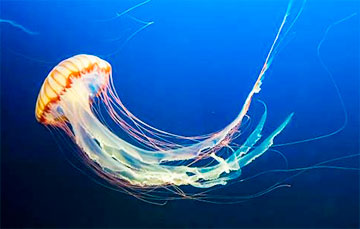
About 200 metric tons have accumulated.
The Gravelines nuclear power plant in northern France has temporarily suspended operations at two of its six reactors due to a massive accumulation of jellyfish that clogged the cooling system’s filters. According to the plant’s operator, EDF, approximately 200 metric tons of jellyfish have accumulated in the coastal waters of the North Sea off the coast between Dunkirk and Calais, disrupting the water intake.
Gravelin is the largest nuclear power plant in France and in all of Western Europe: each of its six reactors has a capacity of 900 MW. Currently, two reactors are shut down for maintenance, two others affected by the jellyfish infestation have been taken offline, and two more are operating at reduced capacity, so the plant is not operating at full load. This is not the first time such incidents have occurred at “Gravillines”: this month and a year earlier, reactors were also shut down due to jellyfish.
The French and European nuclear power industries have increasingly faced natural disasters in recent months. In July, EDF shut down the only operating reactor at the Golfech Nuclear Power Plant in southwestern France due to a heat wave and overheating of the water in the Garonne River, which made it unusable for cooling.
That same month, abnormally low water levels in the Danube forced authorities in Hungary and Romania to reduce output at their nuclear power plants. The Paks Nuclear Power Plant in Hungary, which accounts for half of the country’s total electricity generation and one-third of its consumption, reduced its output to 960 MW from the usual 2,000 MW. In Romania, at the sole Cernavodă Nuclear Power Plant—which accounts for about one-fifth of the country’s electricity generation—the first reactor was shut down due to deteriorating hydrological conditions.

Bank's name: Bank Millennium S.A.
Address: ul. Stanislawa Zaryna, 2A, 02-593, Warszawa
IBAN: PL97116022020000000216711123
SWIFT: BIGBPLPW
Name of the account holder: Fundacja “KARTA ‘97”
Purpose/title of payment: Donation for statuary aims
You can contact us by the e-mail charter97@gmail.com