
A Robot Assault Force, “Trojan” Armored Personnel Carriers, And Panic In The Russian Rear
- 30.09.2026, 14:24
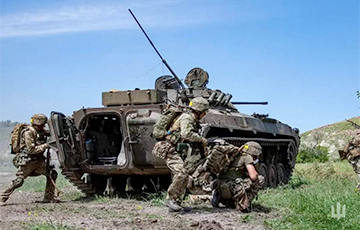
How is Operation "Vivaldi" going—the largest offensive by the Ukrainian Armed Forces since 2022?
The 3rd Army Corps of the Ukrainian Armed Forces (formerly the "Azov" Regiment) has published details of the offensive in the Lyman sector. According to OSINT analyst Clément Molen, the Ukrainian military has already managed to liberate twice as much territory as during the failed offensive in 2023, writes “We Can Explain”.
Operation “Vivaldi” began in May. Over the summer, the Ukrainian Armed Forces cut off the so-called “Shandrigolovsky salient” and eliminated the threat of Slavyansk being encircled from the north. The operation is currently ongoing—the Ukrainian Armed Forces are attempting to push Russian forces back across the Zherebets River, according to pro-Russian media outlets. The situation in this area is described as “extremely difficult” for the Russians. At the same time, according to the “Rybary” map dated September 28 and posts by other Z-channel authors, the Ukrainian Armed Forces have already crossed the Zherebets River and are fighting on its eastern bank.
The details currently being published relate to events from the summer months. The operation is being conducted under a ceasefire, so all information about it is being released with a significant delay. The map from the Ukrainian monitoring project DeepState still shows part of the Shandrygolovskyi salient, although in reality the front line is now presumably in the area of the Zherebets River.
During the offensive, the 3rd Army Corps used “Trojan APCs.” Old Soviet armored personnel carriers were loaded with explosives and equipped with remote-control systems, turning them into kamikaze drones. The Russian military thought reinforcements were coming their way—and did not fire on the approaching vehicles. Massive explosions destroyed the Russians’ fortified positions.
For the first time in history, ground robots (NRK) were deployed behind enemy lines using cargo drones—at a distance of up to 10 km (photo on the right). Once on the ground, they moved toward the positions and equipment of the Russian Armed Forces and detonated. This caused “chaos and panic” among the retreating Russian Armed Forces units, writes the Z-blogger.
The offensive was supported by a special team tasked with disinforming the enemy. “[It] collects data from all corps units, analyzes it, and calculates exactly what the enemy will believe. Their job is to create a picture on the battlefield that does not correspond to reality.” According to the commander of the 3rd Army Corps Andrei Biletsky, this was successful: “The enemy was convinced that the main direction of the attack was Shandrigolove–Zelenaya Dolina. This forced them to pointlessly expend their reserves on counterattacks in that very direction. The Russians missed the actual strike, which was focused on capturing Novoye.”
The Ukrainian side estimates Russian Armed Forces casualties during Operation “Vivaldi” at 5,000. 250 Russian soldiers were taken prisoner. Russian military correspondent Yuri Kotenok writes that one of the reasons for the collapse on the Liman front was unreliable reports: “They simply lied about flag-raising ceremonies, claiming to have liberated settlements that are actually controlled by the enemy.”

Bank's name: Bank Millennium S.A.
Address: ul. Stanislawa Zaryna, 2A, 02-593, Warszawa
IBAN: PL97116022020000000216711123
SWIFT: BIGBPLPW
Name of the account holder: Fundacja “KARTA ‘97”
Purpose/title of payment: Donation for statuary aims
You can contact us by the e-mail charter97@gmail.com