
Russia Refused To Discuss The Release Of Political Prisoners With Trump
2- 30.09.2026, 14:05
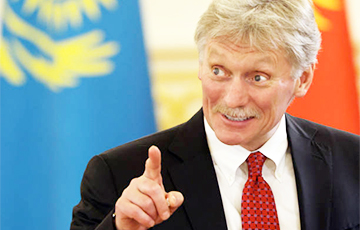
Photo: Getty Images
Peskov stated that there are “no prisoners of conscience” in Russia.
Russia is not negotiating with the U.S. to ease American sanctions in exchange for the release of political prisoners, said Putin’s press secretary Dmitry Peskov. “In this context, this issue has not been discussed and could not be discussed, because we categorically deny the existence of any political prisoners and consider such a framing of the issue to be completely inappropriate,” he said. At the same time, Peskov noted that the intelligence agencies of the two countries continue to maintain “regular contacts” regarding “various exchanges.”
The day before, The Atlantic reported that U.S. President Donald Trump had endorsed the idea of his special envoy for Eastern Europe John Cole to try to negotiate with Russia regarding the release of political prisoners in exchange for easing sanctions. According to the publication, the initiative arose after Cole’s meeting in May with the former editor-in-chief of *Novaya Gazeta* and Nobel Peace Prize laureate Dmitry Muratov. Trump’s envoy has already compiled a list of Americans in Russian prisons, and with Muratov’s help, a separate list is being prepared of dissidents, journalists, and others convicted for their anti-war stance.
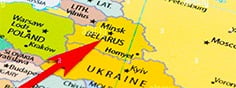
As a reminder, John Cole has served as the U.S. President’s Special Representative for Belarus since November 2025. Following his visit to Minsk on March 19, 2026, 250 political prisoners were released. In total, the U.S. has facilitated the release of more than 500 Belarusian prisoners. John Cole himself believes that this figure is much higher, since another two hundred people were released under pardons signed by Alexander Lukashenko.
“So the actual figure is approximately 700–800 people. I hope to bring that number up to a thousand soon,” Cole noted in a comment to Voice of America.
In an interview with the TV channel “Dozhd” in September 2026, John Cole stated that he would be working not only with Belarusian political prisoners but also with Russian political prisoners, as well as Ukrainian prisoners of war.

Bank's name: Bank Millennium S.A.
Address: ul. Stanislawa Zaryna, 2A, 02-593, Warszawa
IBAN: PL97116022020000000216711123
SWIFT: BIGBPLPW
Name of the account holder: Fundacja “KARTA ‘97”
Purpose/title of payment: Donation for statuary aims
You can contact us by the e-mail charter97@gmail.com