The Kremlin Is Not Accountable For Its Statements
4- 4.09.2026, 12:43
- 10,292
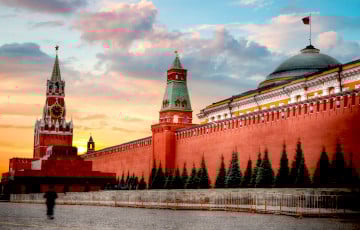
Moscow has lifted the taboo on its own opponents.
"Words don't come easy," sang the Tunisian Jew F. R. David in a popular hit from the 1980s. In diplomacy, it has always been this way: words were precious and left room for interpretation. Today’s Kremlin rhetoric is different, but the nuclear superpower does not expect to be held accountable for its words or actions.
In early 2025, Vladimir Solovyov declared on the air: “There are no good Ukrainians.”
At the time, it sounded like a staged outburst. On August 27, 2026, State Duma Deputy Speaker Pyotr Tolstoy proposed turning Ukrainian cities into scorched earth, and to give residents 24 hours to flee, in order to demoralize those who remained to the point where they would come out to greet Russian troops “with their paws raised.” He cast doubt on whether there were any innocent people among the more than 20 million civilians and immediately explained the purpose of it all: Ukraine is simply “a territory for exporting energy resources via a short route.”
The logic is all too familiar.
Under the “Ost” plan and Hitler’s “starvation plan,” Ukraine was merely a granary for the export of resources; the fate of the population was not a factor in those plans. In 1943, Goebbels justified total war precisely by blurring the line between soldiers and civilians. Tolstoy repeated this almost word for word. Moreover, he is probably unaware that attacks on civilians are classified as war crimes under international law, and admitting this true objective removes the only line of defense Moscow still had.
Now there are no innocent people in the Russian Federation either. Everyone there agrees with Tolstoy.
Speaking to teachers at Moscow Pedagogical University, Putin explained that children need to be taught about the “food chain”: a pod of orcas tears a polar bear to pieces. There is a tragicomic element to this: the regime openly articulates its sole long-term institutional goal—to raise a generation without moral restraints, for whom cruelty will become the norm of socialization rather than an aberration. Unlike the Ottoman Janissaries, who for centuries were recruited from among the children of subjugated Christian peoples, the Kremlin sultan is raising killers from his own children.
In nature, orcas do not attack polar bears, but precision is not needed here: it’s simply the Kremlin’s playbook—the strong devour the weak. And so it has always been. When a political regime finally casts off the mask of pseudo-legal rhetoric and reduces the state’s motive to a primitive “food chain,” the language of diplomacy is no longer needed. This is not merely cynicism, but an anthropological catastrophe in Mamardashvili’s terms: a rejection of human speech and a return to the law of the jungle, where arguments are claws and fangs.
The issue is not the Kremlin’s hypocrisy: the aggressors there couldn’t care less about morality. The issue is that Moscow has lifted the taboo on its own opponents. If the only regulator of the world order is the “food chain” (which, moreover, can even be invented), then both Western and Ukrainian politicians—who for years were held back by the logic that “we cannot respond in kind”—no longer have any reason to restrain themselves. When an adversary officially declares itself a predator that preys on the weak and turns anyone it wishes to devour into a victim, any attempt at de-escalation is no longer perceived as diplomacy, but as voluntarily entering the food chain as prey.
In that case, a responsible Western politician who still calls for restraint risks appearing, in the eyes of his own constituents, as a fool or a traitor.
Strikes against Russian infrastructure, sanctions, warrants from the International Criminal Court—in Putin’s view, this is no longer Russophobia, but simply the right of a larger predator to tear its prey apart. Nothing personal—that’s just how the world works!
Russia’s dependence on Beijing fits into this picture exactly the same way: a small predator in the entourage of a large one is, in any difficult moment, legitimate prey—it’s just temporarily under protection. (This also brings to mind the “live canned food” used during escapes from the Gulag.) When the time comes to eat, Europe and the U.S. won’t protect them. And no one asked them to—nor is there any reason to.
There is also intraspecific selection: Putin recalled that Jack London wrote about the elderly whom the indigenous peoples of the North leave to the wolves. This instruction is not for an external enemy, but for his own inner circle. Weakness is a death sentence; thus, a weakened leader will sooner or later be fed to a merciless pack.
Putin called Zelenskyy’s warning about the dangers of Russian airspace “state terrorism” (That same night, the Turkish airline Pegasus turned a plane around over Antalya and canceled more than a dozen flights to Moscow)—the very same term that Western intelligence agencies, including the head of the Estonian intelligence service, are increasingly using to describe Moscow’s own actions in Europe. According to Putin, one does not negotiate with terrorists. Does this mean that no one negotiates with him either? Words are like sparrows: once they fly away, you can’t catch them.
But words spoken too easily rarely go unanswered. And who will respond—Europe or China? Who will be the first to turn Putin’s own rhetoric against him?
The Kremlin feigns ignorance of the true meaning of its own words—and therefore will not be prepared to answer for its bluster. For the Kremlin, it’s simple: for dissenters within, the Russian Guard with large-caliber machine guns; for skeptics abroad, nuclear missiles and the “dead hand.” No words, no diplomacy—only weapons.
Now Volodin’s flattery—“No Putin, no Russia”—looks like a death sentence for a system that would rather see the state collapse than question its leader.
Who will be the first to test which half of this formula is superfluous?
Aaron Lea, Boruch Taskin, The Moscow Times

Bank's name: Bank Millennium S.A.
Address: ul. Stanislawa Zaryna, 2A, 02-593, Warszawa
IBAN: PL97116022020000000216711123
SWIFT: BIGBPLPW
Name of the account holder: Fundacja “KARTA ‘97”
Purpose/title of payment: Donation for statuary aims
You can contact us by the e-mail charter97@gmail.com