

"Negative" Mobilization
- 4.09.2026, 14:35
- 4,156
How Russia Is Trying to Make Up for Its Own Losses on the Battlefield
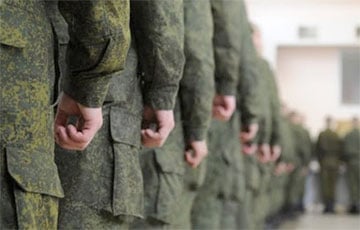
Recently, Ukrainian President Volodymyr Zelenskyy, citing intelligence reports, stated that the occupying country is preparing a new large-scale wave of mobilization for the fall of 2026. The head of state emphasized that the Kremlin plans to carry it out immediately after the sham parliamentary elections to the State Duma of the Russian Federation, which are scheduled for September 18–21.
According to the President of Ukraine, the Russian dictator plans to mobilize between 300,000 and 500,000 people by the end of 2026, and anticipates a similar number of conscripts for the following year.
However, the Kremlin will not openly announce the mobilization, as it fears the reaction of its own society, which, according to internal polls, opposes compulsory conscription. Putin’s plan is to use puppet parties in the “elections” to create the appearance of supposedly overwhelming support for the war among Russians, after which he will activate covert mobilization mechanisms.
According to Ukrainian intelligence, as of August 2026, there are signs of preparations and an increase in overall mobilization readiness in the Russian Federation. The legal basis for this remains the existing mobilization decree, signed by the Russian dictator back in 2022 but not yet revoked.
A possible new wave of mobilization is linked to the fact that the current recruitment rates are no longer fully covering losses on the front lines. “In less than seven months of this year, 221,000 people have joined the ranks of the Russian armed forces. Meanwhile, Russian casualties during the same period totaled nearly 225,500, of whom 131,000 were killed and nearly 93,000 were wounded—a significant number of whom suffered severe injuries, given that Russian frontline medical care is absolutely appalling”,” the president emphasized.
The total mobilization reserve (mobilization resource) of the Russian Federation is estimated by Ukrainian and international intelligence agencies to be between 23.5 and 25 million people. This is the maximum number of citizens subject to conscription who have military registration or related specializations and are theoretically capable of being drafted into the armed forces.
It is worth noting that since the start of the full-scale invasion of Ukraine, Russia has already mobilized (including covert and so-called “partial” mobilization) approximately 1.3–1.4 million people. An offensive force of more than 720,000 people is currently deployed on Ukrainian territory.
The Russian authorities are attempting to publicly demonstrate the success of the contract recruitment campaign to avoid panic over a possible new open mobilization.
For example, in July 2026, Medvedev, Deputy Chairman of the Russian Security Council, stated that in the first six months, approximately 200,000 people had signed contracts with the Ministry of Defense. Of these, 40,000 were allegedly assigned to unmanned systems units.
The Russian independent publication “Important Stories,” in collaboration with German economist Janis Klug, analyzed the Russian Ministry of Finance’s spending on federal payments to new recruits. Officially, 131,300 people received payments in the first half of 2026. In the first quarter, 71,200 people signed contracts, while in the second quarter, only 60,100 did. It is worth noting that at the beginning of the year, the average daily influx of new recruits fell to 700–800 people per day, which is the lowest figure in the last three years since the start of the full-scale war.
In light of this, mobilization measures have now been expanded in detention facilities within the territory of the occupying country. Law enforcement and special agencies are conducting forced mobilization among the so-called “special contingent”.
Over the past four and a half years, the number of inmates in pretrial detention centers and correctional facilities in Russia has fallen to 282,000, according to the director of the Federal Penitentiary Service (FSIN) Arkady Gostev. According to his data, by the end of 2021, there were 465,000 inmates in Russia.
It is noteworthy that in 2025, according to estimates by Western analysts, the occupying country’s army mobilized at least 126,000 people to replenish personnel losses from the so-called “special contingent.” According to Ukrainian intelligence, to make up for casualties on the front lines, Moscow plans to mobilize at least 10,000 soldiers from the “special contingent” every month.
Even during Prigozhin’s mutiny, the Russian dictator signed a decree stating that prisoners have the right to enter into contracts directly with the Russian Ministry of Defense. Putin’s latest decree continued this practice, specifically allowing prisoners to sign contracts with the Russian Ministry of Defense directly in the courtroom.
In addition, forced mobilization is gaining momentum in the temporarily occupied territories of Ukraine. First and foremost, the total mobilization has affected the temporarily occupied areas of the Luhansk, Donetsk, Zaporizhzhia, and Kherson regions. The Russians are attempting to replenish their ranks specifically by conscripting Ukrainian citizens residing in these territories.
As a reminder, under the new law, starting January 1, 2026, the conscription of citizens of the occupying country into active duty will take place without the traditional distinction between spring and fall draft campaigns. The mobilization age is set at 18 to 65 years old. At the same time, the borders with the Russian Federation from the territories of the temporarily occupied Luhansk and Donetsk regions have effectively been closed to prevent local residents from leaving for Russia and, from there, onward to European countries. In other words, the replenishment of personnel is occurring almost exclusively at the expense of the population of the occupied territories.
It is impossible to specify the exact number of Ukrainians forcibly mobilized into the Russian army since the start of the full-scale invasion. According to data from open sources, the figure stands at 46,327 people. The largest number comes from Crimea—over 35,000 people. In Sevastopol, there are more than 5,000, and the same number in the occupied part of the Donetsk region.
In addition, Russia has significantly expanded its use of foreign mercenaries. More than 28,000 foreign mercenaries have signed contracts with the Russian Armed Forces, and this number continues to grow. The occupation forces include citizens from 136 countries, with the exception of military personnel from North Korea. At least 3,080 foreign mercenaries remain in the Russian army even after their contracts have expired.
This year, Russia plans to conscript a record 18,500 foreigners—an important resource for the aggressor state amid massive losses among its own population in the war against Ukraine.
In addition, the ranks of the occupying army are being replenished through de facto roundups of residents of Central Asian states and labor migrants within the aggressor country’s territory.
According to calculations by the analytical service of the audit and consulting network FinExpertiza, based on data from the Russian Ministry of Internal Affairs, 11.8 million cases of foreign workers being registered for migration purposes were recorded in 2022. These statistics include both registration renewals for those who have been living in Russia for several years and initial registrations.
Currently, raids are being conducted throughout the Russian Federation targeting residents of Central Asian countries—so-called labor migrants—who are detained and faced with a choice: either you will be deported back to Tajikistan, Uzbekistan, or Kyrgyzstan, or you sign the corresponding order for conscription into the Russian Armed Forces.
According to information received directly from the scene, Moscow authorities have opened a draft office at the Sakharovo Migration Center. Russian authorities are mobilizing migrant workers on a massive scale to rebuild occupied Ukrainian cities and construct military fortifications directly on the front lines.
All of this is happening against the backdrop of statements by official Kremlin representatives that there is currently no need for a second wave of partial mobilization. In particular, Russia’s Permanent Representative to the UN, Nebenzia, recently stated that a mass mobilization in Russia is not currently planned. “It has been officially stated on multiple occasions that we do not currently need a mass mobilization, and as far as I know, it is neither planned nor expected,” he noted.
It is noteworthy that the State Duma of the Russian Federation passed a law to expand the mobilization reserve by raising the age limit for service in the reserves. The new law raises all age limits for military personnel in the reserve and the mobilization reserve by 5 years. The maximum age for remaining in the mobilization reserve is also being raised—to 65 years for senior officers and to 60 years for junior officers. For all other categories, the maximum age for service in the mobilization reserve has been raised by 10 years at once—from 45 to 55 years.
As a reminder, Ukrainian President Zelenskyy emphasized that, in response to the Kremlin’s plans, the security services have already been tasked with making it as difficult as possible to carry out these plans. In addition, Ukraine is calling on its international partners to take preemptive action: to tighten comprehensive sanctions against the aggressor, to create serious problems for Russian military logistics and fuel supplies, and to block opportunities for financing the defense industry.
Dmitry Snegirev, “Focus”

Bank's name: Bank Millennium S.A.
Address: ul. Stanislawa Zaryna, 2A, 02-593, Warszawa
IBAN: PL97116022020000000216711123
SWIFT: BIGBPLPW
Name of the account holder: Fundacja “KARTA ‘97”
Purpose/title of payment: Donation for statuary aims
You can contact us by the e-mail charter97@gmail.com