

The Two Opposite Poles Of Belarus
2- 7.09.2026, 8:54
- 2,396
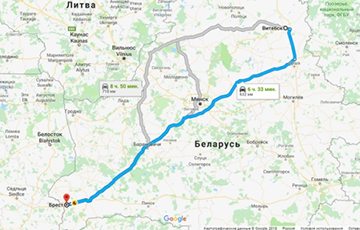
The Brest and Vitebsk regions have the most millionaires, but their economies are quite different.
Brest and Vitebsk are two Belarusian regions that have had the highest number of non-capital millionaires in the country’s top 100 most successful businesspeople lists for the past five editions. However, in terms of their importance to the national economy, these regions are at opposite ends of the spectrum. Why?
“Belarusians and the Market” examined how the growth rates of Belarus’s regional economies correlate with the scale and characteristics of private business development in those regions.
Two regions at the top
To this end, we tallied the number of businesspeople residing and operating in the country’s regions across five editions of the top 100 most successful and influential businesspeople in Belarus. Three rankings (for 2019–2022) were compiled by the publication “Ezhednevnik.” The last two lists (for 2023–2025) were published on the “Belarusians and the Market” portal.
As a result, the Brest Region ranks first in terms of the number of millionaires from the top 100 during this period.
Sixteen local business representatives were included in the five rankings from 2019 to 2025. Among them are Alexander Moshensky (Santa Group), Viktor Lemeshevsky and Alexander Popok (1 AK-Group), Konstantin Kadlubovich (“Bonshe”), Dmitry Chernenko (STiM Group), and others.
The Vitebsk region came in second by a narrow margin, with 14 millionaires. Among the local “business gurus” are Nikolai Vorobey (formerly of “Interservice”), Nikolai Martynov (“Marko”), Vladimir Nekrashevich (“Slavyansky Veles”), and others.
In the remaining regions, there was roughly an equal number of individuals who made it into the top 100 over the years:
in the Grodno region—5, led by Valentin Baiko (“Conte Spa”);
in Mogilev—5, including Evgeny Baskin (“Servolux”);
in Gomel Region—also 5, with the most prominent being Dmitry Pakhomov (“Alkopak”);
in the Minsk region—4, with Sergey Romanovich (“Niva”) standing out among them.
Two Destinies—Two Opposite Poles
Private business in the Brest region has essentially created the region’s new economy.
During the Soviet era and in the first couple of decades of independence, the Brest region was a hopeless industrial underdog in Belarus. The state simply failed to build the industrial giants there that drove growth in other regions.
But private investors have successfully replaced the state and turned the region into the country’s new leader—at least in terms of industrial production growth rates. But Brest Region’s share of the country’s total industrial output is also growing. It has already surpassed Grodno, Mogilev, and Vitebsk regions, and the gap with Minsk and Gomel regions is rapidly narrowing.
It should be noted that for much of this year, against the backdrop of a decline in production at nearly all of Belarus’s state-owned industrial giants, the Brest region was the only region in Belarus (including Minsk) with growing industrial production.
Our data also shows that there is significant private business activity in the Vitebsk region.
But even with its state-owned enterprises on the level of “Naftan” and others (textile and machine-tool manufacturers), this region is a headache for the government.
Why isn’t the return on investment from private businesses in Vitebsk as high as it is in Brest?
The first and main reason is that a significant portion of local private business is tied to the public sector. It is thanks to this that it has, in fact, grown and continues to develop. For example: the region’s leading businessman Nikolai Vorobey built his fortune on supplying and processing oil at “Naftan.” And that’s why private entrepreneurs cannot pull the region’s economy out of trouble when there are problems in the public sector.
Furthermore, the private sector’s reliance on the state has always had hidden pitfalls. At any moment, these can affect both its revenues and the very existence of the business.
The second point concerns the structure of investments. While in Brest most of the millionaires in the top 100 are manufacturers, in the Vitebsk region a significant share belongs to merchants. Despite the retail sector’s undeniable advantage of quick profits, it remains a less reliable source of stable business growth (especially in Belarus).
The third point, perhaps, is the region’s proximity.
The historical ties between Brest residents and their Polish—and, through them, European—business partners, investors, and clients allow them to acquire and implement more effective practices in management and product promotion than those available to Vitebsk residents through business contacts with their neighbors in Russia (and, to a lesser extent, in Latgale, Latvia).

Bank's name: Bank Millennium S.A.
Address: ul. Stanislawa Zaryna, 2A, 02-593, Warszawa
IBAN: PL97116022020000000216711123
SWIFT: BIGBPLPW
Name of the account holder: Fundacja “KARTA ‘97”
Purpose/title of payment: Donation for statuary aims
You can contact us by the e-mail charter97@gmail.com