


A New Supercontinent Is Forming On Earth
2- 8.09.2026, 8:45
- 2,376
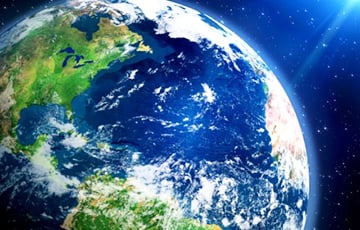
Scientists have identified four possible ways this could happen.
Scientists have known for decades that all of Earth’s continents will one day come together again to form a new supercontinent. We began with Pangaea, and we will return to it once more. There are several possible scenarios.
Research has shown that Pangaea began to break apart 200 million years ago and will reassemble after the same amount of time, according to Wion. A scientific article published in the journal Geological Magazine in 2018 proposes four scenarios for how this might happen.
1. Novopangea
The Pacific Ocean will close, and the Atlantic Ocean will expand. The Americas will collide with East Asia and Antarctica, resulting in a landmass concentrated primarily in the Northern Hemisphere.
Areas near the equator will be hot and arid. Coastal regions will experience heavy precipitation, but the interior will be mostly dry.
However, as the landmass extends into colder latitudes, moderate global ocean circulation and polar ice dynamics will continue to exist.
2. Aurica
The Pacific and Atlantic Oceans will close, forming the supercontinent Aurica. Since they are 200 and 180 million years old, respectively—older than the 140-million-year-old Indian Ocean—the first two will close.
The interior parts of the continents will split apart, once again arranging the Earth’s landmasses into a ring around the equator. Since the continent will be located near the equator, “it will likely be slightly warmer and possibly drier than on Earth today,” said João K. Duarte, an associate professor in the Department of Tectonics at the University of Lisbon in Portugal, who developed the Aurica hypothesis.
3. Amasia
In this scenario, the Arctic Ocean will close off, and all continents except Antarctica will shift toward the North Pole.
With all the landmass concentrated in the North, the Southern Hemisphere will become nothing more than a single vast ocean, with the exception of Antarctica.
With no land between them, the oceanic conveyor belt that transports heat from the equator to the poles will be disrupted. The poles will become colder and remain ice-covered year-round.
4. Pangea Ultima / Proxima
The Atlantic Ocean will close completely as new subduction zones form. The Indian Ocean will also close and become an inland sea. The Americas will collide with Asia.
All the continents will unite around the equator, forming Pangea Ultima. It will look like a large ring-shaped landmass encircling the equator.
Which supercontinent will turn the land into a desert
Although both Aurica and Amasia will spell the end for certain species on land and at sea, it is Pangea Ultima that will wipe out all humans on Earth. The interior regions of the landmass will be thousands of miles away from ocean breezes, meaning that 90 percent of the land will be a hot, dry desert.
The sun will also become brighter, making the planet even hotter, especially in the interior regions of Pangaea Ultima. The atmosphere will be filled with high levels of carbon dioxide from numerous volcanic eruptions caused by tectonic movements.
Temperatures will range from 40°C to 70°C, and only 8 to 16 percent of the Earth’s land area will remain habitable for mammals. Without wind and in extreme heat, the human body will be unable to dissipate heat. This will push the Earth beyond the physiological thermal limit for mammalian life, causing a mass extinction.
The good news is that none of us will be here when this happens—more than 200 million years from now. However, by that time, a new cycle of life may already have begun, featuring species capable of adapting to the new world.

Bank's name: Bank Millennium S.A.
Address: ul. Stanislawa Zaryna, 2A, 02-593, Warszawa
IBAN: PL97116022020000000216711123
SWIFT: BIGBPLPW
Name of the account holder: Fundacja “KARTA ‘97”
Purpose/title of payment: Donation for statuary aims
You can contact us by the e-mail charter97@gmail.com