

Three Reasons For One Celebration
1- Nikolai Statkevich
- 8.09.2026, 8:59
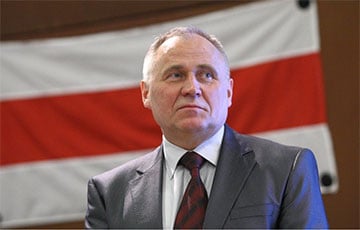
September 8 is a special day in Belarusian history.
September 8 has repeatedly been a landmark date in Belarusian military history.
If we look at events in chronological order, we should start as far back as September 8 (Old Style) 1380, when the forces of Mamai, the temnik of the Horde, clashed with those of the Russian principalities led by Prince Dmitry of Moscow in the Battle of Kulikovo Field. Fighting on Dmitry’s side were regiments from the Belarusian principalities of the Grand Duchy of Lithuania—Polotsk, Bryansk, and Smolensk—led by Princes Andrei and Dmitry Olgerdovich, even though our lands had never been under Mongol rule. And the Mongols’ attempts, together with their Muscovite vassals, to attack them were always repelled.
The Belarusian regiments played a major role in the battle. Perhaps this was because their principalities already had experience defeating significant Mongol forces. In 1362, at the Battle of Blue Waters, a united Belarusian-Ukrainian army led by Grand Duke Algirdas of the Grand Duchy of Lithuania defeated the forces of three Mongol khans, as a result of which the Ukrainian lands, which had always been ours, were freed from Mongol rule. This experience and the confidence it instilled in the Belarusian regiments and their commanders helped the combined forces defeat the Horde’s substantial forces on the Field of Kulikovo. Admittedly, Grand Duke Jogaila of the Grand Duchy of Lithuania took a unique stance: he led his troops to aid Mamai but did not participate in the battle himself. I believe that Jogaila was a shrewd geopolitician who did not want to strengthen neighboring Moscow, as that would have threatened the future security of the Grand Duchy of Lithuania. Nevertheless, we can justifiably consider September 8, 1380, a glorious date in our military history as well.
Almost every Belarusian today knows about September 8, 1514—the date of the famous victory over the 80,000-strong Moscow army, which outnumbered the Belarusians three to one, near Orsha.
The date of September 8 once again played an important role in our country’s modern military history. This was in 1992. At that time, Belarus brought the Soviet military units stationed on our territory under its control. But they were still a long way from becoming a truly Belarusian army. The officers, most of whom were natives of other Soviet republics, viewed Belarus’s independence with suspicion, and it is unclear whether they would have defended it in the event of an attack by another former Soviet republic. After all, there was not even a legal basis for demanding this of them—they had not taken an oath of allegiance to Belarus, which would have made defending its independence a legally binding obligation for them. The Kebich government, as usual, ignored the issue so as “not to anger Moscow.” Therefore, as chairman of the “Belarusian Association of Veterans” (BZV), I proposed holding a symbolic ceremony to swear allegiance to Belarus in the center of Minsk on the very anniversary of the victory at Orsha, in order to inform Belarusians as widely as possible about the glorious victory of their ancestors.
The chairman of the Belarusian Social Democratic Community, the well-known historian Mihas Tkachev, immediately supported this proposal. So did the leader of the Belarusian Popular Front (BNF), Zenon Poznyak, who offered the BZV his party’s assistance in organizing the oath-taking ceremony. The event took place on September 8, 1992, on Independence Square in Minsk. The artistic and musical arrangements were excellent, and the renowned artist Mykola Kupava was responsible for them on behalf of the BNF.
The event began with the sound of a trumpet. After the speeches, I read the text of the oath, which was repeated by career officers—members of the BZV—and thousands of reserve servicemen gathered in the square.
As it happened, the text of the oath was recited twice that day. Colonel Vladimir Borodach, a former commander of a special forces brigade who had arrived late for the ceremony, asked for permission to recite the oath as well. I agreed, because words of loyalty to one’s country can be repeated many times, and everyone in the square once again unanimously swore to defend Belarus. This action was not a legal act. But it received widespread attention. As a result, a few months later, the Kebich government was forced to administer an oath of allegiance to Belarus to all officers of the Belarusian army. And Belarusians, who had been told their whole lives that their country had no history of its own, finally learned about one of its most glorious chapters.
Nikolai Statkevich, “Telegram”

Bank's name: Bank Millennium S.A.
Address: ul. Stanislawa Zaryna, 2A, 02-593, Warszawa
IBAN: PL97116022020000000216711123
SWIFT: BIGBPLPW
Name of the account holder: Fundacja “KARTA ‘97”
Purpose/title of payment: Donation for statuary aims
You can contact us by the e-mail charter97@gmail.com