Should Belarus Expect A "Bridgefall" And The Housing and Utilities Sector Crisis?
5- 17.02.2022, 17:09
- 7,636
What will happen after Russia's refusal to provide a loan to the Belarusian authorities?
Belarus really hoped to get a $3.5 billion loan from Russia. Back in December last year, Deputy Prime Minister Mikalai Snapkou said that a new program was being worked out with The Eurasian Fund for Stabilization and Development. However, the Russian Ministry of Finance, represented by Minister Anton Siluanov, responded (at least for now) in line with “there is no money, but you are to keep going” promising to consider the issue of refinancing the Belarusian state debt of about $1 billion, Salidarnasts writes.
How much will the conflict of expectations and reality affect the Belarusian economy and what can we expect under the most pessimistic scenario?
Uladzimir Kavalkin, the economist and Head of the Kosht Urada project, tells:
— That's a decent difference. Because the budget was drawn up just out of the desire to get $3.5 billion.
Instead, there will be, in fact, just a refunding of the national debt to Russia. $2.5 billion will have to be found somewhere, and the possibility of finding it is practically zero due to the sanctions. All that remains is to go to Putin and tearfully ask for money, otherwise, you will have to cut budget spending by this amount in order to prevent a default.
Is it realistic to find the missing funds from other creditors, for example, from China? The expert says that there is no way to rely on Chinese loan facilities.
Uladzimir Kavalkin explains:
— As a rule, China does not give real money, but gives tied ones, and most often for their own projects. It means that they build any industrial park, logistic center or something similar, and finance constrictions under the guarantees of a government. Chinese money is always bad: it does not enter the country's economy, but simply runs through the accounts and returns to China. The country remains with the debts and China with the order.
— Therefore, if I was the Belarusian Ministry of Finance, I would not really hope that I would be able to get something in China, rather, I would be able to bargain for something from Russia.
Nevertheless, it is not obvious that it will work out and the loan can be too small. The economist notes that this yet does not indicate the catastrophe:
— The situation is difficult, but there will be no default, not critical. The National Bank has reserves of about $3 billion in the form of reserves in foreign currency, which can cover the required amount and still have $1 billion of real money left.
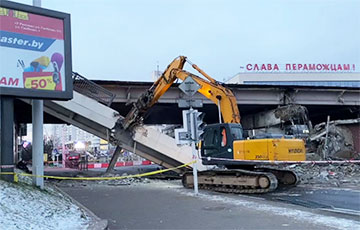
It is clear that we will have to reduce the expenses of a budget and reduce gold reserves, but there is no default yet. Which positions will need to be reduced? Most frequently and first of all investments, expenditures for infrastructure and construction are to be reduced. Roads, housing and communal services, bridges, all this will fall into disrepair faster, because no money will be invested in their repair and improvement.