

Give Putin A Mouse!
1- 24.10.2026, 13:38
- 1,096

I'd rather be playing "Civilization."
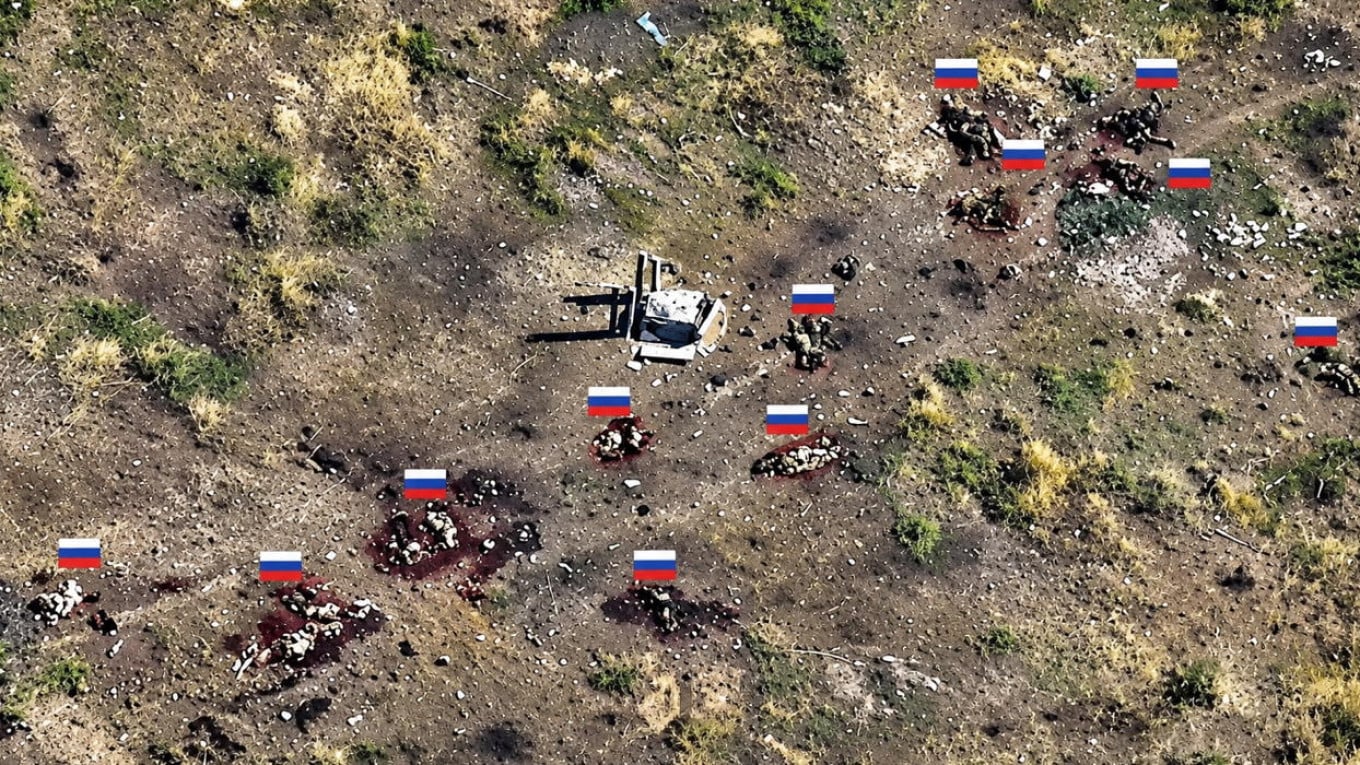
You can win by advancing science, culture, and diplomacy, or by conquering other nations’ capitals. The second path is far more costly and leads to immense destruction and suffering. That is the choice in the famous game “Civilization.” In our reality, the fields near Dobropillya, Ukraine, are littered with the bodies of Russian soldiers, and it seems: how much better the world would be today if Putin had satisfied his imperial ambitions with a mouse in his hand.
I really love the game “Civilization,” especially the fifth installment. Recently, in my Steam profile, I saw that I’ve spent a total of 3,218 hours playing “Civilization” since 2010. And that’s not surprising. For me, “Civilization” isn’t just a way to unwind: while playing, I both relax and think—I formulate future texts and discuss ideas with myself. “Civilization” is an intellectual game, and in a sense, it’s understandable why it helps with reflection: it’s a kind of advanced chess.
In case you didn’t know, “Civilization” was created in 1991 by an American game designer named Sid Meier. The game has become a cult classic, and the seventh installment was recently released. A total of 77 million copies have been sold in just 35 years—for a strategy game, that’s a phenomenal achievement.
The game’s premise is very simple. You choose a country and a historical leader and guide it on a journey from the Stone Age to the conquest of space. The nature of the state depends on your choices. You decide what to develop: science, trade, diplomacy, or culture. You decide whether to expand aggressively by waging war against your neighbors, or to try to survive until the 21st century—and the era of combat humanoid robots—through peaceful means alone.
There are various ways to win:
You can win a UN vote and achieve a diplomatic victory;
you can create a culture that influences all rival civilizations and achieve a cultural victory;
you can achieve a scientific victory by launching a spacecraft to Alpha Centauri;
Finally, you can simply use military force and nuclear weapons to capture all your rivals’ capitals. That would be a military victory.
And no matter how much I play, by the end I always end up with either a scientific or a diplomatic victory. Because developing science and becoming wealthy is far more interesting than fighting. But most importantly: war is an incredibly expensive endeavor; you have to keep your entire civilization in a state of constant tension, shift the economy toward a war footing, and sacrifice science and culture for military purposes. It’s tedious and not very effective, even if the size of your army allows for it. It’s much more fun to win the space race.
I don’t get to play very often, but I think about the game “Civilization” literally every day as I read the chronicles of the war that Russia has been waging in Ukraine for five years now.
What’s the connection? It’s not hard to understand.
Recently, Ukrainian Telegram channels published drone footage of “fields of death” somewhere near Dobropillya. In this case, the term “killing fields” is not a figure of speech. The drone follows a path lined with the bodies of fallen Russian soldiers. There are so many bodies. At one point, it’s even hard to keep track of just how many there are.
Then a similar video was posted by a Z-channel—one of the largest, “Two Majors,” with over 1.17 million subscribers. The location is the same, but the footage was shot not from the air, but from the ground—by an unnamed soldier walking along the “path of death” past the bodies of his comrades.
“The bodies of the fallen, scattered belongings, spent shell casings, abandoned gear. Nothing here is staged. This is the real, unvarnished face of war. Shell casings lie next to one of the fallen. Perhaps, right up until his final moments, he was trying to fight back, hoping to survive. A little further away is a half-open backpack containing a radio. At one time, they were preparing it for use, planning to use it at their position, and making plans for the days ahead. And nearby is another body, bound with tourniquets. The man surely knew how to administer first aid to himself; he had learned how to stop the bleeding. But even this knowledge isn’t always enough to save a life,” wrote the author of the “Two Majors” channel.
I’ve seen hundreds of such horrific videos from the war. Not to mention the far more heart-wrenching videos filmed daily in Ukrainian cities after Russian missiles or drones strike. Videos of rubble being cleared, of the bodies of dead civilians, of children’s funerals.
But still, it’s the videos of dead Russian soldiers that make me think of “Civilization.” Especially the one filmed from above, in which they look so much like units in a video game.
But they aren’t units—they were people. Yes, they were soldiers of an occupying army in a criminal war, but nonetheless—they were human beings.
The authors of the Z-channels that I read and analyze have, of course, also watched this video. Just like hundreds, if not thousands, of other similar videos. Only they draw the opposite conclusion from it: not to “stop the senseless slaughter,” but to “put in competent commanders who won’t waste personnel needlessly.” In other words, not to end the war, but to make it more efficient. To continue the killing.
And at moments like these, it’s simply impossible not to think about a world in which someone had taught Putin how to play “Civilization.” And instead of producing endless piles of corpses on the battlefields and reducing peaceful cities to rubble, he’d be sitting in the Kremlin with a laptop, a mouse, and a bottle of kefir, satisfying his imperial ambitions through the game.
Just think how much better the world would be under such a scenario!
But that’s how it works: all sorts of politicians often claim, loudly and frequently, that video games incite violence. In reality, however, the most terrible war in Europe in recent decades was started by people who don’t even know how to turn on a computer by themselves.
It would have been better if they had known how. It would have been better if they had played games.
Ivan Filippov, The Moscow Times

Bank's name: Bank Millennium S.A.
Address: ul. Stanislawa Zaryna, 2A, 02-593, Warszawa
IBAN: PL97116022020000000216711123
SWIFT: BIGBPLPW
Name of the account holder: Fundacja “KARTA ‘97”
Purpose/title of payment: Donation for statuary aims
You can contact us by the e-mail charter97@gmail.com