Putin Has Lost His Second-to-Last Friend In Europe
- 26.10.2026, 13:59
- 1,124
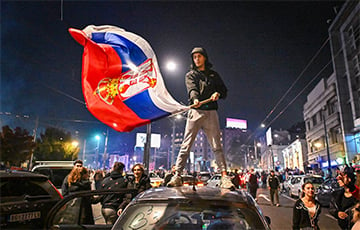
The Serbian youth team won.
Serbia is celebrating the opposition's victory in the parliamentary elections on a massive scale. The ruling party of former President Aleksandar Vučić lost the election. A correspondent from “We Can Explain” Igor Mukhin.
On Sunday evening, after the polls closed in Serbia, the first results emerged showing that former President Vučić’s “Serbian Progressive Party” had lost to the “Student List” — a new party formed in September to represent in parliament the protesters who have been demanding reforms and a change in the country’s leadership for nearly two years. Vučić conceded defeat.
In Belgrade, people took to the streets, and drivers honked their horns in a show of support. Cars flying Serbian flags appeared on the roads, and impromptu marches began. Within an hour, traffic in the city center had come to a complete standstill—tens of thousands of people had gathered in the main squares. They chanted “Vucic, step down” and “students will win” (one of the protesters’ slogans).
People waved flags, danced, lit flares and set off fireworks, hugged, and congratulated one another. What was happening could not be called rioting—the “MO” correspondent did not see a single instance of vandalism or damage to property. Night cafes and bars remained open, and there was no police presence visible in the city center.
Mass protests in Serbia began in November 2024—after the collapse of a station canopy in Novi Sad, which killed 16 people. At first, people sought an independent investigation into the incident and punishment for those responsible; later, their demands expanded to include the fight against corruption and a change in the country’s leadership.
Students and young people formed the core of the protesters, and rallies took place in all of Serbia’s major cities. They took to the streets chanting slogans such as “Corruption kills,” “Vucic is a thief!,” “Serbia or the mafia,” and “Serbia against violence.” For nearly two years, the protesters had no official political representation or clear leaders, but they eventually formed a political force. Young politicians are demanding “European standards of living and laws within the country,” but they are disappointed with Brussels’ current policies.
Aleksandar Vučić served as President of Serbia for two terms (since 2017). He was no longer eligible to run for a third term. In late September, Vučić resigned early, hoping to become prime minister (a position he had previously held from 2014 to 2017)—for this to happen, his party needed to secure a majority in parliament. Now, however, the “Student List” will form a new government and select the prime minister.
In foreign policy, Vučić balanced between Western countries and Russia. He refused to impose sanctions against Moscow but supported Ukraine’s territorial integrity and did not recognize the annexation of its territories. Serbia sold weapons to the Ukrainian Armed Forces through intermediaries (Belgrade did not officially acknowledge this), while at the same time the country serves as a base for Russian intelligence agencies engaged in subversive activities in Europe.
A few days before the election, Vučić gave an interview to Ksenia Sobchak, whose leaked correspondence with Kremlin officials revealed that she coordinates her publications and editorial policy with the Presidential Administration. Vučić criticized the militarization of Europe, justified Putin’s position in the Ukrainian conflict, and said that if the opposition won the election, it would impose sanctions against Russia. Vucic also lamented that Russians living in Serbia dislike both him and Putin equally.
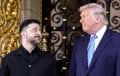
Vucic attended the Victory Day Parade at Putin’s invitation and was part of the “European trio” of Moscow’s friends, alongside the leaders of Hungary and Slovakia, Orban and Fico. Following Orbán’s defeat in the parliamentary elections and Vučić’s departure, only Fico will be able to support the Kremlin’s policies in Europe.
However, the “Student List” has officially stated that it, too, does not plan to impose sanctions against Russia. Party representatives said they would focus on domestic policy, the fight against corruption, and reforms (they intend to carry out a purge within the Ministry of the Interior). They want to resolve the issue of Serbia’s protracted accession to the EU through a referendum. The New York Times notes that on the issues of Kosovo, Russia, and the EU, the positions of the students and Vučić are virtually identical.

Bank's name: Bank Millennium S.A.
Address: ul. Stanislawa Zaryna, 2A, 02-593, Warszawa
IBAN: PL97116022020000000216711123
SWIFT: BIGBPLPW
Name of the account holder: Fundacja “KARTA ‘97”
Purpose/title of payment: Donation for statuary aims
You can contact us by the e-mail charter97@gmail.com