

Details Have Been Revealed In Poland Regarding The Case Of A KGB Agent Who Was Exchanged For Pochobut
- 26.10.2026, 15:10
A former deputy director of the Moldovan intelligence service worked to establish a spy network in Europe.
On April 28, 2026, at the Polish-Belarusian border a prisoner exchange took place on a “five-for-five” basis. Among those handed over to Belarus were a taxi driver from Białystok and a former deputy head of the Moldovan secret service, both of whom are linked to the activities of the Belarusian KGB.
The same three officers of the Belarusian KGB, the same residential complex in Budapest, and two agents from different countries. Journalists from the “Special Report” program on the Polish TV channel TVP uncovered details of the Belarusian agents’ activities and reveal details of KGB operations in Poland and Europe, writes TVP.
This is where the Belarusian KGB organized meetings with its agents
The NovaCity apartments at 27 Szövetség Street are located in the very heart of the old Jewish quarter of Erzsébetváros in Budapest. It was here, in an unassuming apartment just a few steps from the New York Café—a popular spot among tourists and bloggers—that the Belarusian KGB organized meetings with its agents.
Journalists uncovered the details and circumstances of the meetings, which were conducted by officers of the KGB’s Foreign Intelligence Directorate.
In May 2024, the former deputy head of the Moldovan secret services Alexandru Balan met with four officers in an apartment on Király Street, which he had rented using false information.
Nine months later, on February 11 and 12, 2025, less than 500 meters from that location, in the NovaCity complex, a taxi driver from Białystok, Władysław Nadejko, was met by Vladimir Vorozhbitov, who introduced himself as “Yurevich,” Vladimir Yarmak, and Pavel Davidovich.
Another meeting took place two months later. Aleksandr Balan also checked into the same complex. According to case files reviewed by journalists, the Belarusians provided him with the meeting address via an encrypted channel. There is no evidence on his phone of him searching for housing: he immediately entered the address “Szövetség 27” into a search engine and booked an apartment under the fake name “Alex Belan.”
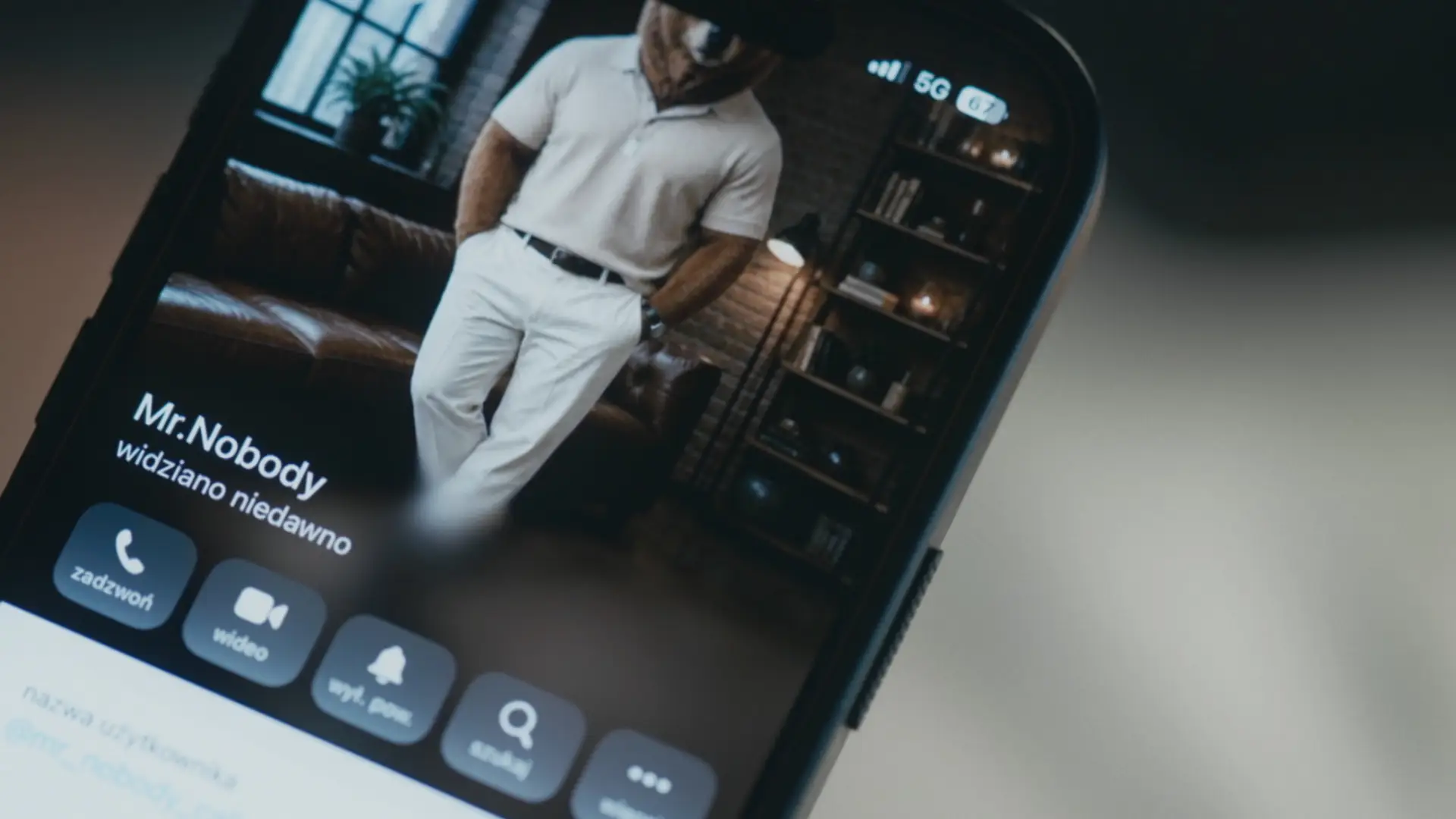
“Mr. Nobody”
Vladislav Nadeiko arrived in Białystok from Grodno along with a wave of Belarusian emigrants following the brutal crackdown on the 2020 protests.
“He had this cover story about being a poor taxi driver. It was obvious he wasn’t working at all,” says an informant who knew him well.
She lists his expenses: car lease—3,200 zlotys a month; rent—another 3,000 zlotys. In addition, he drank alcohol every evening, which, according to her, he abused.
“He said he used to make money from smuggling and that he’d have enough money to last him the rest of his life,” the woman says.
“Did he ever disappear for long periods of time?”
“He used to travel to Hungary. He even bought a car for that purpose. He bought it in December 2024 and sold it as early as May,” says the informant.
She recalls that shortly after she stopped communicating with him, KGB agents visited her father, who lives in Belarus. They knew everything about her opposition activities in Poland.
Nadeiko quickly became close to Pospolite Ruszenie—a paramilitary organization of Belarusian émigrés that was preparing in case protests broke out again in Belarus.
Belarusian propaganda broadcast stolen footage from their training sessions and revealed the identities of the participants. According to journalists, it was Nadeiko who passed their names on to the KGB.
Dima, a military tactics instructor, recalls that during one of the training sessions, Nadeiko approached him.
“I said, ‘We know everything about you, and we’re still thoroughly vetting you. If anything comes to light, I’ll personally shoot you.” And it worked,” says Dima.
Nadeiko admitted that he had collaborated with the KGB in the past.
“He said he used to sign documents, but he no longer cooperates with them because he lives in Poland,” adds the instructor.
“When he admitted that he had collaborated with the KGB, didn’t that bother you?”
“I thought they’d screen him again, because other people are responsible for security,”
According to unofficial reports from journalists, before the training began, Nadeiko also underwent a polygraph test, but the results were inconclusive.
After the April exchange, Belarusian propaganda showed the deputy head of the KGB’s Investigative Directorate greeting Nadeiko with flowers.
— We’re continuing our work. Everything will be fine,” says a smiling Nadeiko to the camera.
Journalists managed to find the Telegram account that Nadeiko still uses today. He goes by the username “Mr. Nobody.” He did not respond to messages from the journalists.
The journalists discovered that after his arrest, Nadeiko was questioned in Poland as part of an investigation conducted by the Romanian prosecutor’s office. In his testimony, he described meetings in Budapest on February 11 and 12, 2025. The operative in charge was introduced to him as “Yurevich.”
According to prosecutors, after the meetings, Nadeiko—and later Balan—received payment in euros. In his testimony, he claimed that he did not know Balan.
An Agent for Two Intelligence Agencies
Alexandru Balan is on an entirely different level than Nadeiko. He headed counterintelligence and, from 2016 to 2019, served as deputy director of Moldova’s Information and Security Service (SIS).
Balan collaborated with Romanian intelligence agencies and had access to top-secret information. He also held Romanian citizenship, which is why he was wanted by DIICOT, a special unit of the prosecutor’s office tasked with combating terrorism and organized crime.
“We’re talking about crimes related to treason and the illegal possession of documents constituting state secrets.” “The extent of the damage is difficult to assess,” says the prosecutor leading the investigation.
The first documented meeting took place on May 20, 2024. Balan flew from Tallinn via Warsaw and rented an apartment on Király Street through Airbnb.
He provided false information: he listed his place of birth as “Vars,” and his date of birth as the day his Romanian ID card was issued. During the eight-hour meeting, Balan did not respond to any of the 236 notifications received on his phone.
The indictment reconstructs the meetings in Budapest almost minute by minute.
On April 9, 2025, at 11:17 a.m., Vladimir Vorozhbitov entered the building at 27 Szövetség Street alone. He left at 10:30 p.m. Two other officers were waiting for him at the hotel, and at noon they brought him takeout food.
During this entire time, Balan barely touched his phone: he ignored 512 notifications from messaging apps and opened only one link. The next day, the meeting continued for another six hours.
In the morning before the second meeting, Balan visited 11 currency exchange offices. At some of them, he spent several minutes closely observing passersby and his immediate surroundings.
He exchanged 1,500 euros in 100-euro bills for 200- and 500-euro notes, and the next day—another 1,400 euros.
Prosecutors believe that in this way he was getting rid of bills received from the KGB that might have had special markings. Later, during interrogations, Balan claimed that he was exchanging Moldovan lei. In 2025, he did not have an official job.
He flew from Budapest to Brussels, and from there to Kraków. After a meeting in 2024, he also flew to Kraków, but via Tirana.
An intermediary—a former employee of the Moldovan secret services—bought the tickets for him. Balan wrote to him that he wanted to fly to Poland, preferably to Rzeszów.
“He was one of the best field agents.” “He asked for a ticket—and that was it,” the intermediary says.
He claims he didn’t know about Balan’s contacts with the KGB.
Draft Reports
In addition to face-to-face meetings, Balan communicated with the KGB via email accounts accessible to both himself and KGB officers.
The messages were saved as drafts but never sent. The Belarusian security services hoped that this would make it impossible to intercept the correspondence.
During a search of Balan’s hard drive, investigators even found instructions to use this specific method.
In July 2025, three months after the meetings in Budapest, Balan wrote six intelligence reports in Russian.
In them, he described conversations with sources, mainly in Ukraine—military personnel and, likely, SBU officers. They were identified by the code names “Caucasian,” “Corrupt,” “Blogger,” and “Forest Representative.”
Balan was detained at the Timisoara airport on September 8, 2025.
A few hours later, when this information appeared on the front pages of the Romanian media, someone accessed the email account used to transmit information to the KGB from an IP address belonging to the Belarusian operator “Beltelecom” and deleted it.
Several dozen phones and discs were seized from Balan’s apartments in Chisinau. Some of them were inside a so-called Faraday cage—which is used, among other things, to shield electronics, block phone signals, and prevent eavesdropping.
The disks contained 14 documents from Moldovan intelligence agencies, including a memo for the CIA about a meeting with an officer of the Russian GRU, as well as top-secret documents from Romanian intelligence and the SRI. One of them listed the surnames of active intelligence officers.
The same location also contained a file titled “mutre 2013”—Romanian for “faces”—labeled “SRI Officers in Iași” and containing seven photographs. According to the Romanian intelligence agency SRI, Balan knows the identities of these individuals, and their exposure by the KGB threatens Romania’s security.
The agency also claims that Balan “acted with the aim of establishing an agent network” for the KGB.
He did not expect to be detained.
“He was very surprised,” investigators say.
Balan denied everything, including any acquaintance with KGB officers. He was charged with attempted treason and disclosure of secrets threatening national security.
KGB Officers
The indictment names four KGB officers with whom Balan met.
According to journalists, three of them traveled to Budapest for meetings with Nadayko.
- Vladimir Vorozhbitov, codename “Yurevich,”—operational supervisor. For many years, he operated under diplomatic cover, including at the UN in New York.
- Vladimir Yarmak — ensured the security of the meetings. He previously served as a counselor at the Belarusian Embassy in Prague.
- Nikolai Dukhta — advisor at the Belarusian Embassy in Prague and the group’s driver. In 2024, he officially identified himself to Czech authorities as a KGB representative. He was later expelled from the country for espionage.
The officers traveled in a gray Hyundai Tucson with Czech diplomatic license plates.
Before the meeting, Dukhta drove from Prague to the Polish-Czech border crossing at Zawidów–Habartice.
The next day, the officers entered the Czech Republic from Poland and then traveled through Slovakia to Hungary.
After returning, they spent the night at the Mama Shelter hotel in Prague, and then drove back to Zawidów, from where Dukšta returned to Prague alone.
The agents followed the same route in February before their meeting with Nadeko and in April before their meeting with Balan.
A “Hitchcock-style” exchange
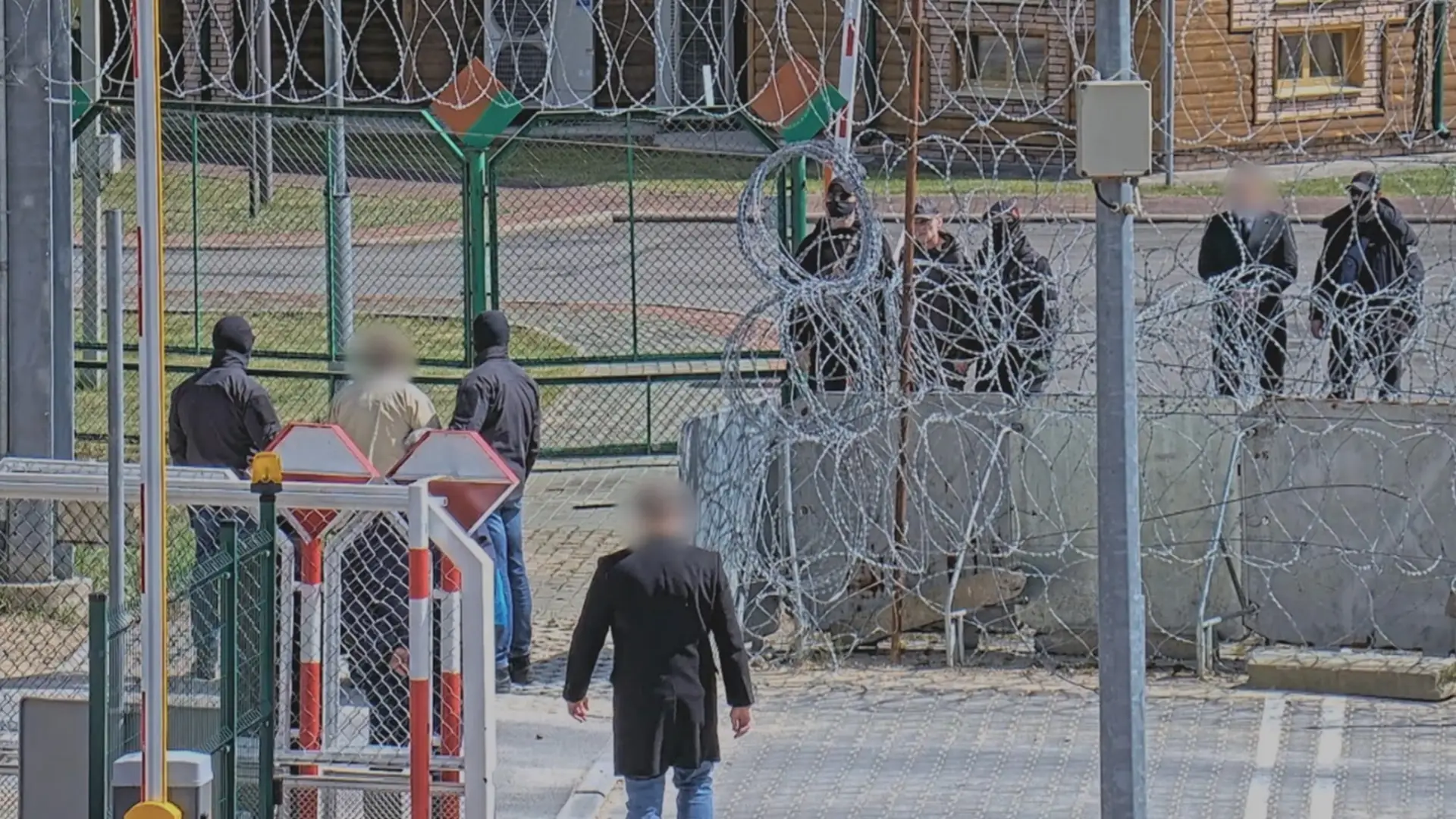
In Białowieża, Poland handed over five people to Belarus: Alexander Butyagin, Alexander Balan, Nina Popova, Anuar Bakibay, and Vladislav Nadeyko.
The exchange took place on a “five-for-five” basis.
Later, on Belarusian television, Balan thanked Belarus and its president for “extending a helping hand.”
One of those handed over to Belarus was Anuar Bakibay—a major in the Kazakh military intelligence service who was operating under diplomatic cover.
Poland’s Internal Security Agency detained him in July 2025.
“His intelligence activities were directed at military institutions,” says prosecutor Artur Kaznovsky of the task force established in December 2025 to investigate espionage, subversion, and sabotage.
According to journalists, the focus was on Bydgoszcz, where strategic NATO centers are located.
Bakibay attempted to recruit a Ukrainian colonel working within the alliance’s structures. He offered him several thousand dollars, the alias “Frenchman,” and glasses for photographing classified documents.
A counterintelligence officer with Poland’s Internal Security Agency, who was directly involved in the spy exchange operation, says that the most difficult part is the handoff.
“Until the very last minute, you don’t know if everything will go according to plan. With an opponent who remains unpredictable until the very end, you need to have Plan B, Plan C, and even further down the alphabet,” he says.
He compares the exchange to a Hitchcock film: the tension remains from the first minute to the last.
According to him, such exchanges take place at the peak of espionage threats, when the activity of foreign intelligence services reaches its highest level.
Since 2022, Russian and Belarusian intelligence services, as well as those of Russia’s allied states, have been the primary actors operating in Poland.
He notes that since 2022, in addition to traditional recruitment by hostile intelligence services, foreign intelligence agencies have expanded their methods to include sabotage and operations aimed at the physical elimination of specific individuals.
“This is the next phase of the Cold War. Similar activities were observed in Western countries until 1989,” says a Polish counterintelligence officer.

Bank's name: Bank Millennium S.A.
Address: ul. Stanislawa Zaryna, 2A, 02-593, Warszawa
IBAN: PL97116022020000000216711123
SWIFT: BIGBPLPW
Name of the account holder: Fundacja “KARTA ‘97”
Purpose/title of payment: Donation for statuary aims
You can contact us by the e-mail charter97@gmail.com