

Andrzej Pochoebut Announced When He Will Finally Return To Belarus
- 27.10.2026, 9:50
- 1,146
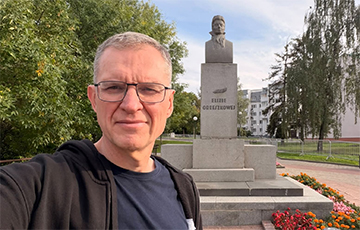
Photo: facebook.com/andrzej.poczobut.9
That was the decision from the very beginning.
Andrzej Pochobut , a former political prisoner, journalist, and activist with the independent Union of Poles in Belarus , plans to return to Belarus plans to return to Belarus to live there permanently. He spoke about this in an interview with a Polish newspaper Rzeczpospolita, as reported by Onet.
“This decision was made from the very beginning. I’ve been saying this all along. I’m returning to Belarus in December. Of course, my family would like me to stay in Poland. My parents do, too. At the same time, they understand my reasons and know that’s just the kind of person I am,” the journalist said.
Pochobut also shared his impressions of his September trip to Belarus. First, he went to his hometown of Grodno, where his home is located. According to the former political prisoner, the city has changed noticeably over the years he spent in prison—primarily because people he knew have left.
“There’s no one I know. This has never happened to me before—walking through the city center and not running into a single familiar face. But that’s exactly what happened. When I finally saw someone I knew, he was very surprised to see me. I was also surprised to run into him, because I’d already gotten used to not having any acquaintances—to this emptiness,” Pochobut said.
According to his observations, it’s now easier to run into people from Grodno or Minsk on the streets of Białystok, Warsaw, and Vilnius than in the Belarusian cities themselves.
The journalist also said that shortly after his arrival, a police officer came to his apartment in Grodno with a body camera turned on.
“Everything was by the book. They asked where I work and how long I’d be in Belarus. I replied that I’d just arrived. I didn’t want to give any answers. In general, I try to say as little as possible in such situations. He left, then came back and said that I had to report to the police station on Thursday. He asked if I would come. I replied, ‘Of course.’ “I’m a law-abiding person, despite what they’ve written about me in their documents,” Pochobut said.
However, the next day he received a call informing him that he no longer needed to go to the police station.
Another unexpected problem was a ban on using a cell phone. According to the journalist, because he was added to the Belarusian lists of “extremists” and “terrorists,” he is not allowed to have a cell phone.
“At first, I went to transfer an old number—which had been registered to my wife—into my name. They did that, but after three calls, the number stopped working. I went to find out what was going on and learned that I wasn’t allowed to have it,” he said.
As a reminder, Andrzej Poczobut was detained in March 2021. In February 2023, he was sentenced to eight years in a maximum-security prison on charges of “inciting hostility” and “calling for actions against state security.” Human rights activists recognized the journalist as a political prisoner.
On April 28, 2026, Pochobuta was released as part of a prisoner exchange between Belarus and Poland on a “five-for-five” basis. After more than five years in prison, he found himself in Poland.
The journalist spoke of his intention to return to his homeland almost immediately after his release. He said that even at the border, he had demanded guarantees from the Belarusian authorities that he would be allowed to return.
On September 8, Pochobut arrived in Belarus, where he met with his family and representatives of the independent Union of Poles. He spent a week in the country and returned to Poland on September 15.
Subsequently, the journalist said he planned to return to Belarus after a trip to the United States. One of his plans was to write a book about the five years he spent in prison.
At the same time, Belarusian human rights activists warned that Pochobut’s story does not mean that returning to their homeland has become safe for other former political prisoners and people who may face political persecution.

Bank's name: Bank Millennium S.A.
Address: ul. Stanislawa Zaryna, 2A, 02-593, Warszawa
IBAN: PL97116022020000000216711123
SWIFT: BIGBPLPW
Name of the account holder: Fundacja “KARTA ‘97”
Purpose/title of payment: Donation for statuary aims
You can contact us by the e-mail charter97@gmail.com