

Israeli Elections: 70% Of Votes Counted
- 28.10.2026, 13:50
- 1,108
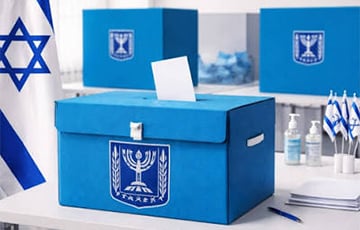
The prospects for forming a coalition remain unclear.
In Israel, with 70% of the votes counted in the parliamentary elections, the bloc supporting the country’s incumbent prime minister Benjamin Netanyahu, is receiving more votes than the opposition bloc led by former Chief of Staff Gadi Eizenkot—but not enough to form a government. According to preliminary data, Arab parties are winning a record number of seats in the Knesset—and they could play a decisive role in forming a coalition, but neither Netanyahu nor Eizenkot is willing to cooperate with them, writes the BBC.
With 70% of the votes counted, Netanyahu’s bloc can expect to win 54 seats in the Knesset (including 27 seats for his Likud party), while the opposition bloc is projected to win 47. Two Arab parties achieved their best-ever results: they could win 19 seats.
The vote count is expected to continue for several more days—likely until Friday, October 30. Votes cast abroad have not yet been counted: only military personnel and diplomats are eligible to vote outside of Israel.
The official results will be announced one week after the election—on November 4.
What’s Next
After the official results are published, Israeli President Yitzhak Herzog will consult with party leaders and select the candidate who, in his opinion, has the best chance of forming a government. That politician will have 28 days to negotiate a coalition, a period the president may extend to 42 days if necessary.
If the candidate fails to form a government, the president may appoint someone else. If no agreement is reached after three such rounds, new elections will be called in Israel.
Between 2019 and 2022, parliamentary elections were held five times in Israel—because politicians were unable to agree on a stable coalition.
What are the coalition options
If no bloc secures a majority of seats in the Knesset (which requires at least 61 seats), the major parties will need to seek allies to form a coalition (or to support initiatives by a minority government). Arab opposition parties could become potential allies—allowing either Netanyahu’s bloc or Eizenkot’s bloc, with their combined 16–19 seats, to secure a majority.
But such cooperation is unlikely from Netanyahu’s bloc: he has already stated that Israel should not have a government that depends on Arab support.
The opposition bloc’s position is less clear-cut. The leader of the “Our Home Israel” (“Yisrael Beiteinu”) party Avigdor Lieberman said during the election campaign that he is not prepared to be part of a minority government supported by Arab parties.
But the leader of the “Democrats” (Ha-Demokratim) Yair Golan, who is also part of the opposition bloc, called for cooperation with the Arabs. Other parties in the bloc do not share his position—at least not until the results are announced.
There is already a precedent in Israel for including an Arab party in a ruling coalition: the United Arab List (RAAM) in 2021–2022. The current leader of the list, Mansour Abbas, told the BBC shortly before the election that he would like to join the new government.
“All politicians in Israel say one thing before the election and another after. We’ve been through this, and we’re not worried about it,” Abbas said.
The narrative surrounding the results of these elections is just as important as the numbers, notes BBC international correspondent Liz Duset: “Should the Arab parties, which won a record number of seats, be part of the coming changes? Netanyahu’s bloc considers this dangerous for Jewish Israel; others say this is democracy.”

Bank's name: Bank Millennium S.A.
Address: ul. Stanislawa Zaryna, 2A, 02-593, Warszawa
IBAN: PL97116022020000000216711123
SWIFT: BIGBPLPW
Name of the account holder: Fundacja “KARTA ‘97”
Purpose/title of payment: Donation for statuary aims
You can contact us by the e-mail charter97@gmail.com