

The Musk Factor
3- 3.11.2026, 13:06
- 1,490

How a Billionaire's Donations Could Influence the Outcome of the U.S. Election.
The richest person on Earth, SpaceX founder Elon Musk, does not directly participating in the U.S. elections, remains one of the most influential donors to the 2026 election campaign. According to the latest data, he has donated nearly half a billion dollars to support Republicans in this election cycle, reports "Voice of America".
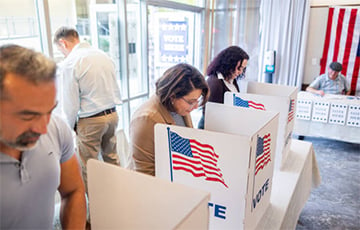
Ahead of the U.S. midterm congressional elections, Elon Musk donated more than $445 million to support Republicans. Bloomberg reported these figures after reviewing reports from the U.S. Federal Election Commission.
Experts from the nonprofit organization Issue One, which works to raise awareness about campaign finance issues, attribute this generosity to Musk’s personal interests.
“[Elon Musk and tech companies] want to shape artificial intelligence legislation themselves and play a leading role in its development,” explains Issue One policy and research specialist Bela Sullivan. “By spending nearly half a billion dollars on this election, Musk is sending a signal to many members of Congress that he is prepared to actively push for the rules of the game to be set in a way that serves his interests.”
Among the states Musk has spent money to support are Ohio, Michigan, Iowa, and Maine. But Musk has allocated particularly large sums to help Republicans in Texas. According to Wired, citing reports from the U.S. Federal Election Commission, Musk donated at least $158 million to support the candidacy of Texas Attorney General Ken Paxton, who is running for the U.S. Senate.
Musk’s interest in Texas is understandable: that is where his primary residence is located, as well as the factories and headquarters of his companies. “He has a financial incentive to build a good relationship with a Republican senator who will be involved in drafting laws on artificial intelligence, regulating that sector, and taxing the wealthy,” says Sullivan. “Billionaires spend enormous sums to demonstrate goodwill and good intentions toward potential political allies.”
Musk has spent considerable sums supporting Republicans in the past. In the most recent U.S. presidential election in 2024, he donated $290 million to Donald Trump’s campaign.
“For Elon Musk, [these donations] are driven not only by a desire to gain access to power but also by his ideological motives, since he shares some of the Republicans’ values, — says Jennifer Hirwig, an associate professor in the Department of Sociology at the State University of New York at Stony Brook. — In other words, it’s not just about his business interests, nor is it solely about his political views. It’s a combination of both factors.”
Experts emphasize that while traditional channels of candidate financing do provide substantial support for election campaigns, they still cannot guarantee victory at the polls. By “traditional methods,” they mean donors who contribute relatively small amounts and corporate Political Action Committees (PACs), which directly transfer funds to candidates’ campaigns, but within limits set by law.
It is still too early to say how effective super PACs (Super PACs)—to which Musk directs most of his donations and which allow for the collection of unlimited amounts from individuals, companies, and unions and the spending of those funds on political advertising, though they are not permitted to directly support candidates or coordinate with their campaigns.
“We in the social sciences generally do not believe that money can buy an election victory,” says Hirvig. “However, we now live in a somewhat different reality. Super PACs are spending truly enormous sums. We had never seen independent spending on this scale in elections before the Supreme Court’s decision in Citizens United [in 2010, which ruled that the government cannot restrict independent political spending by corporations and labor unions ahead of elections]. “How effective Super PAC money will prove to be—whether it can mobilize voters, get them to the polls, and ultimately secure an election victory, for example in Texas—remains an open question.”
“I don’t think a billionaire’s money can decide the outcome of an election,” Sullivan adds. “But big money in politics influences the issues voters discuss, since advertising shapes the information environment in which we live.”
For the Democrats this election season, the largest donor has been financier and philanthropist George Soros. According to the Brennan Center for Justice, entities linked to Soros have contributed approximately $102 million to the Democracy PAC supercommittee, which supports Democratic Party candidates. For the past three years, it has been managed by George Soros’s son, Alex.
By mid-October, as part of the 2026 election campaign, the 40 largest donors had contributed more than $2.4 billion in campaign contributions to both parties.
The 2026 U.S. midterm elections could become the most expensive in the country’s history. According to projections by AdImpact, a company that tracks spending on political advertising, $11.6 billion will be spent on political advertising in this election. That is more than in any previous election cycle, including the 2024 presidential election.

Bank's name: Bank Millennium S.A.
Address: ul. Stanislawa Zaryna, 2A, 02-593, Warszawa
IBAN: PL97116022020000000216711123
SWIFT: BIGBPLPW
Name of the account holder: Fundacja “KARTA ‘97”
Purpose/title of payment: Donation for statuary aims
You can contact us by the e-mail charter97@gmail.com