


A Challenge For The Kremlin
3- 3.07.2026, 8:34
- 5,392
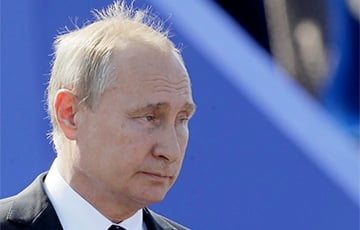
The wheels will literally fly off Putin's war machine.
This week, Gallup (the Gallup Institute) published an interesting survey showing that Russians’ confidence in the economy’s prospects is at its lowest level in the past 20 years.
Note that this occurred even before Ukrainians launched their own recent “sanctions initiative,” which has disrupted Russian fuel supplies and caused an increasingly severe domestic fuel shortage, especially in the Crimea region. The situation will only get worse—much worse.
After 4.5 years of war—or a “special military operation”—that was supposed to end in a matter of weeks, the war finally seems to be coming home to the Russians. And all of this will only get worse for a number of reasons. Here they are.
First, although the war with Iran gave Russia some short-term relief in the form of higher oil prices and the temporary lifting of sanctions against Rosneft and Lukoil, as the conflict in the Persian Gulf nears its end, the U.S. has not renewed the licenses for both Russian oil companies to temporarily sell oil on global markets.
It is now expected that the discount on Urals crude will return to the level that existed before the start of the war with Iran—about 30% relative to Brent/WTI. And given that Brent and WTI prices are falling to $70 per barrel, this suggests that Urals will once again trade around $50.
Second, long-term trends in oil prices are likely to be unfavorable for Russia. The war with Iran has led to a collapse in global demand and, at the same time, weakened OPEC due to the UAE’s decision to withdraw from the organization.
The UAE has made it clear that, given its own development priorities—and now the need to raise additional funds for investments in security and trade diversification—it wants to produce significantly more oil.
Other oil producers are likely to follow suit, and this points to weakening demand and increasing supply, which will lead to a decline in oil prices, possibly even to levels seen before the war with Iran. In a year, oil prices could reach $60 per barrel or lower, and given the 30 percent discount on Urals crude, this could mean oil prices as low as $46 per barrel, as seen in early 2026.
Third, the resilience of global energy markets to the shock of a war with Iran and the loss of 14–15 million barrels of oil per day due to the Strait of Hormuz may indicate that that the West will be more willing to tighten energy sanctions against Russia in an attempt to hasten an end to the war in Ukraine. Remember that the West had been inclined to hold back on imposing aggressive sanctions against Russian energy resources due to fears of destabilizing global markets.
But if global energy markets have weathered the loss of 14–15 million barrels of oil per day from the Persian Gulf, then they will certainly be able to cope with the potential loss of Russian oil exports, which amount to about 4 million barrels. The war with Iran has shown that the West has far more leverage over Russia than it might have dared to imagine.
Sanctions must be tightened. The complete loss of these exports would cost the Russian economy at least 500 million euros in revenue per day, which would be a catastrophic blow to the Russian budget, balance of payments, economy, and Putin’s military machine. If the West—and even China—wants to put an end to this war, they must cut off Russian energy exports.
Note that when Urals crude was trading at around $46 per barrel in the first quarter of 2026, Russia’s budget deficit stood at 2.6% of GDP, and the economy was already in recession. A complete blockade of these exports would cause the budget deficit to increase exponentially compared to the planned amount, plunge the economy into a deep recession, and likely the banking sector would come under extreme pressure, as would the ruble, due to an accelerated capital outflow.
Putin’s war machine would literally fall apart.
Fourth, thanks to the 90 billion euro EU loan for Ukraine approved by the European Council in December (with another 100 billion euros on the way), Ukraine’s military machine is now well-funded for many years to come. Ukraine now has the funding to expand its innovation advantage and produce a massive number of drones, so it can continue to carry the war into Russian territory.
Furthermore, Ukraine is already leveraging the revival of Europe’s military-industrial complex to take its production of drones and missiles to an even higher level.
Russia’s $2.5 trillion economy—which is also shrinking—simply cannot compete with Europe’s $25 trillion economy.
Putin has started an arms race with Europe that Russia is simply not in a position to win right now. Ukraine is the spearhead—or the cutting edge—of this increasingly active European arms industry.
For Russia, it is already clear: the tide of the war has turned in Ukraine’s favor. Ukrainian drone and long-range missile strikes against Russia will only intensify, depleting its energy infrastructure and military-industrial complex. Fuel and goods shortages for Russians will only worsen. Their morale will likely continue to decline, posing a serious challenge for Putin, given his limited victories in Ukraine.
Timothy Ash, New Voice

Bank's name: Bank Millennium S.A.
Address: ul. Stanislawa Zaryna, 2A, 02-593, Warszawa
IBAN: PL97116022020000000216711123
SWIFT: BIGBPLPW
Name of the account holder: Fundacja “KARTA ‘97”
Purpose/title of payment: Donation for statuary aims
You can contact us by the e-mail charter97@gmail.com