
The Dollar Is Poised For Another Surge
- 31.08.2026, 10:05
- 2,176
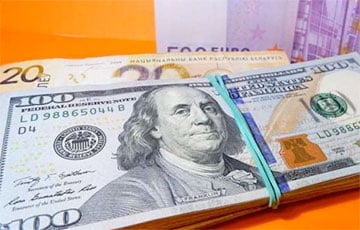
The U.S. dollar could rise as early as this week.
By the end of last week, the U.S. dollar exchange rate on the Belarusian foreign exchange market had risen to an annual high of USD/BYN 3.0396. Over the course of five trading sessions, the dollar gained +2.25%, bringing its year-to-date increase to +4.72%. The trading volume in the dollar on the Belarusian Stock Exchange (BSE) last week totaled 60.285 million dollars, which is in line with average figures. To find out what exchange rates to expect in early September, read the traditional forecast at myfin.by financial analyst Mikhail Grachev.
The Fall of the Russian Ruble
At the same time, the Russian ruble exchange rate on the Belarusian foreign exchange market stood at RUB/BYN 3.5623 per 100 Russian rubles, having lost -1.04% over the past week. The ruble’s overall decline since the start of the year stands at -3.87% for the week. Ruble trading volume on the Belarusian Stock Exchange (BSE) over five trading sessions totaled 17,959.240 million rubles, which is also in line with the annual average.
On the Russian financial market, the dollar closed last week slightly above 86 rubles at USD/RUB 86.15. Even the end of the tax period did not help the Russian currency. The volume of currency sales in the over-the-counter market turned out to be significantly lower than expected. Thus, given the ongoing currency purchases by the Russian Ministry of Finance and increased demand from importers, the trend of the ruble weakening against major currencies may continue starting in September. However, as we have noted repeatedly, this generally aligns with the interests of the Russian budget, since a strong ruble exchange rate will increase revenues to the state treasury.
Fed Chair’s Statement Strengthens the Dollar
By the end of last week, the global financial market received yet another cherry on top. Actually, this happens quite often, and this time the surprise came in the form of a speech by Fed Chair Kevin Warsh at an international symposium in Jackson Hole, Wyoming.
Mr. Warsh’s appearance itself was not a surprise. But this was Warsh’s first extensive speech outlining the regulator’s vision for monetary policy since his appointment as the new Fed chair in May of this year. This came especially in the run-up to the Fed’s September meeting, at which an interest rate hike cannot be ruled out. In fact, these were precisely the signals the financial market had been expecting, and it’s fair to say it received them.
Noting that, overall, the state of the U.S. economy is quite satisfactory (employment is high, economic output is growing, and so is consumption), the Fed chair focused on inflation and acknowledged that if the September data do not show a downward trend, the regulator reserves the right to respond.
This was enough to cause the EUR/USD exchange rate to plummet to 1.1583 by the end of Friday, while gold lost 160 points by the close of the last trading day of the previous week. The yield on 10-year Treasuries settled above 4.702%, while the yield on 30-year Treasuries returned above 5.20%. The probability of a rate hike rose to 57%, up from 35% ahead of the symposium.
Forecast for the Week
The global market’s full attention will now be focused on the upcoming NFP employment data on Friday, September 4, and CPI inflation figures, also on Friday, September 11. It is on this basis that the Fed will make its rate decisions in the second half of September.
As the current week begins, the dollar exchange rate on the Belarusian market may continue to rise while the Russian ruble weakens.
This upward movement is unlikely to be significant, but the dollar may rise to the USD/BYN 3.085 level.

Bank's name: Bank Millennium S.A.
Address: ul. Stanislawa Zaryna, 2A, 02-593, Warszawa
IBAN: PL97116022020000000216711123
SWIFT: BIGBPLPW
Name of the account holder: Fundacja “KARTA ‘97”
Purpose/title of payment: Donation for statuary aims
You can contact us by the e-mail charter97@gmail.com