A Blogger Found "Belarusian Traces" In Krakow
1- 31.08.2026, 15:03
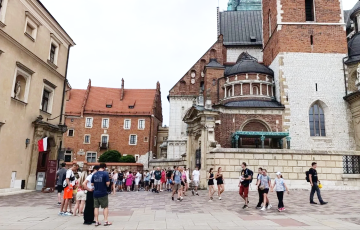
Photo: MOST
And on the walls of Wawel, there are references to Belarusian cities.
In Wawel Castle, you can find commemorative plaques dedicated to Minsk, Gomel, and Grodno; in the center of Kraków stands the building where “Dudka Belaruskaya” was first printed Franciszka Bogushevich, and Vladimir Korotkevich climbed the tower of St. Mary’s Church. Blogger Gleb Lepeiko leads tours of Belarusian sites in Kraków. A journalist from MOST visited one of them.
At the beginning of the 20th century, Wawel—a complex featuring the royal castle and cathedral—was in poor condition and in need of restoration. After Poland regained its independence, it became clear that this would require significant funding.
“At the time, it was an absolutely brilliant idea.” Adolf Shishka-Bogush, who oversaw the restoration work at Wawel, proposed the idea of crowdfunding,” says Gleb.
It wasn’t just wealthy people who could donate. The names of those whose contributions covered at least one day of restoration work were inscribed on small plaques at Wawel. According to Gleb, the first donation arrived the very next day after the fundraising campaign was announced—from New York.
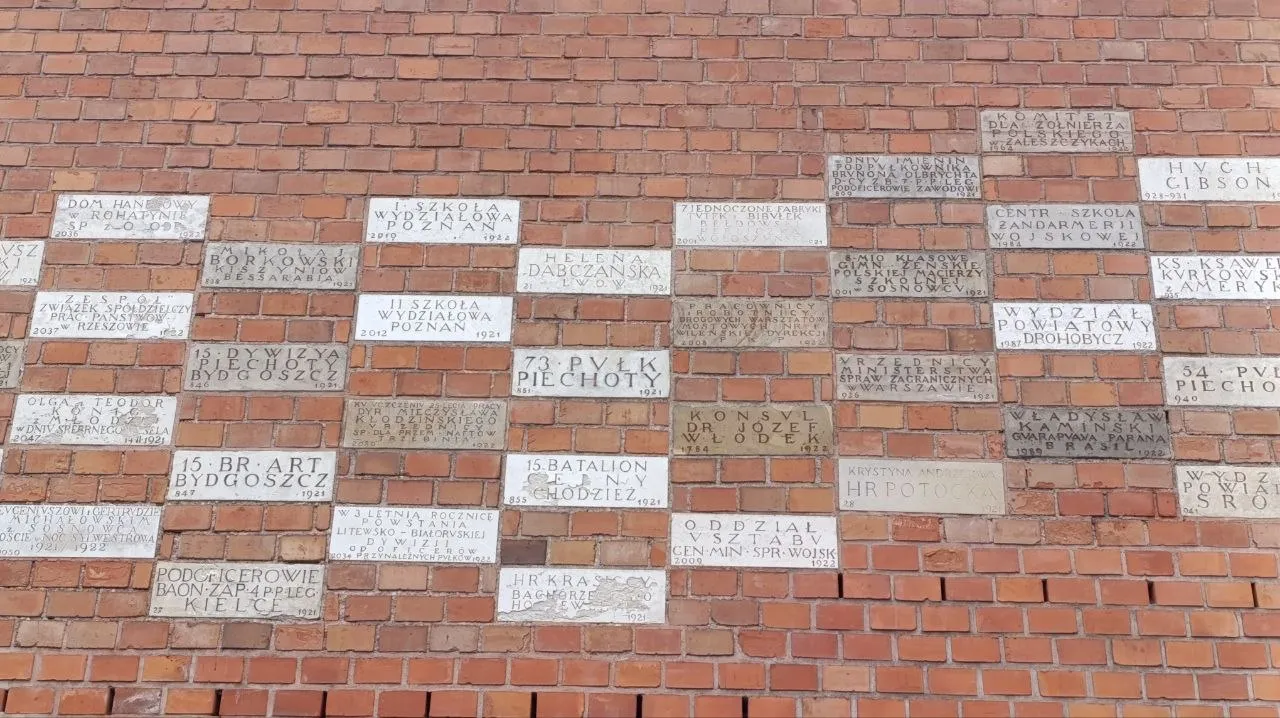
788 such plaques have survived to this day, including some with a Belarusian connection.
“Here’s Minsk, here’s Gomel, and here’s Grodno,” says Gleb.
In the center of Kraków stood a printing house where, in 1891, the first edition of Franciszek Bogushevich’s *Dudki Belaruskay* was published. The building that housed the printing house still stands today.
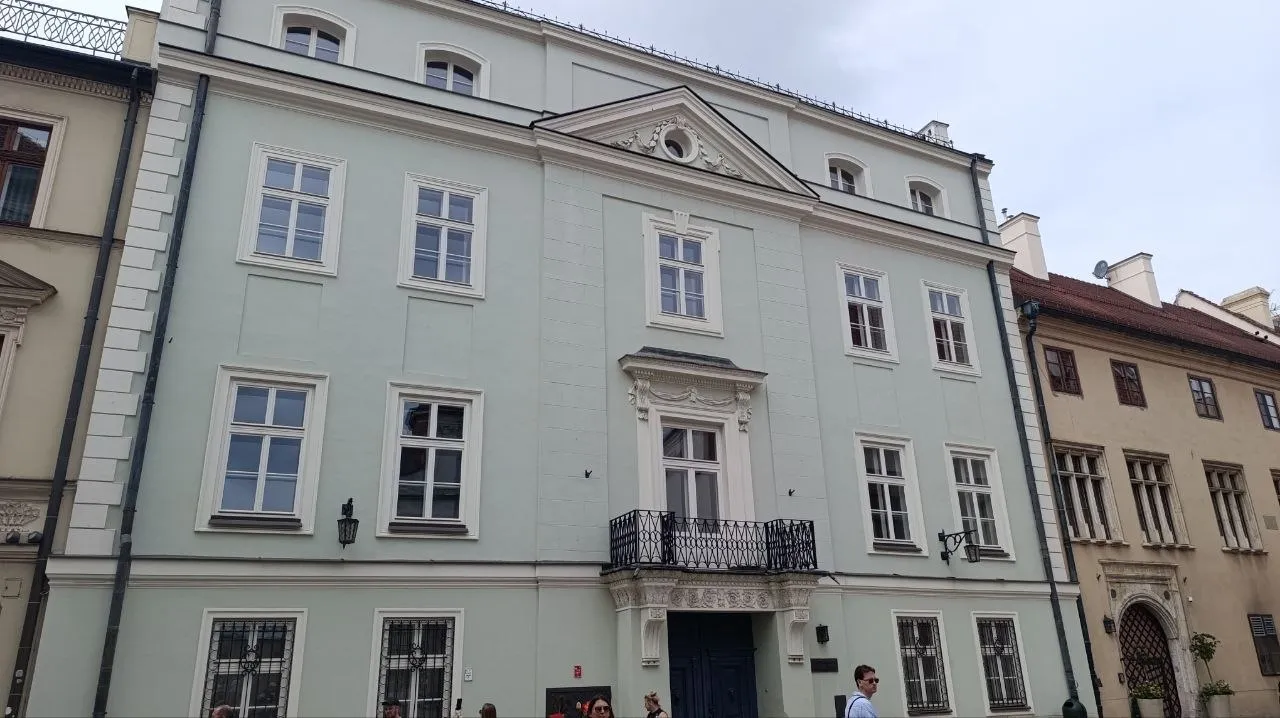
A friend of Bogushevich’s, Alexander Yelsky, a researcher on Belarus, also had ties to Kraków. Gleb acknowledges that it was through his contacts that they were able to arrange for the book to be printed. But he emphasizes: it is not known for certain how Bogushevich ended up at this printing house, since no detailed account of this story has survived.
Now there is a proposal to install a commemorative plaque on the building to mark the publication of the collection.
The Krakow Academy of Knowledge is located on Slavkovska Street. Three people from Belarusian lands are connected to this place.
“I distinguish them based on what they did during the Kalinovsky Uprising. These are three different scenarios,” explains Gleb.
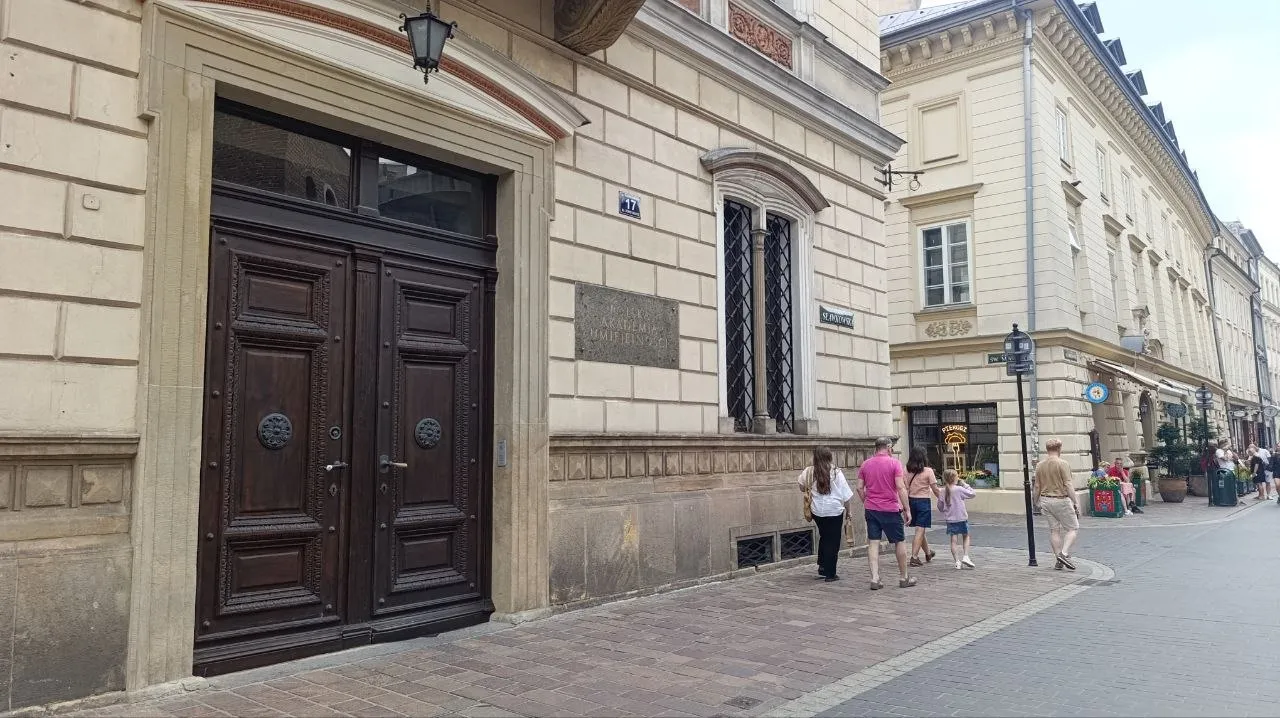
Alexander Yelsky, the “patriarch of Belarusian studies,” wrote thousands of articles about Belarus over several decades of work: on its history, culture, ethnography, and geography. Jelski also assembled a large collection of historical artifacts. He transported a portion of them—about 20,000 artifacts—to Kraków. This saved them: Jelski’s museum in his homeland was later destroyed during World War I.
Zygmunt Wrublewski, a native of the Grodno Region, took part in the 1863 uprising, after which he was arrested and exiled. He later became a scholar and worked in Kraków. Together with Karol Olszewski, Wrublewski was the first to obtain liquid oxygen.
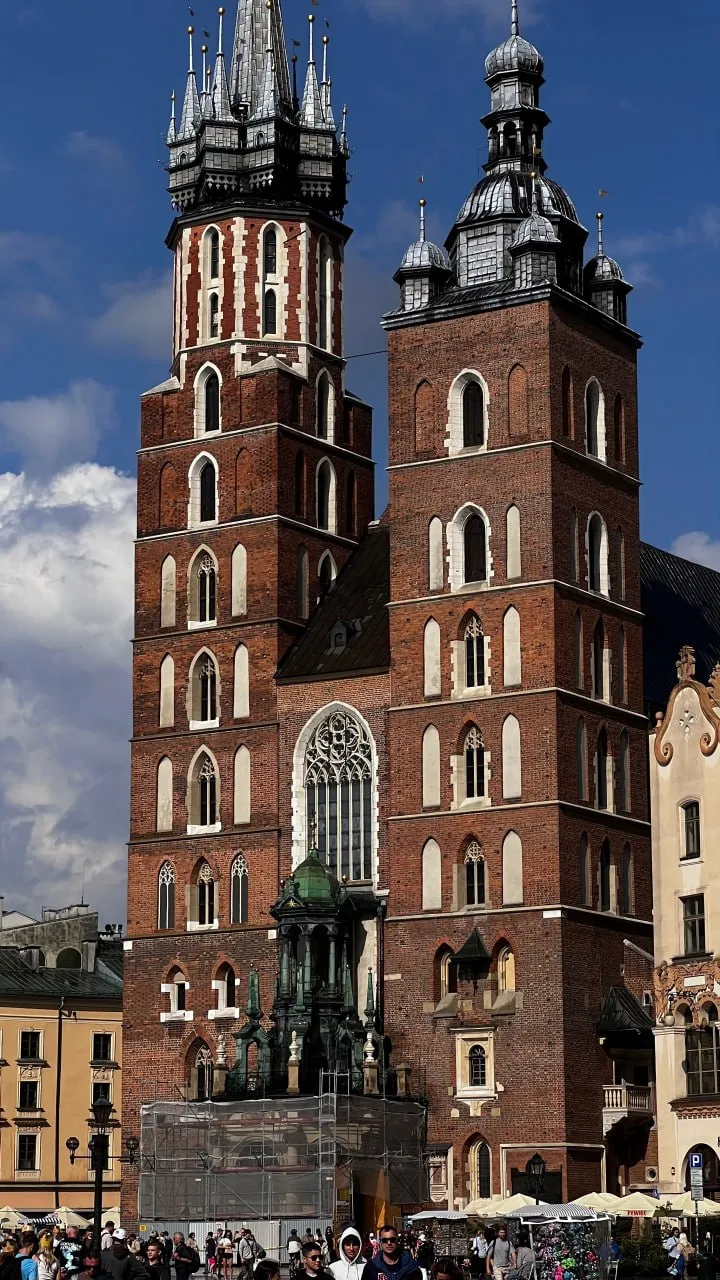
The tour ends near St. Mary’s Church. The story of Vladimir Korotkevich is connected to this place. In 1971, the writer visited Kraków and heard the famous heynal—a melody played every hour from the church tower.
Korotkevich wanted to climb up to the heynal players. Today, tourists can do this, but back then, access to the tower was closed. According to Gleb, they managed to negotiate with the fire chief so that Korotkevich would be allowed to go up.
“The trumpeters, of course, were very surprised that two foreigners had climbed up to them with four bottles of vodka. But the vodka did the trick, and they were allowed to stay,” says Gleb.
According to him, Karatkevich was even allowed to try playing the trumpet. There is also a story that the writer stayed on the tower overnight. But this part of the story has only been recounted indirectly, so it is not known for certain what happened that night.
After Karatkevich’s death, an unpublished poem titled “Around the Heynal” was found in his diary, in which one of the heynalists is mentioned.
“There, he’s simply referred to by his first and last name. Karatkevich could hardly have known his first and last name if he hadn’t met him,” notes Gleb.
This is just a fraction of the Belarusian sites in Kraków. The itinerary also includes other sites connected with the history of the Grand Duchy of Lithuania, Belarusian figures, literature, and science.

Bank's name: Bank Millennium S.A.
Address: ul. Stanislawa Zaryna, 2A, 02-593, Warszawa
IBAN: PL97116022020000000216711123
SWIFT: BIGBPLPW
Name of the account holder: Fundacja “KARTA ‘97”
Purpose/title of payment: Donation for statuary aims
You can contact us by the e-mail charter97@gmail.com