
«Presseurop»: Is it better to show will of iron in relations with Lukashenka’s regime?
20- 19.08.2010, 15:48
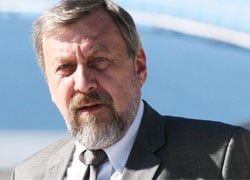
Andrei Sannikov, leader of “European Belarus” civil campaign, believes that “Lukashenka is keeping the EU on the string”.
Seeing absence of progress in the sphere of democracy in Belarus, the European Union has changed its strategy towards its authoritarian leader. As French publication “Presseurop” writes in the article translated into Russian by “Voice of Russia” radio station, contacts with Belarusian civil society have been added to direct talks with Alyaksandr Lukashenka.
For about 10 years Brussels tried to bring to senses the authoritarian Minsk regime with the help of sanctions. The EU refused to issue visas to high-ranking Belarusian officials, excluded Belarus from international partner programs, acted as a brake on development of trade ties and supported democratic opposition. Everything was in vain. And then, two years ago, the European Union decided to change the strategy. In the framework of the Eastern Partnership, which links the EU with six former Soviet republics, Brussels has established direct contacts with Minsk regime.
We cannot but wait whether such a policy would bear fruits. The question suggests itself – is it possible that direct contacts with the authoritarian government would just stabilize the regime? Maybe it would be better to show a will of iron in the relations with Lukashenka’s regime, as it was done by the US President Ronald Reagan towards the Soviet Empire.
“Lukashenka is keeping the EU on the string”
“I believe that it is just a policy calming down the society,” Andrei Sannikov said about the recent changes. Sannikov is one of the most dedicated supporters of the EU among numerous dissenters who are set to be nominated as candidates against Lukashenka in the presidential elections in December this year. His civil campaign “European Belarus” even advocates Belarus’ joining the EU. And though his attitude to the Eastern Partnership is favourable in principle, though he expresses his concern over the fact that the EU had stopped to put pressure on Lukashenka’s government: “Brussels was to take a firm stand and demand the Belarusian government to meet its internal obligations first”. Sannikov believes that “Lukashenka is keeping the EU on the string”.
In 2008 the EU laid down five conditions of good relations to Belarus: to abolish the death penalty, to carry out democratic elections, to guarantee freedom of the press, to stop crackdown on non-governmental organizations and to release of all political prisoners. First it looked as if changes are possible. Minsk released political dissenters; two newspapers which had been banned for years, appeared in newsstands again, and the reform of the election legislation facilitated nomination of opposition candidates. But this political spring was short. The local election which followed was not democratic at all. And freedom for non-governmental organizations in Belarus is still a sweet dream.
As said by Sannikov, who wants to stand for the presidential election, “a dialogue with the dictator had no influence on the state of civil freedoms in Belarus, and moreover, the new political line of the EU has done a lot of harm to the Belarusian opposition”.
In Europe opinions on the new Lukashenka’s conduct differ. Germany, Sweden, Finland and Visegrad group countries (Hungary, Poland, the Czech Republic and Slovakia) are traditionally in favour of a more permissive attitude to Minsk, and in March this year the European Parliament issued a warning to Belarus, threatening to impose the above-mentioned sanctions again in case of new human rights violations. However many things indicate that if we want to see Belarus a democratic country one day, it would not be possible to avoid contacts with the current regime.
Russia will try to prevent Belarus from becoming the NATO and the EU member with all might. It will support Lukashenka as long as possible. Despite of the fact that the economic situation in Belarus is deteriorating, one cannot be sure that the regime would fall by itself, and the country would become a democratic one. No one knows what policy of the West would lead to democratization of Belarus more rapidly. As said by a sociologist Aleh Manaeu about the fall of Communism in Eastern Europe, “to a great extent it was a miracle”.