"The Theory Of Victory": How NATO Plans To Respond In The Event Of A Russian Attack
1- 16.10.2026, 9:30
Five Key Questions.
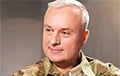
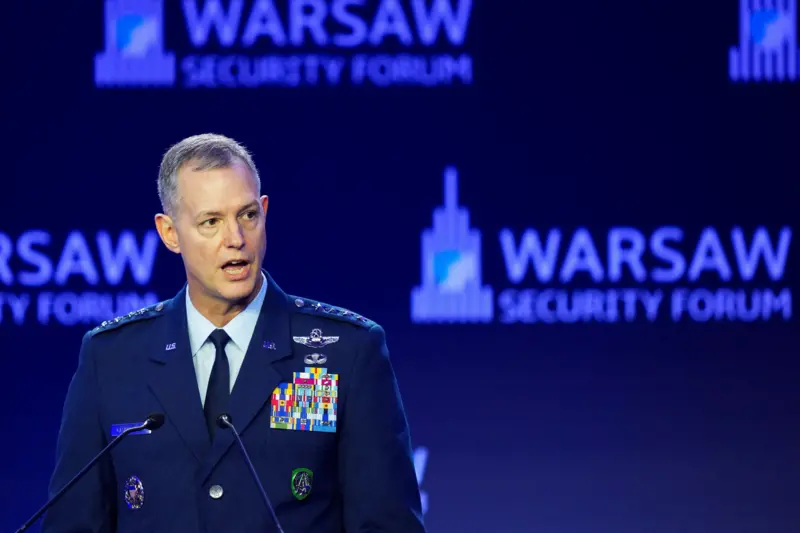
In the event of a Russian attack on a NATO member state, the alliance intends to stop it at the very outset, will strive to contain it within the bounds of a local conflict, and, if that fails, will launch strikes against the resources and forces supporting the military operation. These are the provisions of “theory of victory”—a concept for deterring Russia and deploying NATO armed forces in the event of an attack by Moscow. This concept was presented earlier this week by General Alexus Grinkevich, Supreme Allied Commander Europe.
The BBC has examined this concept and explains what kind of war the North Atlantic Alliance is currently preparing for.
“I do not believe that a conflict is inevitable or that it is about to begin. That is not the case,” said General Alexus Grinkevich, speaking at a security forum in Warsaw. During his speech, he never once mentioned the word “Russia,” although the general meaning of his remarks and the context in which the speech was delivered were linked to a potential Russian threat.
Not everyone in Europe—or even within NATO—shares Grinkevich’s view. In December 2025, the alliance’s secretary general Mark Rutte said: “We are Russia’s next target, and we are already in danger.”
However, despite somewhat differing assessments, following the full-scale invasion of Ukraine in 2022, NATO has been applying the principle of “guiding itself by capabilities, not intentions” with regard to Russia. And, judging by statements from alliance representatives, they believe that Russia is strong enough to threaten neighboring countries.
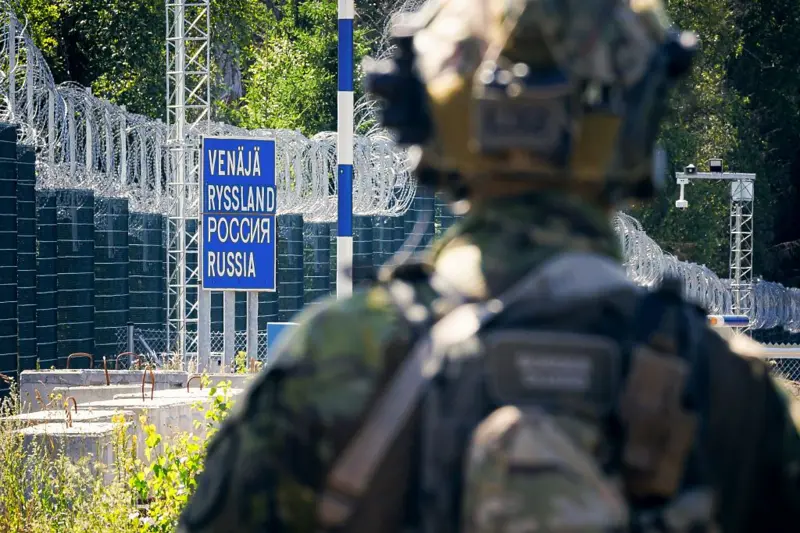
The Baltic states and Poland are considered potential theaters of war in the event of a Russian invasion. And the most likely location is the so-called Suwalki Corridor. This is a small section of the Polish-Lithuanian border between Russia’s Kaliningrad Oblast and Belarus. The distance between them as the crow flies is only 65 km
At the same time, other sections of the borders of Lithuania, Latvia, and Estonia are also considered potentially dangerous, which is why news about NATO’s military buildup along the borders with Russia comes mainly from this region.
In October, the Financial Times reported that Estonia was redeploying troops closer to the Russian border. In late September, it was reported that U.S. troops—a tank battalion and an engineer battalion, totaling more than 1,000 service members—were returning to Lithuania after a six-month absence. Germany has begun forming a brigade in Lithuania with the goal of increasing its strength to 4,800 troops by the end of 2027.
At the same time, Lithuania and Poland are preparing evacuation plans for the populations of the Baltic states in the event of a Russian invasion—identifying emergency border crossings, refugee reception centers, and other infrastructure.
Four Eurofighter jets from the German Air Force were temporarily deployed to Latvia. This was done due to concerns about drones infiltrating from Russia during the Saeima elections in early October. However, this deployment also served as a test of NATO’s ability to strengthen its air presence over the Baltic states.
On the other side of the border, troop movements are also taking place. For example, since September 15, Belarus has been conducting command-and-staff exercises in the Suwalki Corridor area. At the same time, in the Kaliningrad region, the Baltic Fleet’s air force conducted exercises in which pilots practiced engaging ground targets.
What kind of war is NATO preparing for?
In his speech, Aleksus Grinkevich described a full-scale conflict reminiscent of the Cold War-era standoff in Europe, when the Warsaw Pact countries and NATO were preparing for clashes between large armies.
A summit of mixed feelings. How the NATO leaders’ meeting in Ankara ended
In September, Russia accused NATO of intending to isolate the Kaliningrad region from the rest of the country and even promised to use nuclear weapons if that happened. In a written response, the organization stated that NATO is a defensive alliance committed to countering threats to the security of its members from all directions, and that “no NATO exercises or actions pose a threat to the territory of the Russian Federation.”
The “theory of victory” adheres to the principle of “deterrence through prevention,” whereby the adversary is made to understand that any offensive operation on its part will be futile, and the costs of such an operation will prove too great. An alternative principle—“deterrence through retaliation”—means that a potential adversary is threatened with a powerful and devastating counterstrike in response to possible aggression.
“We will stop the initial attack. If the attack continues, we will weaken it and prevent the enemy’s advance. And if necessary, we will crush the enemy’s forces and the operational warfighting system deployed against us,” said Grinkevich.
This NATO principle was adopted back in 2023 at the Vilnius summit, when the organization declared its intention to defend “every centimeter of allied territory,” which led to an increase in the alliance’s troop presence in the Baltic states and Poland.
Prior to that, NATO contingents in these countries served as a “stretching force”—a signal that, in the event of an attack, would summon additional reinforcements—a prime example of “deterrence through retaliation.”
These two types of deterrence require different approaches to the deployment of forces and assets.
“Deterrence through prevention” involves deploying as many forces as possible to locations where hostilities are likely to begin or at a relatively short distance from them. The redeployment of troops to Russia’s borders is precisely this.
In the second case, a relatively small blocking force remains in place, tasked with delaying—rather than stopping—the enemy, while a crushing strike is prepared from the rear.
Israeli military expert David Gendelman believes that at this stage, NATO is trying to exercise restraint, if only to avoid escalating tensions with its statements.
According to him, this is the minimum possible military response without escalation or raising the stakes: “Ideally, they don’t want to fight at all, but if they have to, they say they will fight to the absolute minimum and no more. They believe that statements about a crushing blow and a rout in response to an invasion are in themselves an escalation, so they avoid making such statements and instead keep their rhetoric to a minimum.”
Is NATO afraid of a war with Russia?
One possible reason for choosing this strategy is the fear that a conflict with Russia could spiral into an uncontrollable escalation. After all, that very “retaliation” in response to the initial offensive—a crushing blow—is precisely a very sharp, one-time escalation of the conflict, which could provoke a similar response.
The strategy chosen by NATO increases the intensity of the conflict much more gradually.
Of the three stages of a defensive operation described in the “theory of victory”—stopping the first strike; prevent the offensive from advancing deep into the country; and “destroy the operational war-fighting system”—only the third stage involves a strike, likely against Russian territory, and even then, probably not against strategic targets but against operational ones, that is, communications, warehouses, and command centers.
Grynkevich says that NATO will try to place the “burden of escalation” on the side that initiates the conflict. According to him, NATO forces will merely defend themselves, preventing the offensive from gaining momentum. “It is he [the adversary], and he alone, who will bear all moral, political, and strategic responsibility for the decision to escalate. And here we must ensure that the adversary also understands: the advantage is on our side, and any escalation will only worsen its position both militarily and politically,” — the general emphasized.
However, is it possible to contain the escalation of the conflict by artificially limiting one’s own use of forces and resources?
“Escalation can certainly be contained if that is the desire of the parties; most conflicts in the world do not usually escalate ‘to the limit.’ This is all the more true in this case, where NATO has no real interest in escalation, and a hypothetical Russian attack so far fits more into the logic of ‘escalation for the sake of de-escalation,’ that is, extracting political concessions through military pressure, rather than the logic of an actual military victory,” said David Gendelman.
NATO sees its advantage in intelligence and decision-making, as well as in aviation, precision-guided weapons, and the ability to coordinate actions across all five “domains”—on land, at sea, in the air, in space, and in cyberspace.
In other words, NATO evidently expects that the initiative—which could fall into Russia’s hands if war breaks out—will not give it a significant advantage, since the preparations for an invasion, its scale, and the composition of the strike force will be known in advance.
Is there a risk of nuclear weapons being used?
The greatest risk of escalation in a conflict between NATO and Russia is nuclear weapons. General Grinkevich’s “theory of victory” makes no mention of their use. However, the situation regarding nuclear weapons in Europe is changing.
The threat of their use is echoed in the statements of Russian officials and propagandists. Speaking in early October at the annual Valdai Club meeting, Russian President Vladimir Putin accused Europe of escalating tensions in relations with Russia.
“If it comes to a direct attack on the Russian Federation—in this case, we are referring to Kaliningrad, and perhaps other territories as well—the question of the Russian Federation’s use of all weapons at our country’s disposal will inevitably and immediately be on the agenda,”, he stated. “All weapons” includes nuclear weapons.
In late September, the Russian state news agency “RIA Novosti” published a column by Alexander Nosovich “Another Special Military Operation Awaits Russia. It Will Be Very Short,” which stated that in the event of war, Russia could use nuclear weapons in the Baltic states. The column was subsequently removed.
Nosovich’s column was published after the Lithuanian Seimas began considering the possibility of deploying nuclear weapons on the country’s territory. Such authorization requires a constitutional amendment. The amendment passed its first reading on October 6; the final vote is scheduled for January 12, 2027.
This amendment does not mean that Lithuania will acquire nuclear weapons. However, it could allow the country to temporarily host another country’s weapons on its territory. For example, it could join the French nuclear deterrence program, under which French Air Force aircraft carrying nuclear missiles could be stationed in European countries.
Since we are talking about Europe, the nuclear weapons that could be used in a conflict of this scale would likely be non-strategic. They are sometimes also referred to as tactical.
After 2023, Russia deployed low-yield nuclear warheads in Belarus. These weapons belong to and are controlled by Russia. These are presumably “Iskander” operational-tactical missiles equipped with nuclear warheads. In addition, Belarus hosts Russian “Oreshnik” medium-range missile systems capable of carrying a nuclear warhead.
The U.S. is currently developing a “controlled escalation” strategy, as part of which it also intends to expand its arsenal of non-strategic nuclear weapons. According to experts, this is necessary to control escalation involving the possible use of nuclear warheads.
The U.S. has tactical aerial bombs in several European countries, but they are less effective than missiles. Therefore, as Washington apparently believes, it lacks a deterrent that is more powerful than conventional weapons but not as destructive as strategic nuclear missiles.
All these preparations are taking place against the backdrop of the expiration of the Intermediate-Range Nuclear Forces Treaty, which for many years reduced tensions in Europe by depriving the parties of their most dangerous nuclear weapons.
How will NATO respond to hybrid threats?
The “theory of victory” also devotes considerable attention to hybrid threats. Judging by statements from Western politicians, NATO countries are already facing them.
The day after Grinkevich’s speech in Warsaw, Polish authorities accused Russia of organizing an arson attack on a ground station of the Starlink satellite network. “We have no doubt that Russian intelligence services are behind this act of sabotage,” said Tomasz Semoniak, the minister responsible for Poland’s intelligence services. The arson itself took place in September.
In his remarks, Grinkevich addressed hybrid threats while answering the host’s questions: “When a state that has been attacked is ready and has fulfilled all the necessary legal requirements to establish responsibility for that attack, we must do so publicly. This allows the Russians to understand […] that we see what they are doing.”
But he said nothing about retaliatory measures or how to respond to a proven act of sabotage.
On the one hand, drawing “red lines” in hybrid warfare could provoke a potential adversary to push closer to those lines and, perhaps, test how resolutely those boundaries will be defended. But on the other hand, it is important that they be clear to those who establish them and that there be a clear plan for responding to their violation.
Another danger of hybrid warfare is that its escalation can occur gradually, and each subsequent step, on its own, may not constitute a sufficient pretext for starting a war. General Grinkevich did not address this issue directly in his speech, but he stated that, in any case, the enemy would not be able to conceal preparations for a full-scale war.
Will the U.S. Go to War with Russia?
Following his speech, Grinkevich was asked about U.S. involvement in a conflict with Russia, should one break out. This question has been debated for quite some time; moreover, French President Charles de Gaulle openly expressed doubts about it as early as 1961.
On the one hand, the United States is the most powerful country on the planet. The North Atlantic Treaty Organization (NATO) was originally created to defend the U.S.’s European allies. On the other hand, a war with Russia could result in a nuclear apocalypse that would threaten every country in the world.
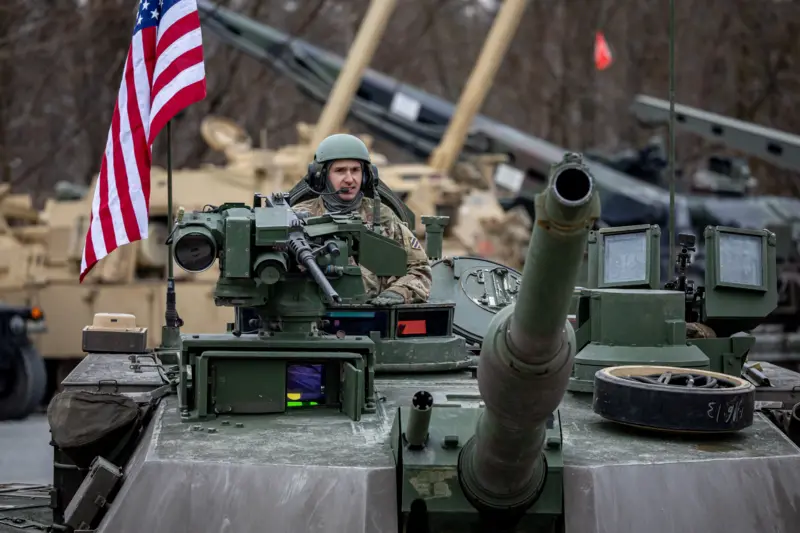
Grynkevich cited the U.S. presence in Europe as an example of the U.S.’s continued commitment to NATO unity, but did not mention any specific plans.
“Look, U.S. troops are already here in Poland. U.S. troops are stationed along the entire eastern flank. Ultimately, the question of who provides troops and where is a political decision. But I think no one should doubt the United States’ commitment to this alliance,” he said.
Meanwhile, back in the summer, Pentagon chief Pete Hegset stated at a meeting of NATO defense ministers that the days of “freeloading” were over, and that Europe must take charge of its own defense, while the U.S. will reassess its military presence in Europe over the next six months. In addition, Hegset confirmed that the U.S. will immediately reduce its participation in NATO’s rapid reaction forces.
This does not mean that the Americans are literally going to reduce their troop contingent on the European continent. According to him, the U.S. advocates for “a rapid and irreversible shift toward Europe taking a leading role and assuming primary responsibility for its own defense.”
No concrete answers
The very fact that General Grinkevich’s keynote speech took place in the Polish capital was symbolic. Grinkevich himself called Warsaw “a place where deterrence and defense are taken seriously and where actions match words.”
Polish authorities are constantly warning the public that the number of acts of sabotage, subversion, and incidents at infrastructure facilities linked to Russia will increase. Russia, Warsaw explains, will seek to “undermine” the societies of European countries, intimidate them, and force them to stop helping Ukraine.
The speech by NATO’s Supreme Allied Commander Europe differs fundamentally from the rhetoric of Polish Prime Minister Donald Tusk and members of his government, who have been predicting further escalation and possible missile and drone strikes on Poland.
This contrast was so stark that the influential newspaper Rzeczpospolita called Grinkevich’s remarks “a voice from another reality.”
To many experts, the alliance’s position—which aims to deter Russia not by threatening the use of force but by building a robust defense—seems ill-timed.
“Even now, NATO has not abandoned its policy of preventing escalation and does not intend to provoke a third world war in response to a Russian attack on its eastern flank. The alliance intends to defend itself, including by striking enemy territory, but does not seek to bring Russia to its knees, decapitate its leadership, or destroy its nuclear capabilities,” — writes Marek Swerczyński, a military expert for Polityka Insight .
On the one hand, says TokFM radio commentator Szymon Kempka, it would be extremely naive to expect concrete answers to complex questions from an American general holding such a high-ranking position: “We must not forget that we are not the only ones listening to his speech; the Kremlin is also paying close attention to the theory of victory.”
On the other hand, commentators urge us to view Grinkevich’s speech not in isolation, but in conjunction with the remarks made at another panel of the Warsaw Forum by another representative of the U.S. administration close to Donald Trump, U.S. Ambassador to NATO Matthew Whitaker.
He noted that in President Trump’s National Security Strategy, priorities are set as follows: “First and foremost is the security of America itself. If we fail to meet this challenge, nothing else will matter. Second is the Western Hemisphere. Obviously, we must focus on what is closest to the United States. Third is the Pacific region. And fourth is Europe. I believe this is precisely the order in which we are currently considering all the current security priorities of the United States and our allies.”
Misinterpretation of Two Concepts
Following the Warsaw conference, on October 14, the Belarusian Ministry of Foreign Affairs issued a statement condemning General Grinkevich’s remarks, viewing them as a threat to Belarus.
“This concept provides for preemptive strikes on Belarusian territory using drones and ground-based robotic systems,” the Foreign Ministry’s official statement read.
Meanwhile, General Grinkevich’s remarks did not contain any such statements.
This may have been the result of a misinterpretation of an article in the Wall Street Journal, which, in discussing the “theory of victory,” suggested that it might be based on the work of retired General Chris Donahue, former commander of the U.S. Army in Europe and former head of the alliance’s land command.
The idea of launching a decisive counteroffensive—which, among other things, involved a missile strike against Russian command posts and air defense systems in the Kaliningrad region, near St. Petersburg, and in Belarus, appears in Donahue’s concept outlined in the WSJ, not in Grinkevich’s speech.
“This approach has been dubbed the ‘Eastern Flank Deterrence Initiative,’ and, according to U.S. military officials, its main goal is to force Putin, after assessing NATO’s defenses, to conclude ‘not today’ if he is considering an attack,” the article stated.
According to the publication, “as part of this strategy, the plan was to create a vast ‘autonomous zone’ so that drones and ground robots could repel a Russian attack without significant losses among the allies.”
The deterrence concept proposed by Donahue differs from Grinkevich’s “theory of victory.” It is more a matter of “deterrence through retaliation”—the very approach that, by all accounts, NATO does not intend to adopt.

Bank's name: Bank Millennium S.A.
Address: ul. Stanislawa Zaryna, 2A, 02-593, Warszawa
IBAN: PL97116022020000000216711123
SWIFT: BIGBPLPW
Name of the account holder: Fundacja “KARTA ‘97”
Purpose/title of payment: Donation for statuary aims
You can contact us by the e-mail charter97@gmail.com