

Residents Of Sevastopol Were Not Issued QR Codes For Gasoline Due To A Disruption In Supplies
7- 11.06.2026, 8:04
- 3,820
There's no point in standing in line.
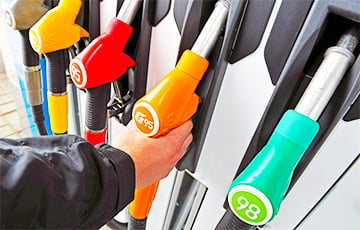
Mikhail Razvozhayev, the Moscow-appointed “governor” of annexed Sevastopol , on the evening of June 10 reported that a new batch of QR codes entitling local residents to refuel would not be issued. He cited supply disruptions as the reason: fuel trucks were unable to reach the city last night. “I’m addressing everyone: there’s no point in standing in line at the ‘TES’ gas station tomorrow,” he wrote on his Telegram channel, emphasizing that “today (June 10 — TMT) all previously issued QR codes will be deactivated.”
“Tomorrow (June 11, after 10:00 p.m. — TMT) there will be a new batch, and if you haven’t had a chance to use your code yet, you’ll be able to get a new one,” the “governor” added. He also noted that on June 11, the "TES" gas station will be accessible only to utility services, ambulances, law enforcement agencies, and public transportation. Razvozhayev promised to provide a separate update regarding the possible general sale of fuel at the “ATAN” gas station.
According to 7×7’s estimates, by June 10 at least 25 Russian regions (excluding the occupied territories of Ukraine) faced gasoline shortages and supply disruptions. If we include the six occupied Ukrainian regions—Crimea, Sevastopol, Luhansk, Donetsk, Kherson, and Zaporizhzhia regions—the number of such regions reaches 31.
In the Krasnodar Krai, gas stations have already begun to close due to fuel shortages. Prices have skyrocketed in annexed Crimea: as of June 10, a liter of AI-92 cost about 82 rubles (compared to roughly 69 rubles in Moscow), and AI-95 cost nearly 90 rubles compared to 75 rubles in the capital. Resellers are offering fuel for 130–150 rubles per liter, which is about 50% higher than official Crimean prices.
The main cause of the crisis was strikes by the Ukrainian Armed Forces on oil refining infrastructure. According to Bloomberg, Russian refineries were attacked 38 times between January and May 2026, with 16 of those attacks occurring in May—the highest number since the war began. According to OilX data, refinery utilization has fallen by 14% since the start of the year and remains approximately 20% below pre-war levels. Against this backdrop, on June 8, the Russian Ministry of Energy announced the creation of an industry task force to ensure the stable operation of the fuel and energy complex amid “an increase in enemy airstrikes.”

Bank's name: Bank Millennium S.A.
Address: ul. Stanislawa Zaryna, 2A, 02-593, Warszawa
IBAN: PL97116022020000000216711123
SWIFT: BIGBPLPW
Name of the account holder: Fundacja “KARTA ‘97”
Purpose/title of payment: Donation for statuary aims
You can contact us by the e-mail charter97@gmail.com