

Ukrainian General: Russian Army Will Be Depleted By Spring
2- 24.01.2026, 13:48
- 13,758
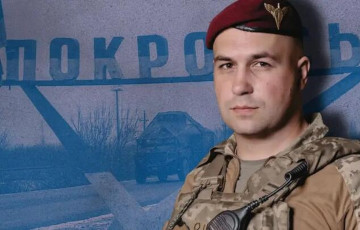
Photo: BBC / Reuters
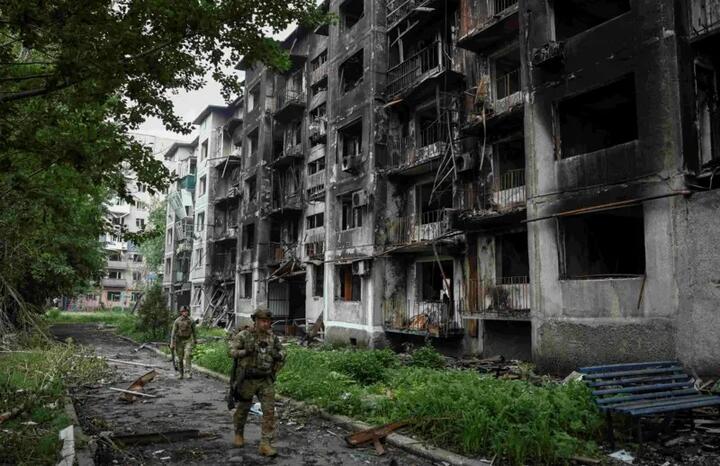
The battles for Pokrovsk and Mirnograd are of key importance.
The large agglomeration of the industrial cities of Pokrovsk and Mirnograd in Donetsk Oblast is one of the main targets of the Russian offensive. Russia has concentrated its largest and most powerful grouping here. Late last year, the Kremlin announced the full occupation of these cities. In reality, this is not the case, writes BBC.
Earlier in the late summer of 2024, Russian troops approached the vicinity of these settlements. But Ukraine transferred reserves, strengthened its defenses and managed to prevent the rapid fall of the agglomeration.
Active fighting on this section of the front has been going on for a year and a half. The situation escalated to the maximum in the early fall of 2025, when Russian troops were able to overcome the AFU defenses in the south of the Pokrovsk-Mirnograd agglomeration and enter residential areas.
Already in late October, the Russian authorities announced the "completion of the encirclement" of Ukrainian forces in Krasnoarmeysk and Dimitrov (the Kremlin uses these Soviet names for Pokrovsk and Mirnograd). On December 1, the Kremlin reported the capture of Pokrovsk, and just before New Year's Eve it claimed full control of Mirnohrad.
Ukrainian authorities deny this. The military-political leadership assures that separate districts of these towns are still under AFU control and there is no question of encircling or capturing the agglomeration.
OSINT-analysts also draw attention to the lack of reliable data on Russia's full control over these settlements. But the researchers admit that parts of Pokrovsk and Mirnograd have long been in a "gray zone" where neither side has stable control over the territory.
The question remains: how long will Kiev be able to resist Russia's powerful pressure on this section of the front? How much strength and reserves do Ukrainian troops have to continue grueling battles in the urban areas of Pokrovsk and Mirnograd?
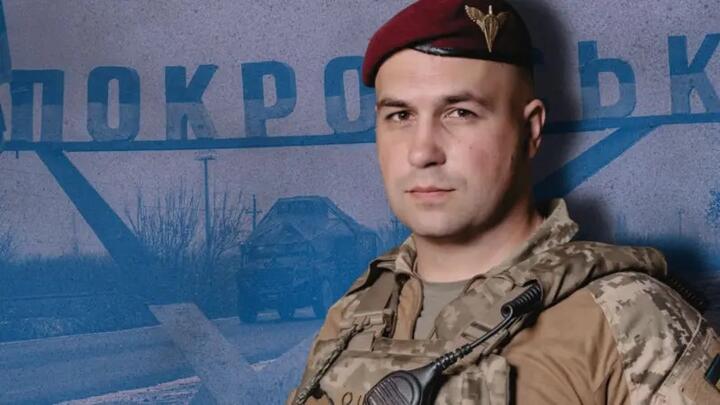
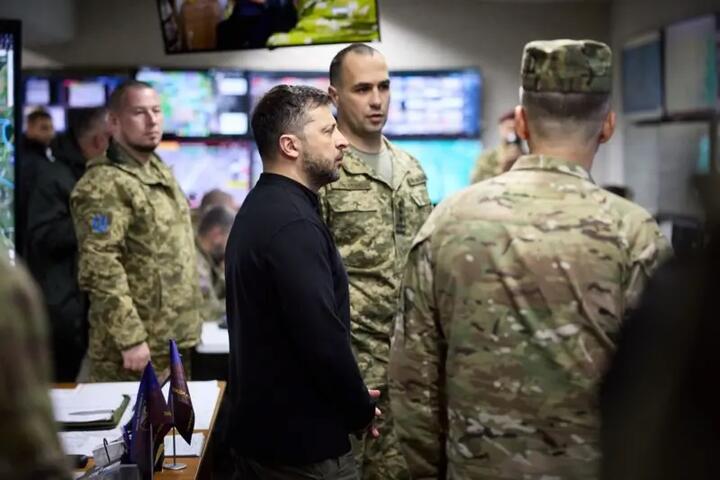
Ukrainian General Yevgeniy Lasiychuk has the answers to these questions. Since the summer of 2025, he has been in charge of the 7th Rapid Reaction Corps of the Airborne Assault Troops. It is this AFU unit that is responsible for the defense of Pokrovsk and Mirnograd.
In an interview with the BBC Ukrainian Service, the brigadier general notes: the Defense Force fighters need to hold out until spring, when the Russian army, according to calculations, should be exhausted and slow down the advance.
But in the meantime, it is stepping up its offensive on Pokrovsk and Mirnograd.

Who controls what, where is the line of demarcation?
BBC: What is happening in the main area of responsibility of your corps - in the agglomeration of the towns of Pokrovsk and Mirnograd? Under whose control is it under?
Evgeniy Lasiychuk: Today the Ukrainian Defense Forces have full control over the northern part of Pokrovsk and the northern part of Mirnograd. The enemy is still more active in Pokrovsk, trying to press north-west for further access to the settlement of Grishino. Perhaps, this is his main goal in the Pokrovsk district.
Some units, attracted by the enemy in this city, are also trying to penetrate between our military orders in the north, trying to go beyond Pokrovsk.
As for Mirnograd, the enemy's advance is in the southern part of the settlement. He is trying to accumulate personnel and equipment there.
We have intelligence information that there the enemy plans to continue to try to further advance towards the northern part of Mirnograd. As of today, logistics in this agglomeration remain difficult, but we are using bombers (drones-multicopters with large payloads - BBC), ground robotic systems, and they are helping us a lot.
BBC: In December, you said that in fact the line of demarcation in Pokrovsk runs along the railroad. Have the Russians managed to cross that line and gain a foothold in the northern parts of the city? For example, on the DeepState maps we see that there are some points where they have managed to do this.
E.L.: Yes, indeed, this resource reflects the fact that the enemy can bring in some kind of sabotage group there. It will stay there for a while, live there.
The dividing line currently runs along the railroad. We control it, and the enemy almost never manages to cross it. And where there are small islands [of control] that he tries to occupy, he is destroyed there, he does not live there for long.
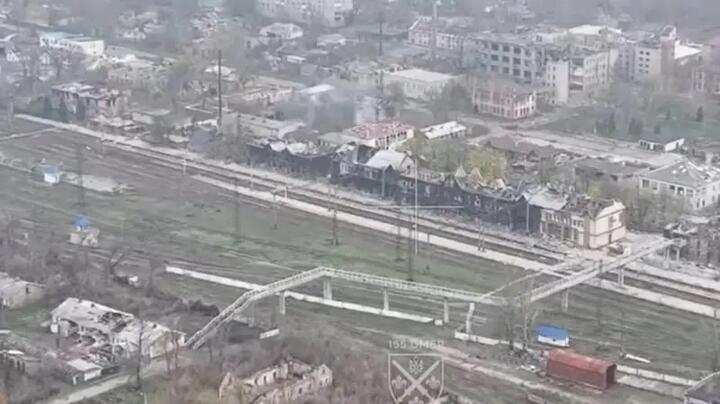
The railroad in Pokrovsk divides the city into southern and northern parts. The south is held by Russian troops, while in the north there are still AFU positions. Photo: 155th AFU OMBr
The railroad in Pokrovsk divides the city into southern and northern parts. The south is held by Russian troops, in the north there are still positions of the AFU. Photo: 155th AFU OMBr
BBC: You said that the AFU holds the northern part of Mirnograd. Does this mean that the Ukrainian forces have already withdrawn from the south and center of the city?
E.L.: Mirnograd can be conditionally divided into southern and northern parts. And between them there is such a gap - the area of five-storey buildings. At this stage, we fully hold the northern part of the settlement and keep under fire control the gap between the southern and northern parts.
The enemy is forced to pass through this area and accumulate. But this state of affairs only makes it easier to fire on the enemy forces.
Grishino. "We read their designs"
BBC: There are two villages, Svetloye and Rivne, between Pokrovsk and Mirnograd. Russia claimed to have seized them. According to your information - are they really captured or are they under Ukrainian control?
E.L.: As for these settlements, we have our positions there. We "stirred up" the enemy there on New Year's Day. Our servicemen were showing Ukrainian flags - congratulating the enemy on New Year's Eve. So our positions are there.
But really, the enemy realizes that this is an important direction for him - he needs to separate Pokrovsk from Mirnograd by cutting into this place. There are our positions there, but somewhere there is also the enemy. However, the situation there today is controlled.
BBC: When you say that the northern part of Pokrovsk and Mirnograd remains under Ukrainian control, are you talking about fire control or are there still actual AFU positions there?
E.L.: No, we have fire control even before this point. In the northern part there are our positions. If we define the line of combat in Pokrovsk, it is the railroad, and in Mirnograd - the area of five-storey buildings.
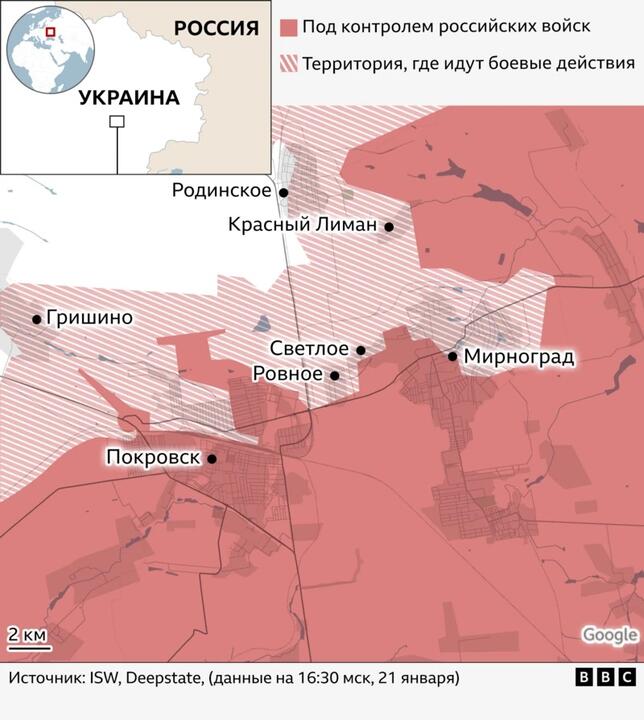
Ukrainian command says that the northern part of Pokrovsk and Mirnograd remains under AFU control. OSINT analysts from the DeepState project and the Institute for the Study of War (ISW) consider these territories a "gray zone."
Ukrainian command says the northern part of Pokrovsk and Mirnograd remains under AFU control. OSINT analysts from the DeepState Project and the Institute for the Study of War (ISW) consider these territories a "gray zone."
BBC: You said that the Russian army's efforts are now focused on capturing Grishino. How close are the Russians to this and why is this village so important?"
E.L.: You see, they are making plans for further action. We read their plans. And the incoming intelligence information shows that in the future the enemy will press on Grishino.
It is very difficult for them to move somewhere in open fields, forest belts. That's clear. Therefore, it will cling to populated areas in order to move further into the depth of the defense. That is - if we are talking about this direction - to the west, through Grishino, in the direction of the Dnepropetrovsk region. But now the situation in Grishino is controlled.
There were cases when the enemy tried to move forward on motorized vehicles, a conditional mechanized column, but we stopped him. And after that the enemy again switched to the tactic of small groups.
How it looks: directly from our positions infantry transmits that they hear the movement of the enemy or equipment. Then we let the occupants get closer to the neighborhood of the village and destroy them in small arms combat. This is in bad weather, when we can not fully conduct aerial reconnaissance.
But if the weather allows us to conduct reconnaissance from the air, we detect the enemy even in Pokrovsk.
There was even such a situation. The Russians, having a love for "sacred dates", set themselves the task to seize the settlement of Grishino on New Year's Eve and had already prepared some flags and salutes for this purpose. But in fact they had no success at all.
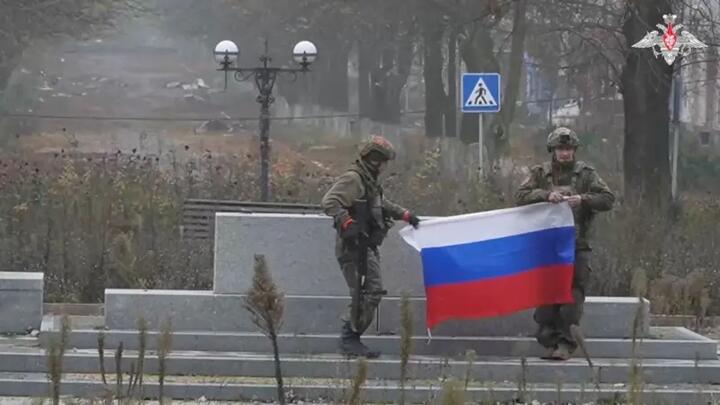
How many troops does Russia have in the area of Pokrovsk
BBC: Can you say how many troops Russia has accumulated on this section of the front and how many it managed to bring directly to Pokrovsk and Mirnograd?
E.L.: As for the Russian grouping, the tasks here were carried out by the 51st and 2nd Armies of the Russian Federation. But at a certain point they lost their effectiveness because they suffered losses.
After that, they brought in an operational-strategic reserve from the 76th Airborne Division. We knew where it was moving from, by what means, how it would be accumulated.
Today, this airborne assault group is active, trying to advance. But we know that it has already suffered such losses that we have to change units, taking them out to regroup, to restore their combat capabilities.
That is, it shows that our defense and fire defeat are effective.
BBC: And how many troops has Russia deployed here?
E.L.: In total, the entire grouping numbers up to 150,000. Directly in Pokrovsk - up to a thousand servicemen. We have exactly that kind of data. But this is again with the agglomeration of this settlement. That is, they are in landings, actively moving around and so on.
BBC: And what losses did the AFU manage to inflict on them? Is there such data?
E.L.: We can say that in about a month up to 2,000 are destroyed - we are talking about wounded and dead. I tell my staffs and brigade commanders: if we have not destroyed 100 enemy soldiers in 24 hours, it was a bad day for us. So we have a "benchmark" and we try to raise these figures.
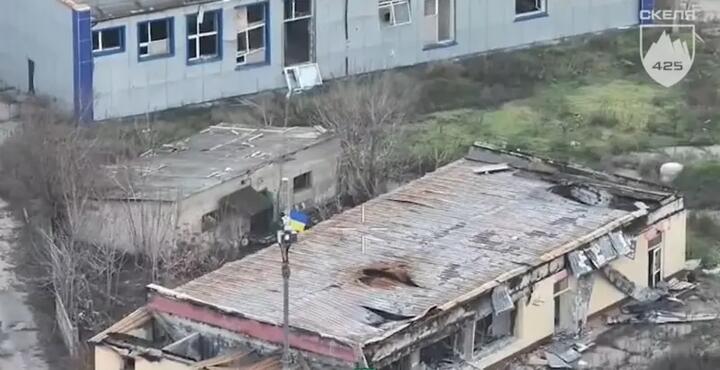
Flags on buildings
BBC: Sometimes we see footage of Ukrainian military personnel, most often from assault units, such as the Skala regiment, making, so to speak, raids into the central part of Pokrovsk with flag displays. Is this risk justified? Sometimes such operations are criticized, saying that Ukraine is risking people's lives for the sake of propaganda effect.
E.L.: I understand what you are saying. Indeed, there was a video of us raising our banners. But I will say right away - there were no raids. You don't need to worry about that.
Our servicemen were raising flags, giving their "congratulations" either at our positions or in the immediate vicinity. This was again on New Year's Day. They showed such initiative.
This mainly influences the enemy, "invigorates" its military leadership, and the enemy moves to rash actions. This has been proven time and time again. They start moving out as much as possible with infantry, looking for our positions, looking for these flags.
How long Pokrovsk will hold out and why it is important
BBC: The dominant opinion is that Ukraine will be forced to withdraw its troops from Pokrovsk and Mirnohrad at some point. First of all, do you share this opinion? Secondly, then what is the point of holding these cities for such a long time? In total, the fighting on this section of the front has been going on for almost a year and a half. You have probably heard arguments that Ukraine should have withdrawn its troops immediately and not engaged in grueling urban battles. How do you see the situation here in the future?
E.L.: The enemy must not be allowed deep into our defenses. Pokrovsk and Mirnograd are of great importance for the further course of hostilities. Today the enemy is bogged down in urban battles in one or the other city. He does not show himself effectively and for every meter of a settlement he suffers colossal losses. Today Pokrovsk and Mirnograd restrain the enemy from further advancement.
If the enemy succeeds in these cities, he will be able to accumulate personnel and equipment there for further entry into the operational space. This could be the Slavyansk-Kramatorsk agglomeration. It could be the Kharkiv or Dnepropetrovsk region. That's why it is so important for us to hold the enemy in these settlements, not to let them go deep into the defense.
BBC: According to your forecasts, how long will Ukraine be able to hold them? After all, these are grueling battles.
E.L.: It all depends on resources and personnel. We have built a stable defense here. The enemy, of course, prevails in resources and personnel, but they are also running out. This direction is one of those where the enemy is already introducing his reserves. And we should not forget about the Zaporizhzhya and Kharkiv directions, where he also needs to send his personnel.
I think that by spring the enemy will be exhausted and will slightly stop the pace of his advance. But that's again unless some other reserve is brought in, for example, the Marines. We know that it's in the process of being coalesced and re-staffed. I'm not sure if it will be used in this particular direction, but it's possible.
BBC: You said that "the enemy will be depleted before spring". Is this only in this direction or is it the entire Russian grouping in general?
E.L.: I am referring specifically to this direction - Pokrovsk and Mirnograd. I have information about how many enemy forces we are eliminating, I correlate it with our losses. Knowing the possibilities of replenishing the personnel and the enemy's advantages in this area, I think that in a little more time, his activity will subside.
BBC: Am I correct in understanding that holding Pokrovsk and Mirnograd has a purely military purpose, not a political one?
E.L.: As a military officer, I will tell you that this has a great military significance. As for the political component - I am not ready to say now. We are doing our own thing. I have already said before: the enemy must be destroyed, and we are doing it.
BBC: In case of a negative scenario, i.e. complete capture of Pokrovsk and Mirnograd, in your opinion, what will be the next goal of the Russian Federation - an offensive towards Dnipropetrovsk or Dobropillya?
E.L.: If we talk about settlements, then it will be 100% Grishino and the direction to Dobropillya.
If we take a broader view, if we talk about the operational space, then it is an exit to the Dnepropetrovsk region, moving north towards the Kramatorsk-Slavic agglomeration. But this is probably the next stage, which they are planning or fantasizing. I think that not only the grouping that exists in Pokrovsk and Mirnograd will be involved, but also the grouping from the northeastern direction, where the enemy is also trying to advance.
On Russian plans to seize the entire Donetsk region
BBC: Russia is demanding that Ukraine give up the territory of the Donetsk region that remains under Ukrainian control. In your opinion, can the Russian Federation militarily seize these remnants of Donbass or is this a difficult, almost unrealistic task for it?"
E.L.: It is a difficult and almost unrealistic task. Again, you have to know their resource and the availability of personnel. Yes, of course, the Russians have means of fire defeat, they have some technologies.
But, as the practice of this war has shown us, the basis of their success is the personnel, which they keep launching and launching, using the current method of "infiltration" or accumulation of certain groups with advancement deep into our territory. But that requires a large number of personnel. Somehow I don't think they have that number.
BBC: You talk about the infantry "infiltration" tactic, but recently the Russians have also tried to attack with mechanized columns, particularly in the direction of Grishino. Were those experiments unsuccessful, and have they abandoned that? Do the Russians continue to stockpile equipment for such attacks?
E.L.: This is their standard tactic, their standard way of attacking, seizing our territory. Basically, it was just when the reserves were brought in, it was an attempt to get into our territory very quickly and decisively with armored vehicles.
This is a very easy target for us, it is destroyed on the approaches to settlements.
Subsequently, the enemy did not use it [armored vehicles] anymore. Not because he doesn't have it, but because it is ineffective. Then he switched to lighter vehicles: motorcycles, buggies, cars. But, again, the movement of this equipment we detect, and we defeat it.
The last method they have now come to is small group tactics.
When our position is detected, the enemy studies it, the approaches to it, the logistical routes and tries to cut them off. Then follows a combined fire attack on the position - up to the fact that the enemy does not spare to use tactical aviation with the use of CABs.
We even recently had six strikes of CABs on one mortar position, in one point, in one intersection of forest belts. The enemy was hampered by this very effective mortar, and he used a full package of bombs on one mortar.
After the fire defeat, the infantry stormed the position.
Daily we recorded that up to five such stages took place alternately on one position. That is, the enemy tried five times to demolish one position, to storm it and put up his "fixes". He almost never succeeds.
The main threat to us is the enemy's tactical aviation, which can inflict a fairly powerful fire attack. The rest is not a particular threat to us.
Our infantry also fights, takes part in contact combat. And they do it quite calmly.
BBC: What trend do you see - is the intensity of Russian attacks now decreasing or increasing?
E.L.: As of today, it is increasing. Both in Pokrovsk and Mirnograd. The enemy still has offensive potential at the expense of the reserve that has been brought here. Accordingly, the intensity of the fighting is still increasing.

Bank's name: Bank Millennium S.A.
Address: ul. Stanislawa Zaryna, 2A, 02-593, Warszawa
IBAN: PL97116022020000000216711123
SWIFT: BIGBPLPW
Name of the account holder: Fundacja “KARTA ‘97”
Purpose/title of payment: Donation for statuary aims
You can contact us by the e-mail charter97@gmail.com