

Belarusians Debated Which Currency Is More Convenient For Tracking Income And Expenses
4- 4.11.2026, 8:00
- 1,126
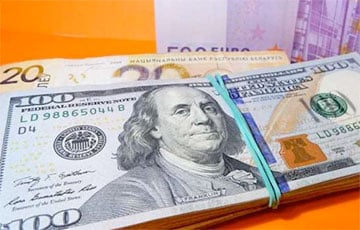
A heated debate broke out.
One Threads user wrote that it had become convenient to view prices in rubles, and that the dollar had “quietly faded into the background.” But not everyone agreed with him in the comments—many admitted that they still convert large purchases to U.S. dollars, writes "Zerkalo".
"Am I the only one who never calculated anything in dollars or converted it?"
“Belarusians, have you noticed how convenient it’s suddenly become to calculate everything in BYN? Somehow, the USD has quietly faded into the background as a unit of value,” a social media user asked.
Opinions were divided in the comments—some agreed with the author, while others categorically denied that anything had changed for them. Here are some of the responses to the post:
“I didn’t notice. In fact, I don’t even process large amounts in Belarusian rubles—I immediately convert them to dollars in my head.”
“No. Nothing has changed for me. When people tell me they bought a 30 m² apartment in ‘Minsk-Mir’ for 8,250 Belarusian rubles per square meter, I don’t understand how much that is. And when they say it’s 2,800 dollars, that’s when I’m even more confused and go, ‘What the hell?!’”
“Well, go ahead and buy an apartment in rubles. They’ve removed the currency options from the websites. Very convenient, yeah.”
“If life is limited to routine trips to the grocery store or running errands, then yes, there’s no need to think in dollars. Anything beyond that automatically triggers the currency calculator in my head.”
“Haven’t you noticed how terribly inconvenient it is that they’ve removed dollar prices from websites? Now you have to convert everything you’re interested in using a calculator.”
“Here we have a generation that doesn’t remember 2008, 2011, and 2014,” noted one commenter. As a reminder, these were years marked by financial crises, the devaluation of the ruble, or sharp price hikes.
“Am I the only one who’s never calculated anything in dollars or converted prices?”
“I’ve never calculated the price of a loaf of bread or kefir in dollars. But it’s much more convenient to calculate major purchases in dollars—nothing has changed.”
“Well, this didn’t happen overnight. It’s thanks to the fact that the exchange rate has held steady at around 3 rubles for the past 5 years—give or take—with the exception of a few spikes. At least it’s not like it was, say, 10–15 years ago.”
The Fight Against the Dollar at the Government Level
In recent years, the authorities have been making efforts to curb the role of the U.S. currency in the domestic market.
First, they restricted foreign-currency lending to individuals; then, banks set unattractive interest rates on foreign-currency deposits. This affected the appeal of savings in foreign currency: keeping money in ruble deposits became more profitable than in dollar or euro deposits. And last year, even private currency loans were banned, except between close relatives.
In 2025, rental rates were also pegged to the national currency, rather than to the dollar as before.
Starting in May of this year, real estate prices could only be listed in rubles. This same restriction has affected the automotive market and the tourism sector.
In July of this year, the National Bank reported that the ruble’s share of money in circulation rising to 70% indicates the de-dollarization of the economy.

Bank's name: Bank Millennium S.A.
Address: ul. Stanislawa Zaryna, 2A, 02-593, Warszawa
IBAN: PL97116022020000000216711123
SWIFT: BIGBPLPW
Name of the account holder: Fundacja “KARTA ‘97”
Purpose/title of payment: Donation for statuary aims
You can contact us by the e-mail charter97@gmail.com