

"It Was The Last Chance"
- 13.07.2026, 12:52
- 3,960
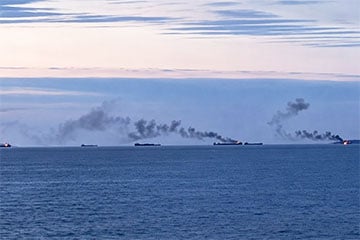
Why is the Ukrainian Armed Forces attacking targets in the Sea of Azov?
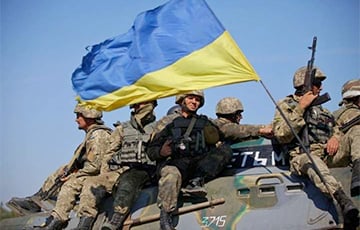
Targeted strikes by the Ukrainian Defense Forces against targets in the Sea of Azov, specifically tankers and dry cargo ships, are due to the fact that the Russians are using this logistics route because of problems with using the Crimean Bridge and the land route. This was reported during a televised marathon by the spokesperson for the Ukrainian Navy Dmytro Pletenchuk, writes unian.net.
In particular, he was asked to comment on the Defense Forces’ attacks on tankers transporting fuel.
He explained that the occupiers resorted to transporting fuel via the Sea of Azov due to problems with the Crimean Bridge and Ukrainian Armed Forces strikes on the land “corridor” in southern Ukraine. At the same time, as Pletenchuk emphasized, the waters of the Sea of Azov have been within range of the Defense Forces’ weapons for two years now. Moreover, Ukraine’s military capabilities have changed over that period, and “certainly not in the Russians’ favor,” the military official added.
“It was a rather risky decision (logistics via the Sea of Azov—ed.). And, of course, a predictable outcome. “That’s why I believe this will cause them a lot of trouble, since this was apparently their last chance to deliver sufficient quantities. Of course, fuel tankers can make their way through by land, and sometimes across the bridge, but the volumes are completely different,” — said the press secretary.
In his opinion, there are likely no environmental consequences from the strikes on the tankers. If something like that were happening, Russian propaganda channels would have already started accusing Ukraine of “ecocide.”
Pletenchuk added that the Sea of Azov is shallow, which limits the routes available there. Therefore, other vessels illegally present in the area are also experiencing certain “inconveniences.”
Furthermore, he said that Russia’s temporary blockage of the waterways leading to the Sea of Azov is a significant achievement, as it has disrupted the transport of goods, including those looted in Ukraine. Furthermore, this has, to a certain extent, affected the occupiers’ ability to use the captured Ukrainian ports of Mariupol and Berdyansk for their own interests.
Furthermore, strikes on targets in the Sea of Azov should disrupt the enemy’s supply lines in the south, as this is one of their key logistical routes.
“To reach the Sea of Azov (Ukrainian drones—ed.), they must traverse a fairly large area overland, which is under the cover of the enemy’s air defense. In other words, to get there, they have to complete a difficult ‘quest,’ and then locate a moving target at sea…—that requires a high level of skill,” emphasized the Ukrainian Navy spokesperson.
He explained why enemy tugs, dry cargo ships, and so on have also become targets for the Ukrainian Armed Forces.
“Because anything that delivers anything at all to Crimea falls under the category of logistical support. The Russians constantly used ferries—both to transport military cargo, such as equipment, and personnel. They deliberately mingle with civilians to make our work as difficult as possible. As for dry cargo ships, that’s a whole other story—it’s impossible to verify exactly what they’re bringing into Crimea if there are delivery issues… It could be weapons, or anything at all,” the military official noted.
As a reminder, according to Reuters, Russia suspended shipping on the Don-Azov Canal—the waterway connecting the Don River to the Sea of Azov—due to strikes by the Ukrainian Armed Forces. It was reported that the decision was made immediately after a Ukrainian strike on 13 Russian vessels (including 10 tankers) in the Sea of Azov on Friday. Up to a quarter of Russia’s total grain exports pass through the Sea of Azov.

Bank's name: Bank Millennium S.A.
Address: ul. Stanislawa Zaryna, 2A, 02-593, Warszawa
IBAN: PL97116022020000000216711123
SWIFT: BIGBPLPW
Name of the account holder: Fundacja “KARTA ‘97”
Purpose/title of payment: Donation for statuary aims
You can contact us by the e-mail charter97@gmail.com