

Should We Expect The Dollar To Exceed 3 Rubles In Belarus In September?
6- 24.08.2026, 8:45
- 3,416
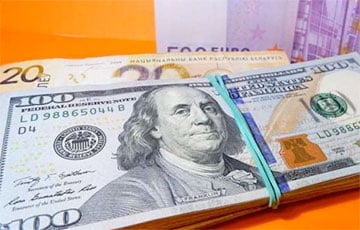
A similar situation occurred on the Belarusian foreign exchange market five months ago.
Exactly five months ago, on February 18–19, 2026, a similar situation unfolded on the Belarusian foreign exchange market. At that time, the U.S. dollar exchange rate rose slightly above 3 rubles for a couple of days, but then plummeted to a three-year low by mid-May. Last week, in the second half of the week, a similar reversal occurred. However, the causes and consequences of these two market phenomena may differ. As for what exchange rates to expect in the last week of August, the publication Myfin.by financial analyst Mikhail Grachev.
A quick rebound from 3 rubles per dollar
At the end of the week, the U.S. dollar exchange rate fell by -0.50% to USD/BYN 2.9756. By the start of the year, the dollar’s appreciation had slowed to +2.51%. Although by the close of trading on Tuesday, August 18, the dollar had risen to USD/BYN 3.0313, and it seemed that the next stop would be around USD/BYN 3.05. But on Thursday, the dollar lost more than 400 points, falling by a record 1.5 percent during the trading session.
At the same time, dollar trading volume reached a two-month high of 38.485 million. Total trading volume for the week amounted to 75.277 million dollars, as Tuesday, August 18, saw a record low in trading volume for those same two months at 3.870 million U.S. dollars.
Similarly, the Russian ruble exchange rate strengthened by the end of the week after falling during the first two days. Last week’s closing rate was RUB/BYN 3.5996 per 100 Russian rubles. The ruble appreciated by +0.78% over the week, and its depreciation since the beginning of the year narrowed to -2.87%. The trading volume in rubles for the week totaled 19,790.840 million rubles, or approximately 238.44 million U.S. dollars.
In fact, this was a fully expected outcome for the week given the approaching tax season in Russia. However, this factor was compounded by a sharp weakening of the U.S. dollar in global financial markets.
The Collapse of the U.S. Dollar
Last week, U.S. national debt surpassed the 40.05 trillion dollar mark for the first time in history. Interest payments on this debt also exceeded $1.2 trillion, which is more than the U.S. defense budget. In light of this, the U.S. Treasury announced on Wednesday, August 19, that it would increase the volume of buybacks of 10–20-year and 20–30-year Treasuries from $2 billion to $4 billion per transaction.
Against this backdrop, the “greenback” plummeted against all major financial assets. The main currency pair briefly rose to EUR/USD 1.171. The price of gold touched the 4,700 USD/oz mark but settled at 4,661.60 USD/oz by the end of the week. The price of Brent crude rose to 94.83 USD/barrel.
In addition to the tax season and the weakening of the dollar on the global market, there was frenzied demand in Asia for Russian Urals crude, the price of which settled at 88.85 USD/br on Friday. The situation in the Strait of Hormuz is heating up again, and against this backdrop, China and India are trying to secure strategic reserves.
Weekly Forecast
These factors will shape the currency market in the near future. The end of the tax period may weaken the ruble, but next month, high oil prices could bring an additional inflow of foreign currency into the Russian financial market. This factor has a delayed effect, but sooner or later it will take effect.
Consequently, this week the U.S. dollar exchange rate on the Belarusian foreign exchange market may show a slight decline, as the peak of tax payments in Russia falls on the 28th—that is, the end of the week. The dollar is likely to fall to USD/BYN 2.95. Meanwhile, the Russian ruble will appreciate.

Bank's name: Bank Millennium S.A.
Address: ul. Stanislawa Zaryna, 2A, 02-593, Warszawa
IBAN: PL97116022020000000216711123
SWIFT: BIGBPLPW
Name of the account holder: Fundacja “KARTA ‘97”
Purpose/title of payment: Donation for statuary aims
You can contact us by the e-mail charter97@gmail.com