
ISW: None Of The Russian Satellites In The "Starlink-like" Batch Have Reached The Intended Orbit
5- 1.09.2026, 19:02
- 1,302
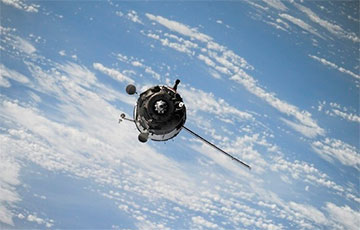
The devices were launched on July 19.
Russia’s attempts to quickly establish its own satellite constellation—one that would replace Elon Musk’s Starlink and enable the military to launch strikes against Ukrainian forces—are failing. None of the second batch of “Rassvet” satellites intended for this purpose reached the required altitude, according to the Institute for the Study of War (ISW).
The satellites were launched on July 19, but by August 31, none of the 16 satellites were at the planned altitude of 550 km, according to data from N2YO, a service that tracks satellites in real time. Many of them ended up at an altitude of 300–400 km; the orbits of some are declining, and at least two are heading toward reentry into Earth’s atmosphere. Meanwhile, the operational altitude of the “Rassvet” satellites is 870 km.
The first batch, launched on March 24, also encountered problems. By July 31, only 12 of the 16 satellites had reached their planned altitude of 550 km and remained there by the end of August. According to the ISW, these 12 satellites provided Russian forces with communication with ground terminals in the occupied territory of Ukraine only twice a day for up to an hour and a half.
Although most of the satellites from the second batch remain in space, their lower orbits shorten their service life due to drag from the upper atmosphere and increased fuel consumption, notes the ISW:
“It is unclear how long the ‘Rassvet’ satellites will remain in lower orbits, but they will likely not last as long as Russia had planned.”
Satellite communications are vital to the Russian military. Earlier this year, after then-Defense Minister Mikhail Fedorov appealed to Musk, Starlink shut down terminals that had been smuggled into Russian units in the occupied territory. This deprived them of the ability to use satellite communications to organize UAV attacks, coordinate operations, and for other purposes. “Z-bloggers” subsequently complained repeatedly that the Russian army’s combat effectiveness had suffered greatly without Starlink, attributing to this the loss of its initiative on the battlefield.
This year, the advance of the occupying forces has slowed considerably compared to last year; there were even several months when they were losing territory.
As of the end of August, only 37.5% of the launched “Rassvet” series satellites had reached a stable operational altitude, according to the ISW. The complete failure of the second batch indicates that Russia, in its attempt to deploy the constellation as quickly as possible, was not prepared to carry out the project “at this pace and will likely face additional delays.”
The aerospace company “Bureau 1440,” which is developing these satellites, reported that “dozens” more launches are planned to deploy “hundreds” of satellites. However, they are launched into orbit by the “Soyuz-2.1b” rocket; at its current launch rate, Russia will be able to launch no more than 128 “Rassvet” satellites over four years, “and there is no guarantee that all of them will be operational.” In addition, this rocket is needed to deliver other cargo as well, the ISW adds.

Bank's name: Bank Millennium S.A.
Address: ul. Stanislawa Zaryna, 2A, 02-593, Warszawa
IBAN: PL97116022020000000216711123
SWIFT: BIGBPLPW
Name of the account holder: Fundacja “KARTA ‘97”
Purpose/title of payment: Donation for statuary aims
You can contact us by the e-mail charter97@gmail.com