

Russian Officials Are Buying Up Anti-eavesdropping Systems In Large Numbers
1- 1.09.2026, 18:32
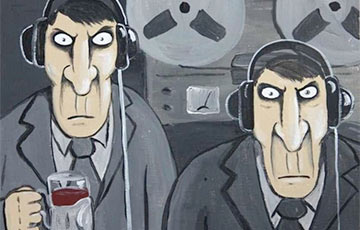
Both Russian and foreign intelligence agencies are trying to eavesdrop on government officials.
Officials in Russian regions are buying anti-eavesdropping systems on a massive scale and have spent at least 20 million rubles on them over the past two years, according to Mash, citing government procurement data. Most often, they purchase two types of protection: a vibration generator and an acoustic emitter. The first is attached to a window and generates vibrations. As a result, it becomes more difficult to pick up sound from the glass inside the room. The acoustic emitter is placed near a door, vent, or ceiling. It generates noise that also prevents conversations from being recorded. The devices themselves must be manufactured in Russia, and suppliers must obtain licenses to engage in work related to state secrets.
Officials in Bashkortostan are most afraid of wiretapping; there, they spent 1.1 million rubles on systems to counter it. Such devices were also purchased by the Russian Academy of Sciences for a total of 666,000 rubles, the Far Eastern Customs Service for 500,000 rubles, and the Bryansk Regional Duma for 400,000 rubles.
In recent years, corruption schemes have been uncovered and criminal cases have been opened in all of these agencies and organizations. In Bashkortostan, former acting Deputy Prime Minister Alan Marzaev was sentenced to 13 years in prison for accepting a bribe of 37 million rubles from construction companies. In the Bryansk Region in 2025, former Vice Governor Nikolai Simonenko and the head of the regional construction department, Evgeny Zhura, were detained on charges of embezzlement resulting in 818 million rubles in damages, while former Deputy Governor Sergei Timoshenko became a defendant in a case involving the acceptance of bribes totaling 7 million rubles. In 2025, former Vice President of the Russian Academy of Sciences Konstantin Solntsev was found guilty of embezzling 168.7 million rubles from the Academy’s funds and laundering that money. Corruption cases are regularly filed at the Far Eastern Customs Administration—at least eight criminal cases in 2025.
Both Russian and foreign intelligence services attempt to eavesdrop on officials. Last year, the FSB accused foreign intelligence services of eavesdropping on high-ranking Russian officials via their smartphones. According to the FSB, software was used to intercept conversations, as well as for covert audio and video surveillance near electronic devices. For example, Bloomberg published a phone conversation between Trump’s aide Stephen Whitcoff and Putin’s aide Yuri Ushakov from October 14, 2025. The publication “Important Stories,” citing sources in the intelligence services, reported that the FSB is actively eavesdropping on politicians. “All equipment has been reoriented toward wiretapping the government and other authorities,” said an intelligence service employee.

Bank's name: Bank Millennium S.A.
Address: ul. Stanislawa Zaryna, 2A, 02-593, Warszawa
IBAN: PL97116022020000000216711123
SWIFT: BIGBPLPW
Name of the account holder: Fundacja “KARTA ‘97”
Purpose/title of payment: Donation for statuary aims
You can contact us by the e-mail charter97@gmail.com