
Why Have Russians Suddenly Started Stockpiling Cash?
3- 1.09.2026, 17:55
- 1,334
This is the first sign of growing caution.
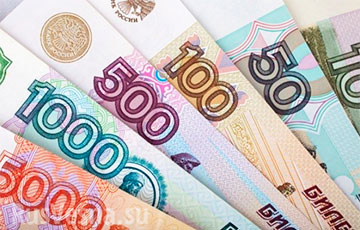
In early August, the amount of cash in circulation in Russia rose significantly. This occurred amid mounting pressure on Russia’s public finances and rising military spending. Some economists attribute this to DW.
The Russian economy is facing growing difficulties in financing the budget and the war against Ukraine. Military spending is rising, it is becoming more difficult for the government to borrow money, and banks are increasingly dependent on support from the Central Bank. Against this backdrop, several government bond auctions have ended unsuccessfully.
Some experts suggest that if the situation worsens further, the authorities may resort to freezing bank deposits. In that case, the money would technically still belong to citizens, but they would only be able to access it after a long period of time.
The increase in cash holdings does not in itself indicate mass panic, but it is occurring at a time when confidence in the safety of private assets in Russia is in doubt. The government is already expanding its control over the business sector: in recent years, Russian authorities have seized assets worth tens of billions of dollars, and in August 2026, they gained the ability to temporarily take control of critical infrastructure facilities.
Against this backdrop, it cannot be ruled out that, should the budget situation continue to deteriorate, the Kremlin will begin seeking new ways to mobilize private funds. One such method could theoretically be a freeze on bank deposits—the money would formally remain the property of citizens, but access to it would be restricted for an extended period.
So far, there are no signs that the Russian authorities are preparing such a move. Finance Minister Anton Siluanov previously dismissed reports of a possible deposit freeze as fake news. But financial pressure on the state is mounting—the budget deficit in the first half of 2026 reached 5.73 trillion rubles, and the annual oil production forecast was recently lowered to its lowest level since 2009.
Therefore, the increase in cash holdings can be seen as a sign of growing caution among Russians. The more resources the Kremlin needs to continue the war, the more room there is for decisions that, until recently, seemed unlikely.

Bank's name: Bank Millennium S.A.
Address: ul. Stanislawa Zaryna, 2A, 02-593, Warszawa
IBAN: PL97116022020000000216711123
SWIFT: BIGBPLPW
Name of the account holder: Fundacja “KARTA ‘97”
Purpose/title of payment: Donation for statuary aims
You can contact us by the e-mail charter97@gmail.com