
The U.S. Struck More Than 100 Iranian Targets In A Single Day
- 2.09.2026, 11:36
- 1,038
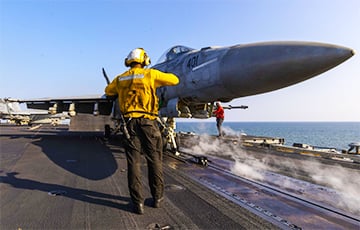
This has weakened Tehran's ability to attack ships in the Strait of Hormuz for at least a month.
The U.S. struck approximately 100 Iranian military targets. According to Washington’s assessment, this has weakened Iran’s ability to attack ships in the Strait of Hormuz for at least a month.
This was reported by Axios.
On Tuesday, the U.S. military carried out a series of strikes against Iran, hitting approximately 100 targets. Among them were two Iranian government tankers, which U.S. drones struck with missiles in their engine rooms.
Other targets included air defense facilities of the Islamic Revolutionary Guard Corps (IRGC), radar systems, mine-laying equipment, communications facilities, as well as launchers for anti-ship missiles and strike drones.
According to a U.S. official, the strikes weakened Iran’s offensive capabilities and “bought at least a month” of reduced threat to commercial vessels. He described the idea itself as an effort to “mow the lawn”—to reduce the risk of Iranian attacks on U.S. tankers, ships, and aircraft.
The new “tanker-for-tanker” policy
The strikes on tankers marked the first instance in which the U.S. attacked Iranian vessels specifically in response to Iranian attacks, rather than to prevent a breach of the naval blockade. According to an official, this is part of the new “tanker-for-tanker” policy approved by Donald Trump.
Despite this, according to U.S. officials, Iran’s response was unsuccessful. About 25 ballistic missiles were launched, but only half reached Jordanian airspace—10 were intercepted, and three fell without causing any casualties. In addition, Iran launched about two dozen drones at U.S. bases in Bahrain, as well as missiles and drones at bases in Kuwait. Most of the targets were intercepted.
While the U.S. and Iran exchanged fire, American forces continued to escort ships through the strait. According to an official, on Tuesday, about 40 vessels carrying millions of barrels of oil entered and left countries in the region.

Bank's name: Bank Millennium S.A.
Address: ul. Stanislawa Zaryna, 2A, 02-593, Warszawa
IBAN: PL97116022020000000216711123
SWIFT: BIGBPLPW
Name of the account holder: Fundacja “KARTA ‘97”
Purpose/title of payment: Donation for statuary aims
You can contact us by the e-mail charter97@gmail.com