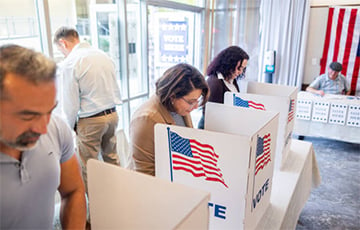


Election Day: Which States Have The Closest Races?
1- 3.11.2026, 8:07
- 2,492

A Decisive Election for Trump.
On Tuesday, November 3, the U.S. will hold midterm elections, which could prove to be a turning point for Donald Trump’s second presidential term. If the Democrats manage to secure a majority in the U.S. House of Representatives and the Senate—or at least in one of these two chambers of Congress, which are currently controlled by the Republicans—this could significantly limit Trump’s actual powers and political influence.
Although Donald Trump’s name does not appear on the ballots, the U.S. president has done everything he can to ensure that Republican voters view this election as a personal vote of confidence in him. In the month leading up to the election, he held about 20 rallies and public events across various U.S. states, in the style of his presidential campaign. However, as CNN reports, they were more like a “farewell tour”—after all, they may be the last such events where Trump appeared as the “standard-bearer” of the Republican Party.
By the time of this election, Trump has gone from being an asset to more of a liability for his political faction, and in the U.S., he has increasingly been called a “lame duck.” The approval ratings of the U.S. president and his party were most heavily impacted by American voters’ dissatisfaction with the significant rise in the cost of living and fuel prices due to the war against Iran unleashed by the Trump administration. According to an Ipsos/Reuters poll, this issue became the top concern for voters: 73% of respondents said that the cost of living in the country is heading in the wrong direction.

According to the same data, Trump’s approval rating fell to a record low of 31% in October and rose by just one percentage point—to 32%—a week before the election. The survey also showed that in late October, 47% of registered voters were ready to vote for the Democrats, while only 36% were ready to vote for the Republicans (assuming a theoretical choice of the party itself, rather than specific candidates, as is the case in U.S. elections).
However, the realities of the U.S. electoral system are much more complex. “Generic ballot polls” are nationwide surveys that provide insight into which party respondents would like to see in control of Congress. Although such polls reflect general sentiment across the country, they do not account for the nuances of the race in individual states and congressional districts—which are precisely what will determine who controls the Senate and the House of Representatives,” Reuters summarizes the findings of its pre-election poll.
Early voting in this election is already breaking records: as of November 2, 54.5 million votes had been cast in the U.S., according to data from the University of Florida. That’s nearly 10 million more than the total number of early votes cast in the previous midterm elections in 2022.
New Voice reminds readers of what they need to know about the U.S. elections on November 3.
Who is elected in the midterm elections?
Midterm elections are held in the U.S. two years after a new president is elected—that is, roughly halfway through his four-year term. For every American leader, they are a significant test of public confidence in the party they represent and, to a certain extent, of public opinion regarding the leader personally.
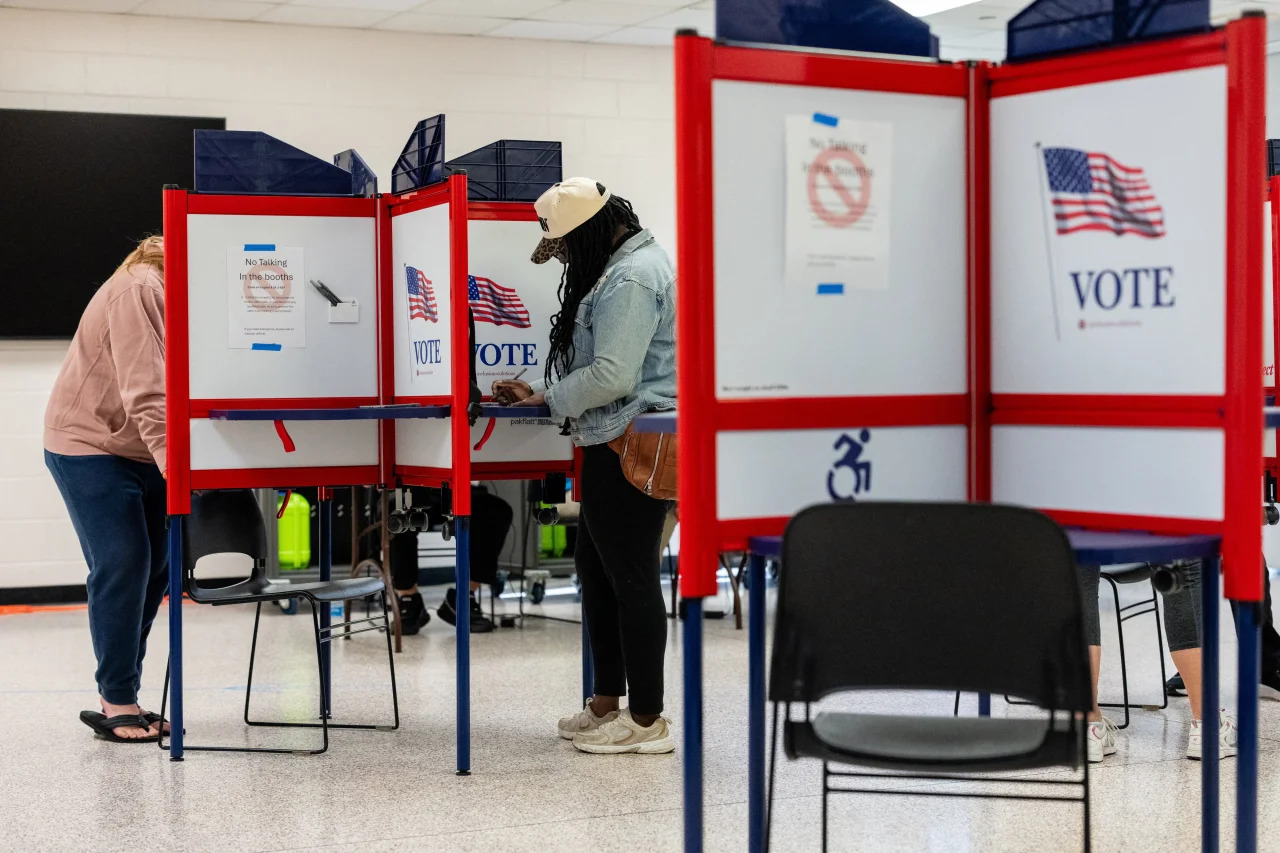
These elections are held on the first Tuesday in November; this year, that date is November 3. The results of the vote are important because they can significantly alter the country’s political landscape and strengthen or weaken the role of the president’s party in the U.S. Congress. Accordingly, it will be either more difficult or easier for the president to push government bills and his own political agenda through Congress.
The following are up for reelection:
all 435 seats in the U.S. House of Representatives—that is, the entire lower chamber of Congress (which is renewed every two years, during both presidential and midterm elections);
35 seats (one-third) out of 100 in the U.S. Senate—senators are re-elected for six-year terms;
39 governors (in 36 states and three U.S. territories);
a number of attorneys general and judges in many states, as well as hundreds of seats in state legislatures.
Typically, in midterm elections, the ruling party loses seats in the House of Representatives rather than gaining new ones. Since 1946—that is, 80 years after World War II—there have been 20 midterm elections in the U.S. In 18 of them, the incumbent president’s party lost seats in the House of Representatives compared to its previous composition (with the exception of 1998 and 2002, under Presidents Bill Clinton and George W. Bush, respectively).
How many seats do the Democrats need to win to secure a majority in the Senate and the House of Representatives?
Following the 2024 elections, Republicans control both the Senate and the U.S. House of Representatives by a narrow margin. Therefore, in the midterm elections on November 3, 2026, the Democrats are seeking to regain control of both chambers of the U.S. Congress.
To secure a majority in both chambers, the Democrats need to win at least four additional seats in each of the two chambers of Congress.
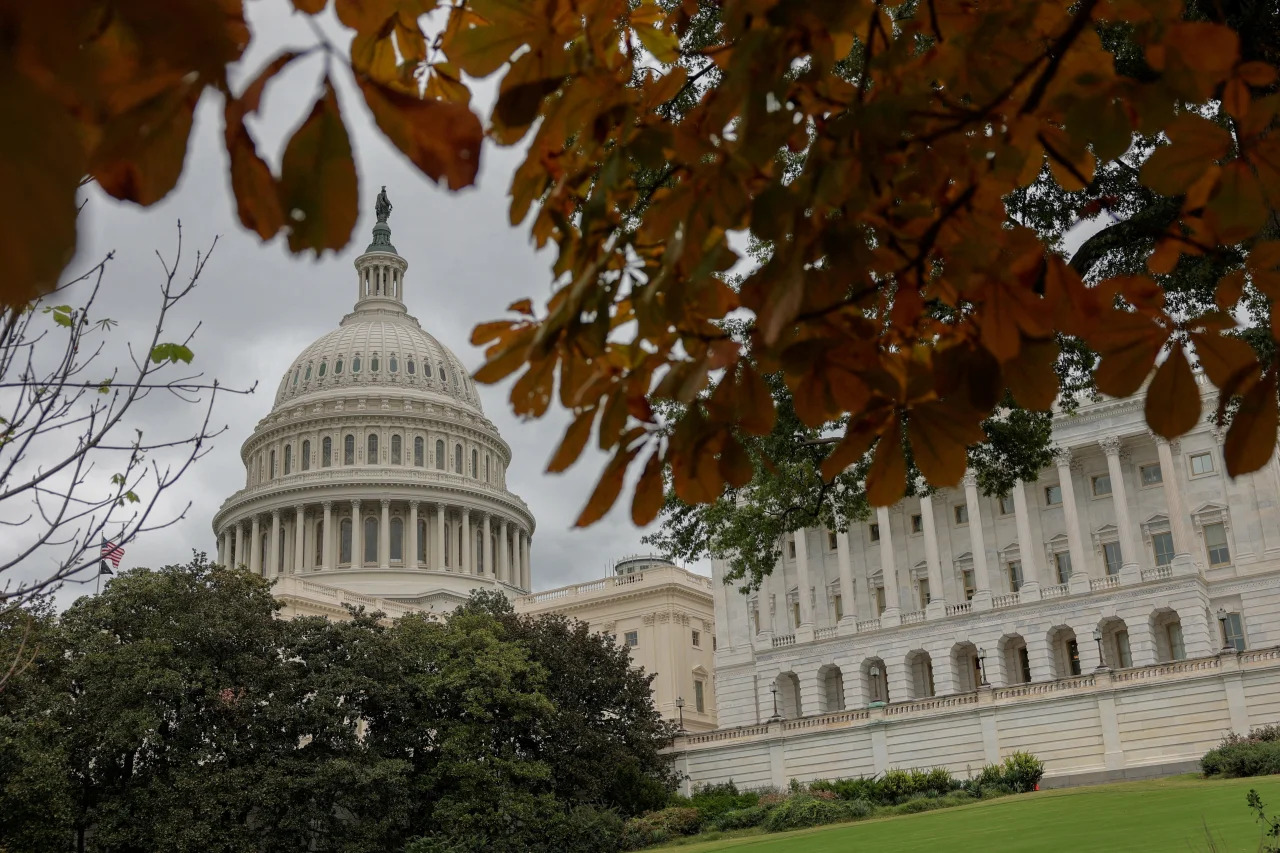
In the House of Representatives, the Republicans’ lead has been narrow for the past two years. Before the election, Republicans held a slim majority of 218 out of 435 seats, while Democrats held 214 seats [two seats were vacant, and one independent representative voted with Trump’s party]. After a full election cycle, the Democratic Party needs to gain four additional seats to secure a majority of at least 218 votes.
According to estimates by The Cook Political Report, an analytical project that prepares election forecasts, the Democrats may even exceed this projection and secure their strongest majority in the House of Representatives since 2009—up to 240 seats. This is fewer than the 257 seats the Democrats held after the election of Barack Obama, but it is larger than the majorities the Democratic Party held in the House of Representatives following the 2006 and 2018 elections.
In the U.S. Senate following the 2024 election, Republicans secured a majority of 53 out of 100 seats, while Democrats effectively held 47 (45 of their own plus the votes of two independent senators, Bernie Sanders and Angus King, who typically vote with the Democrats). Based on the results of the midterm elections, a triumph for the Democratic Party would be winning at least 51 seats—and thus a majority in the Senate. After all, if the seats are split 50-50, the U.S. Vice President J.D. Vance—Trump’s right-hand man—would have the deciding vote in the Senate. Each U.S. state is represented by two senators in Congress.
The Cook Political Report expects the Senate race to be more unpredictable, with control of the chamber “hanging by a thread, as races in seven key states are too close to call, leaving the door open for either party to secure a majority.” These are the fiercest Senate battles in states such as Alaska, Iowa, Kansas, Maine, Michigan, Ohio, and Texas. In six of them (except Michigan), the Senate seats currently held by Republicans are at stake. Analysts at The Cook Political Report are reluctant to predict whether the Democrats will be able to win back any of these seats. However, they do venture to predict a “slight advantage” for the Democrats in the Senate race, based on the combination of all the nuances of the U.S. electoral system and the current political situation, which is unfavorable for Republicans.
“Political analysts generally believe that the Democrats have a good chance of gaining control of the House of Representatives, but note that it will be significantly more difficult for them to gain control of the Senate,” Reuters confirms these forecasts.
At the same time, according to the Silver Bulletin—a well-known analytical media platform run by American statistician and election forecaster Nate Silver — the Democrats’ chances of regaining control of the House of Representatives stand at 93%, while their chances of taking control of the Senate have risen to 75%–80% in the final days before the election (up from 56% in early August, according to the same forecast).
When will the U.S. election results be announced?
The first results of the U.S. midterm elections will begin to come in after the polls close. Voting will end earliest in the eastern parts of Indiana and Kentucky: Next, polling stations will close in Georgia, South Carolina, Vermont, and Virginia: at 3:00 a.m. Minsk time (7:00 p.m. local time). Alaska will be the last to finish voting: polling stations there will close at 9:00 a.m. on November 4, Minsk time.
This means that as early as November 4, Kyiv time, preliminary data on voting trends and the early frontrunners in individual state races will be available.
However, in the most closely contested races, it may take several more days or even weeks to determine the winners.
Due to the complex differences in electoral systems across various states and the hundreds of individual races, the entire world traditionally follows the vote count conducted by the Associated Press. It is the AP that traditionally declares the winner of each race once enough votes have been counted to make the lead over the opponent mathematically insurmountable.
The Fiercest Battles: Which States Will Determine Control of the Senate
According to the Associated Press, which has been tracking election results most closely for decades, and based on a forecast by The Cook Political Report, the votes in the following states will be decisive for a Senate majority.
Georgia, Michigan, New Hampshire: Will the Democrats hold onto their Senate seats?
To have a shot at a Senate majority, the Democratic Party must first hold on to all the Senate seats it currently holds. The fiercest races in this regard will be in three states where the final result of the 2024 presidential election was decided by a margin of less than 3%. At that time, Trump won by a narrow margin in Georgia and Michigan, while Kamala Harris won in New Hampshire.
In Georgia, the youngest senator in the U.S. hopes to retain his seat — 39-year-old John Ossoff, a rising star of the Democratic Party who is already being touted as a likely Democratic nominee for U.S. president in 2028. In 2021, it was Ossoff’s victory, along with that of another Georgia Democrat, that secured the Democratic Party’s majority in the Senate. Since then, Ossoff has gained recognition and popularity across the U.S., largely thanks to viral videos featuring him. In the Senate, he conducts sharp questioning of Trump administration officials—clips of which garner millions of views—and at rallies he speaks in the style of Barack Obama, which is why the American press has already dubbed him the “king” of short videos. Incumbent U.S. Representative Mike Collins, a Republican, will attempt to halt Ossoff’s rapid political rise in the race for a Senate seat.

In Michigan, 42-year-old epidemiologist Abdul El-Sayed could become the first Muslim senator in U.S. history if he wins the election and holds the seat for the Democrats (the incumbent Democratic senator from Michigan, Gary Peters, is not seeking re-election).
In New Hampshire, the state’s former governor, Democratic Senator Jean Shaheen, is also vacating her seat. Restaurant owner Chris Pappas of the Democratic Party and Republican John Sununu—who previously served as a senator and is a descendant of the state’s influential political dynasty—will compete for her seat.
Maine and North Carolina: The Most Promising Additional Seats for Democrats
Assuming the Democrats retain all the Senate seats they currently hold, they will need to win four additional seats to secure a 51-vote majority. According to an AP projection, the Democratic Party has the best chance of winning some of these seats in two states.
The state of Maine embodies a rare paradox: while Donald Trump has never won there, the region is represented in the Senate by Republican Susan Collins. Troy Jackson, former speaker of the Maine State Senate and a descendant of a logging dynasty, will try to take her seat for the Democrats.
In North Carolina, since 2008, Democrats have consistently lost to Republicans by a narrow margin in every federal election. Roy Cooper, a well-known figure here who served as the state’s governor from 2017 to 2025, hopes to finally turn the tide in favor of the Democratic Party. Cooper will be running for the Senate seat being vacated by Republican Tom Tillis, Cooper will compete against Michael Watley, who served as chairman of the Republican National Committee from 2024 to 2025.
Alaska, Iowa, Ohio, Texas, Kansas: Will Democrats Win the Battle for Traditionally Republican States
For at least ten years, Alaska, Iowa, Ohio, and Texas have remained “deep red,” as the AP notes—that is, staunchly Republican. However, riding a wave of discontent over the rising cost of living and the war in Iran, the Democrats hope to compete here this time for the new Senate seats they need. So even these Republican strongholds could become hotbeds of political battles.
Particular attention is focused on Alaska, where Democrat Mary Peltola, a sitting member of the U.S. House of Representatives, is attempting to unseat Republican Dan Sullivan, who has served as the state’s senator since 2015. In recent polls, Peltola has been leading Sullivan by several percentage points. If she wins, she will become the first representative of Alaska’s Indigenous peoples in the Senate. However, long before Election Day, the situation in Alaska became the subject of heated debate in the U.S., as a “spoiler” candidate named Daniel J. Sullivan — that is, a candidate with a name almost identical to that of the main Republican candidate. The New York Times claims that Democratic Party representatives deliberately sought out such a “lookalike” to persuade him to run and take votes away from the Republicans. Peltola’s campaign team rejects these allegations. The Trump administration has already launched an investigation into the situation in the state through the attorney general’s office and has separately filed a lawsuit seeking to block the election results if Sullivan loses the race. All of this could ultimately significantly delay the determination of the election winner in Alaska—and thus in the Senate as a whole. With the exception of 2008, Democrats have not won a presidential election or a Senate race in Alaska for 30 years.
In Iowa, Democrats hope to reclaim the seat being vacated by Republican Senator Joni Ernst—who took the seat from the Democratic Party in 2014. Democrat Josh Turek, a two-time Paralympic champion and current member of the U.S. House of Representatives, is running for the Senate seat here. He is running against his colleague in the House of Representatives, Republican Ashley Hinson, a former reporter. This is a tough battle for the Democrats: since 2017, Republicans have held the governorship in Iowa, as well as majorities in both the state Senate and the state House of Representatives.
In Ohio, the race will be for the Senate seat vacated by J.D. Vance following his appointment as U.S. vice president. In 2025, he was replaced by Republican John Hasted, whom Democrat Sherrod Brown is now seeking to unseat from the Senate. He previously represented Ohio as a senator from 2007 to 2025, and will now try to make a comeback by winning another seat for the Democratic Party.
Texas is one of the most loyal Republican strongholds. In 1976, Jimmy Carter was the last Democratic presidential candidate to be supported by the state. The last time Democrats won a Senate election in Texas was in 1988, and overall, Democrats have not won a statewide election here since 1994. This time, Democrat James Talalico, a 37-year-old member of the Texas House of Representatives, who is running against the incumbent state attorney general Ken Paxton—one of Donald Trump’s most notorious allies. Republican Paxton is running despite having been implicated in numerous scandals—ranging from allegations of securities fraud to an attempt to impeach him from the office of Texas attorney general in 2023 (the motion was supported by the state House of Representatives but rejected by the Texas Senate).
In Kansas, Republican Senator Roger Marshall, who is trying to hold onto his seat, and Democrat Adam Hamilton — founder of the United Methodist Church, the largest church of that denomination in the U.S. If successful, Hamilton will become the first Democrat to represent the state in the Senate since 1932. During the campaign, U.S. Vice President J.D. Vance visited Kansas, which indicates Republicans’ concern about the outcome of this race.
What Will Be the Consequences of the Election for Trump and for Ukraine
If it loses its majority in even one chamber of Congress, the Republican Party—and thus the Trump administration—will have far less influence over the passage of new legislation. Both the Senate and the House of Representatives are key branches of the U.S. legislative branch, so the implementation of many presidential initiatives requires their mutual support. Furthermore, it is the Senate that confirms top-level appointments—from cabinet members to ambassadors and Supreme Court justices. By securing a majority in this chamber, the Democrats will be able to block many of the appointments put forward by the White House.
By winning the election, the Democratic Party would also gain far more leverage to advance its own agenda. If the Democrats were to win a majority in both the Senate and the House of Representatives, they could even attempt to influence U.S. foreign policy, including resuming aid to Ukraine. Shortly before the election, Reuters identified four areas that could become foreign policy priorities for the Democrats in such a scenario:
War in Iran: Democrats could cut defense spending to force Trump to seek congressional support to continue this war—or to end it;
new aid to Ukraine: Trump has suspended direct financial and military aid to Ukraine, but the Democrats could restore it if they passed such a resolution with a two-thirds majority to override a potential presidential veto;
Restricting or ending military aid to Israel amid its actions in the Gaza Strip, which have sparked widespread criticism among Democrats (over the past fiscal year, the U.S. provided $3.8 billion in aid to Israel—more than to any other country);
restoring foreign aid and cutting military spending: since early 2025, the Trump administration has suspended or canceled billions of dollars in foreign aid approved by Congress — Democrats may attempt to restore it while simultaneously limiting the unprecedented 67% increase in the military budget (to $1.5 trillion) that Trump is pushing for in 2027.
It appears that Donald Trump is already preparing for this scenario and, should his party lose the election, will try to force the Democrats into a battle by issuing numerous presidential vetoes. A few days before the midterm elections, he stated in an interview with the New York Post that he was ready to become “Mr. Veto”—that is, to constantly veto bills passed by the Democrats should they secure a majority in Congress. “Eventually, after a month or two, when the vetoes are blocking everything—because it’s just a waste of time—they’ll come around and strike a deal,” Trump said.
However, the new U.S. Congress will not be sworn in until January 3, 2027. Until then, Trump will operate within the authority of the current Senate and House of Representatives, where Republicans hold a majority. The U.S. president also traditionally has greater personal authority in foreign policy, which is why Europe fears that a defeat in the midterm elections will lead to even worse consequences in Trump’s relations with America’s allies.
In particular, experts at the Royal United Services Institute (RUSI) expressed concern in a comment to Politico that after the election, Trump might further reduce the U.S. military presence in Europe and attempt to conclude a broader agreement with Russian dictator Vladimir Putin, which would also include issues related to the European security order.
Politico sources also do not rule out that Trump might reduce U.S. contributions to NATO’s collective budget, limit the PURL program—under which allies purchase American weapons for Ukraine—and continue to build closer ties with Russia.
However, if a “blue wave” does sweep the U.S. and the Democrats gain a decisive majority in the U.S. Congress, they could make life significantly more difficult for Trump in yet another way—by launching new investigations into the actions of the U.S. president and his administration.
Back in September, Reuters reported that the Democratic Party was preparing a large-scale campaign of such public hearings and investigations, which could primarily target U.S. Secretary of Defense Pete Gagset — specifically due to the war with Iran, the dismissal of high-ranking military officers, and a number of other scandals.
In addition, Elon Musk may become the subject of new investigations initiated by the Democrats, including his companies’ multibillion-dollar contracts with the government and Musk’s possible role in restricting access to Starlink for Ukrainian military personnel.
Another focus of the hearings and investigations could be Donald Trump’s recent diesel fuel deal with Russia. According to Axios, influential Democrats sent a request to major banks and ports even before the election, asking them to preserve documentation related to the deal for the supply of Russian diesel fuel.
“For Republicans, losing control of either chamber of Congress could complicate the implementation of Trump’s political agenda during the last two years of his second presidential term,” Reuters summarizes the significant impact of these elections.

Bank's name: Bank Millennium S.A.
Address: ul. Stanislawa Zaryna, 2A, 02-593, Warszawa
IBAN: PL97116022020000000216711123
SWIFT: BIGBPLPW
Name of the account holder: Fundacja “KARTA ‘97”
Purpose/title of payment: Donation for statuary aims
You can contact us by the e-mail charter97@gmail.com