
"Remember The Statement That Scared Lukashenko So Much"
- 3.11.2026, 8:09
- 3,436
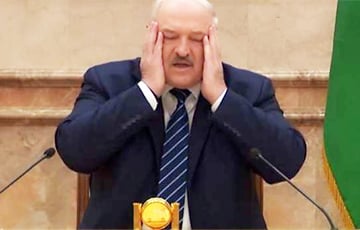
Belarusians dream of change.
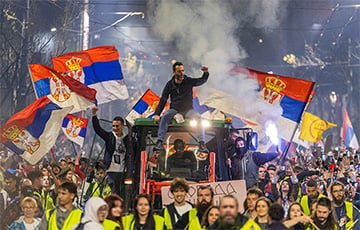
What can Belarusians learn from Serbia’s experience to achieve future victory over Lukashenko’s dictatorship? The website Charter97.org posed to former political prisoner and coordinator of the “European Belarus” civic campaign Yevgeny Afnagel:
— The Serbs had already overthrown a dictator—Milošević—in 2000. The student resistance movement “Otpor” played a decisive role in those events, and democratic parties came to power. However, a few years later, the government was led by Milošević’s former allies, members of Šešelj’s Serbian Radical Party. Vucic, who ruled Serbia as an autocrat for more than 12 years, had previously served as general secretary of Seselj’s party.
Yes, as one of the leaders of the Belarusian “Zubr” movement—which was the largest in Belarus in the early 2000s—I can say that we learned a great deal from “Otpor.” But the Belarusian experience was also in demand. Few people know that before the “Orange Revolution” in Ukraine, we, together with the Serbs, shared our experience with activists from “Pora,” which later played a huge role in the first Maidan. Likewise, the experience of “Zubr” and “Otpor” was utilized by the leaders of the Georgian “Kmara” during the “Rose Revolution” in Tbilisi.
Revolutions and the struggle for freedom in authoritarian countries cannot be viewed in isolation. They always have a huge impact on their neighbors. The first Ukrainian Maidan served as an example for Minsk’s 2006 Square, and the Belarusian protests in 2010 influenced the “Arab Spring.” Now Belarusians are looking with hope toward Hungary, Serbia, and, of course, Ukraine.
I am confident that the successes of the forces of good in these countries will also influence what is happening in Belarus, and Europe will become a continent free of dictatorships.
But I’d like to return to where it all began in Serbia. On the surface, everything in the country seems “stable”; the economy appears to be functioning; wages are higher than in Albania; and state-run and some independent media outlets claim that things aren’t really that bad in the country and try to convince people of the opposition’s weakness. But then some event occurs, and the illusion crumbles, and everything is set in motion.
The discontent that had been building up in kitchens, student dorms, and factory break rooms spills out onto the streets in a matter of just a few days or weeks. And hundreds of thousands of people take to the streets to protest.
That’s exactly what happened in our country in 2020. Recall the words of most “independent political analysts” and foreign “useful idiots” about the “popular Lukashenko” and how we were in for “the most boring election.” Note that they’re saying the exact same thing now, having forgotten how badly they were wrong in 2020.
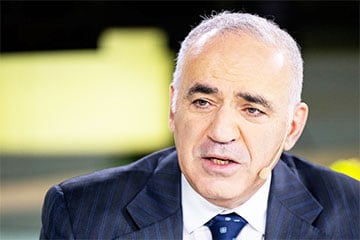
Yes, Russian aggression against Ukraine is a very serious factor in our region. But Putin’s Russia is an economic and military dwarf compared to the European Union and, even more so, to NATO. Recall the statement by our fellow countryman—U.S. General Grinkevich—which so terrified the collective farm dictator.
We know how much Belarusians hate Lukashenko, dream of change, and look back on 2020. It’s impossible to stay in power for long when the overwhelming majority of the population is against you. Any minor incident, any failure on the part of the authorities, could be the trigger that sets in motion a process of fundamental change in Belarus. It could happen as early as tomorrow.

Bank's name: Bank Millennium S.A.
Address: ul. Stanislawa Zaryna, 2A, 02-593, Warszawa
IBAN: PL97116022020000000216711123
SWIFT: BIGBPLPW
Name of the account holder: Fundacja “KARTA ‘97”
Purpose/title of payment: Donation for statuary aims
You can contact us by the e-mail charter97@gmail.com