

Cole Sent Lukashenko A Message
4- 11.06.2026, 10:39
- 9,264
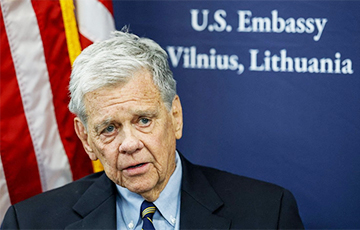
Photo: Reuters
Washington is unhappy with the ongoing crackdown.
John Cole, the U.S. President’s Special Representative for Belarus, assures that the process of releasing Belarusian political prisoners has not been suspended. But he is not announcing the dates of his visit to Minsk at this time. Cole recently got burned by doing that, writes political analyst Alexander Klaskovsky on "Pozirku".
What could be the stumbling block in the negotiations between Minsk and Washington? Most likely, there is more than one issue.
First, the number of prisoners to be released. With each visit by the Americans to Minsk, that number grew. In June 2025—14, in September—52, in December—123, in March 2026—250.
It’s natural to assume that Cole wants to continue this upward trend. Lukashenko, for his part, is haggling hard over this “live cargo,” afraid of selling it short. Moreover, time and again he has to justify himself to his security forces, some of whom are clearly not thrilled about releasing the regime’s enemies.
Second, the dispute may revolve around specific individuals. It is said that Lukashenko and his security services are constantly reshuffling the lists of candidates for pardon.
The motives may vary. Take Sergei Tikhanovsky: he was released last year, apparently on the calculation that he would sow discord among the political emigration and try to vie for leadership with his wife.
Here is another example: in December, Viktor Babariko was pardoned, but his son Eduard was left behind bars. Here, most likely, a cynical logic was at work: as long as the son is held hostage, the father will be wary of acting too boldly in the political arena.
Third, a key condition could have been that the regime allow those pardoned to remain in the country. American negotiators began to press on this issue. As a result, 235 of the 250 people released in March avoided the deportation that had been standard in previous rounds. But perhaps Lukashenko considered this too generous a gesture and backed down.
Moreover, political prisoners are often expelled from the country without documents (or have their passports revoked retroactively). The Americans are likely insisting that the regime put an end to these petty acts of malice.
Finally, in March, Cole made it clear that Washington does not approve of the continued repression. And this is surely the most difficult challenge for Lukashenko.
At the same time, he clearly values the chance to strike a “big deal” with Trump. For Cole, however, it is a matter of honor to carry out his president’s orders.
Of course, the Americans understand that, by and large, the Belarusian autocrat cannot be changed. But it is conceivable that the issue at hand is a significant easing of the crackdown.
And here Lukashenko is torn between two desires. On the one hand, he wants to keep a tight grip on the country. On the other, he wants to receive an invitation to visit Trump and other perks promised by the “big deal.”

Bank's name: Bank Millennium S.A.
Address: ul. Stanislawa Zaryna, 2A, 02-593, Warszawa
IBAN: PL97116022020000000216711123
SWIFT: BIGBPLPW
Name of the account holder: Fundacja “KARTA ‘97”
Purpose/title of payment: Donation for statuary aims
You can contact us by the e-mail charter97@gmail.com