

How Does The World Really View China?
1- 2.09.2026, 16:53
- 1,550
Don't confuse popularity with actual influence.
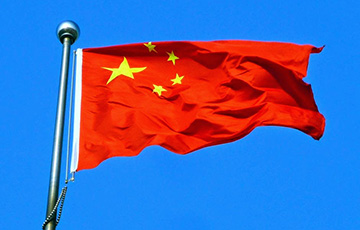
The world’s attitude toward China has improved significantly, while the United States’ popularity, by contrast, has declined. However, it is still too early to speak of a victory for Beijing in the struggle for global influence. When people are asked to choose their preferred economic partner, the majority still favors Washington, writes the magazine Foreign Affairs.
According to recent studies, in 25 of the 36 countries covered by the survey, the percentage of respondents with a favorable view of China exceeded that of the United States.
Some experts have interpreted these figures as signs of the decline of American influence and the rapid rise of Beijing’s influence. However, such an interpretation is too superficial.
“A favorable attitude is, in essence, a feeling,” the authors write. Sympathy for a country does not always mean a willingness to choose it as a primary partner.
Another question is more revealing: with whom do countries prefer to have strong economic ties? In 2025, residents of 20 out of 24 surveyed countries chose the U.S. over China.
The difference is particularly noticeable in a number of European countries. In Canada, France, Greece, the Netherlands, Spain, Sweden, and Turkey, China received higher ratings; however, the majority of residents in these countries preferred economic ties with the U.S. In Sweden, Washington’s lead on this metric was 48 percentage points.
China’s popularity should not be confused with its actual influence. “When people are forced to choose, most of the world still prefers cooperation with Washington,” the article notes.
At the same time, the U.S.’s position cannot be considered unshakable. Trade wars and conflicts with allies could reinforce the perception that the U.S. economy is losing its leadership.
For now, however, the global picture is more complex than a simple standoff between two superpowers. The world may be viewing China more favorably, but when it comes to money, trade, and long-term cooperation, many still rely on the United States.

Bank's name: Bank Millennium S.A.
Address: ul. Stanislawa Zaryna, 2A, 02-593, Warszawa
IBAN: PL97116022020000000216711123
SWIFT: BIGBPLPW
Name of the account holder: Fundacja “KARTA ‘97”
Purpose/title of payment: Donation for statuary aims
You can contact us by the e-mail charter97@gmail.com